Introduction
Bathroom Ideas | A bathroom can have expensive fixtures and beautiful tiles yet still feel uncomfortable when there isn’t enough storage, the lighting is poor, or the layout makes everyday routines difficult. On the other hand, a simple bathroom can look elegant and feel relaxing when its colors, materials, and features are planned carefully.
The best bathroom ideas focus on more than appearance. They help you create a space that feels clean, organized, comfortable, and easy to maintain. Whether you’re working with a small guest bathroom, a family bathroom, or a spacious primary bathroom, thoughtful design choices can make a noticeable difference without requiring a complete renovation.
At Blog Home Ideas TheHomeTrotters, home improvement and interior design are about making everyday spaces work better for real people. That same principle applies to bathroom design: choose features that support your routine, suit your available space, and fit your budget.
In this guide, you’ll discover modern bathroom designs, small bathroom solutions, color combinations, tile options, shower ideas, vanity styles, storage improvements, lighting techniques, and affordable upgrades. You’ll also learn how to plan a renovation, avoid common mistakes, and choose finishes that remain attractive beyond a single design trend.
1. What Are the Best Bathroom Ideas for a Modern Home?
The best bathroom ideas combine a practical layout, coordinated finishes, effective lighting, moisture-resistant materials, and accessible storage. A successful design doesn’t need to look luxurious or complicated. It needs to make everyday activities easier while creating a visually balanced environment.
Before selecting products, consider how the bathroom is used. A busy family bathroom has different requirements from a guest bathroom or a private space designed for relaxation.
Create a clean and contemporary appearance
Modern bathrooms often feature simple cabinet fronts, uncluttered surfaces, large mirrors, and a limited selection of materials. These elements help the room feel organized without making it look plain.
Consider using a floating vanity, neutral wall tiles, and coordinated metal fixtures. Add warmth through natural wood finishes, textured towels, or subtle decorative details.
The important thing is to establish a consistent direction. Combining too many patterns, colors, and finishes can make the room feel disjointed.
Choose comfort over unnecessary decoration
A bathroom should support everyday habits. The sink needs to be comfortable to use, storage should be easy to reach, and lighting should provide sufficient visibility.
For example, a household that gets ready in the morning at the same time may benefit from a wider vanity or additional mirror space. A guest bathroom may need less storage but should offer convenient towel hooks and a clear counter.
Pro tip: Identify your three biggest bathroom problems before buying anything. If poor storage, weak lighting, and a cramped shower are the main issues, address those first rather than spending the entire budget on decorative accessories.
2. Which Small Bathroom Ideas Make the Biggest Difference?
Small bathroom ideas work best when they preserve usable floor space, reduce visual clutter, and improve storage. Floating vanities, large mirrors, wall-mounted cabinets, light-reflective finishes, and clear shower screens can make compact bathrooms feel more open.
However, making a small bathroom look bigger isn’t only about choosing white tiles. The layout, proportions, lighting, and placement of fixtures are equally important.
Install a floating vanity
A floating vanity is mounted on the wall rather than resting directly on the floor. The visible floor underneath creates a sense of openness and makes cleaning easier.
Choose a vanity with enough storage for everyday products. A beautiful wall-mounted sink without practical storage may leave toiletries scattered across the counter.
Before installation, confirm that the wall can support the unit and that the plumbing connections will fit the cabinet design.
Use a large mirror
A large mirror reflects available light and creates a greater sense of depth. It can also make a narrow bathroom feel less enclosed.
For a coordinated appearance, choose a mirror that relates to the width of the vanity. A mirror that’s too small may look disconnected, while one that’s disproportionately large can overwhelm the wall.
If the bathroom has limited natural light, position the mirror to reflect the brightest available area where practical.
Make vertical storage useful
When floor space is limited, walls become valuable storage areas. Slim cabinets, recessed shower niches, and appropriately positioned shelves can provide storage without occupying much of the room.
Useful options include:
- A narrow cabinet beside the vanity.
- Hooks behind the bathroom door.
- Recessed shelving in a properly waterproofed shower.
- A shallow cabinet above the toilet, where clearance permits.
- Tall storage units that fit without blocking movement.
Avoid installing shelves simply because a wall is empty. Each addition should serve a purpose and remain convenient to reach.
Choose a clear shower screen
A transparent shower screen can make a compact bathroom feel more connected because it doesn’t create a strong visual barrier.
However, a walk-in shower requires suitable drainage, waterproofing, and splash control. If the room is extremely small, a well-designed shower enclosure or curtain may be more practical.
Common mistake: Buying fixtures before measuring the available space. Always check the depth of the vanity, the door’s opening direction, and the clearance around the toilet and shower entrance.
3. What Bathroom Color Schemes Look Beautiful and Timeless?
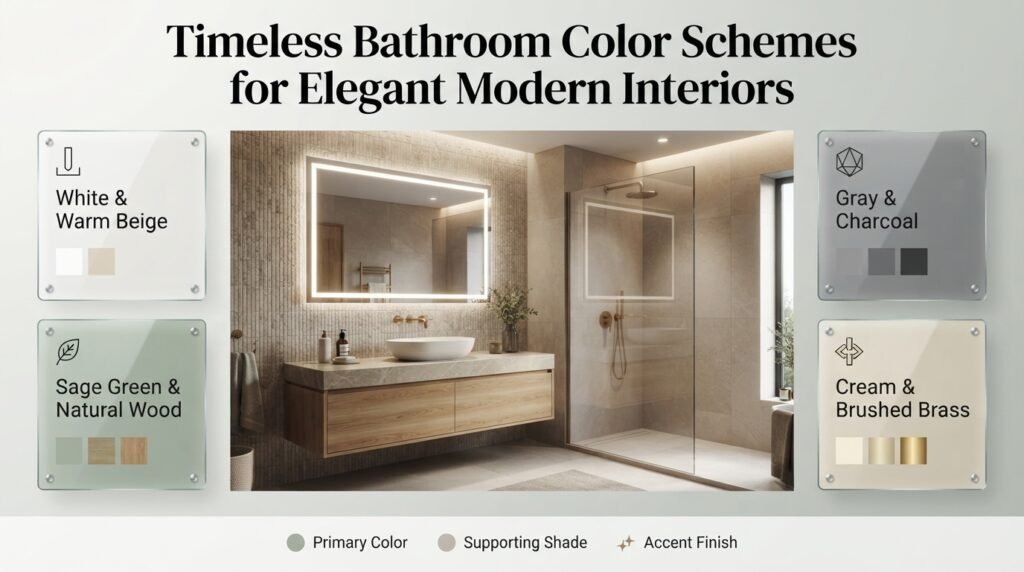
Timeless bathroom color schemes use a calm foundation with a small number of complementary shades. White, cream, beige, soft gray, muted green, and natural wood tones are versatile choices because they can work with different materials and fixture styles.
The best color palette depends on natural light, room size, existing finishes, and the atmosphere you want to create.
White and warm beige
White creates a bright appearance, while beige adds warmth. Together, they work well in bathrooms that need a fresh, welcoming look.
You can use white on the walls and introduce beige through floor tiles, cabinetry, towels, or decorative details. Natural wood finishes can make the combination feel less clinical.
Sage green and natural wood
Muted green can introduce color without overwhelming the room. A sage-green vanity paired with warm wood, white walls, and simple metal fixtures creates a relaxed contemporary appearance.
If you don’t want permanent colored cabinetry, introduce green through towels, accessories, or other easily changed details.
Gray and charcoal
Gray can create a sophisticated modern bathroom, particularly when paired with white surfaces and simple fixtures. Charcoal adds contrast but should be used thoughtfully in bathrooms with limited natural light.
A useful approach is to keep the larger surfaces relatively light and reserve darker shades for cabinetry, hardware, or a feature wall.
Cream and brushed brass
Cream-colored finishes and brass-toned fixtures can create a warm, refined atmosphere. Repeat the metal finish across a few details, such as the faucet, cabinet handles, and shower hardware.
There’s no need to use brass everywhere. Too many repeated decorative features can make the room feel overly coordinated.
How to select the right palette
Use this simple process:
- Choose a primary color for the largest surfaces.
- Select a supporting shade for cabinetry or accent tiles.
- Add a finishing color through accessories and fixtures.
- Test material samples under the actual bathroom lighting.
A paint color that looks soft and neutral in a showroom may appear much cooler or warmer at home. Checking samples in the finished environment helps avoid expensive disappointments.
4. Which Bathroom Tile Ideas Are Practical and Attractive?
Bathroom tiles should suit their intended location, tolerate the expected moisture exposure, and provide appropriate slip resistance where people walk on wet surfaces. Porcelain, ceramic, mosaics, and natural stone can all be suitable choices when selected and installed correctly.
The right tile should complement the bathroom’s design while remaining practical to clean and maintain.
Large-format tiles
Large-format tiles reduce the number of visible grout joints, which can create a cleaner appearance. They work particularly well on broad walls and in contemporary bathrooms with simple finishes.
However, large tiles require suitable substrate preparation and careful installation. They may also be less convenient for shower floors that need to slope toward a drain.
Textured tiles
Textured tiles add depth without relying on bold colors. Subtle stone patterns, ribbed wall tiles, and decorative mosaics can create interest around a vanity or shower.
For floors, evaluate the manufacturer’s suitability and slip-resistance information for the intended wet environment. Texture alone doesn’t guarantee that a tile will be safe underfoot.
Natural stone and stone-look finishes
Natural stone offers distinctive patterns and an organic appearance. Depending on the material, it may require sealing, specialist cleaning, or more frequent maintenance.
Stone-look porcelain can provide a similar visual effect with less routine care. It’s often worth comparing the complete maintenance requirements rather than choosing a material based on appearance alone.
Bathroom tile comparison
| Tile type | Main benefit | Important consideration |
|---|---|---|
| Porcelain | Durable and versatile | Installation may require specialist tools |
| Ceramic | Available in many styles | Confirm suitability for the intended surface |
| Mosaic | Useful for detailed designs and sloped floors | More grout joints to maintain |
| Natural stone | Distinctive natural patterns | May need sealing and specialist care |
| Stone-look porcelain | Natural appearance with relatively easy maintenance | Pattern repetition varies by product |
Should bathroom walls and floors match?
Matching tiles can create a unified appearance, but they aren’t essential. You can combine complementary finishes to distinguish the floor, shower, and vanity area.
For example, use a simple beige floor tile with a subtly textured shower wall. Keep the remaining surfaces relatively quiet so the feature remains attractive rather than competing with other patterns.
Practical tip: Purchase tiles based on the actual installation plan, including cuts, waste, and future repairs. Confirm quantities with your installer before ordering, especially when the product has a distinctive pattern or limited availability.
5. What Walk-In Shower Ideas Work Best?

A well-designed walk-in shower combines comfortable access, reliable drainage, effective waterproofing, and convenient cleaning. Frameless glass, recessed niches, coordinated hardware, and restrained tile patterns can create a premium appearance without unnecessary decoration.
Plan the shower around the available space
A walk-in shower may fit along one wall, occupy a corner, or extend across the end of the bathroom. The best arrangement depends on plumbing locations, the entrance, and the amount of usable floor area.
Before choosing an enclosure, check:
- The location of the drain.
- The slope required for water to flow toward it.
- The direction of water spray.
- The clearance needed to enter and exit.
- The position of nearby fixtures.
- The requirements of the waterproofing system.
A poorly planned walk-in shower can leave water on the main bathroom floor or create difficult-to-clean corners.
Add a recessed shower niche
A recessed niche stores shampoo, soap, and other bathing products without taking up much space inside the shower.
Its height and position should make the products easy to reach. Proper waterproofing is essential because the niche creates additional joints and corners within a wet area.
If a recessed niche isn’t practical, a suitable wall-mounted shower organizer can provide an alternative.
Choose fixtures that suit your routine
A rainfall showerhead can create a relaxing experience, but a handheld showerhead may be more useful for rinsing, cleaning, and everyday convenience.
Some households prefer both. Before choosing a combined system, confirm the water supply, plumbing compatibility, and budget.
Expert advice: Prioritize the shower’s construction before its decorative finishes. Waterproofing, drainage, correctly sealed joints, and appropriate ventilation are more important than expensive glass or designer hardware.
6. How Can Bathroom Vanity Ideas Improve Storage?
The best bathroom vanity ideas balance storage, comfortable access, and visual proportion. Drawers, internal organizers, suitable cabinet dimensions, and a well-positioned mirror can make the vanity more useful without overcrowding the room.
Choose drawers for everyday essentials
Drawers often make it easier to organize toiletries than a single deep cupboard. You can separate dental care, skincare, grooming products, and spare supplies instead of stacking everything together.
Check how the plumbing will affect the internal layout. Some vanities include a cutout drawer or a combination of shallow and deep drawers to make better use of the available space.
Consider the vanity’s depth
A deep vanity may offer more storage, but it can restrict movement in a narrow bathroom. Measure the space between the vanity and nearby fixtures before choosing a model.
Also consider the basin’s shape and position. A wide countertop may look attractive, but the usable surface can be reduced by an oversized sink.
Update an existing vanity
If your current vanity is structurally sound, you may not need to replace it. New handles, a suitable finish, improved drawer organization, and a coordinated mirror can make it feel more contemporary.
Repair water damage before refinishing the surface. Cosmetic improvements won’t solve deteriorating cabinetry or ongoing leaks.
Organize products by frequency of use
Keep everyday products within easy reach and store occasional-use items elsewhere.
A practical organization system might include:
- Daily grooming products in the top drawer.
- Haircare products in a separate compartment.
- Spare toiletries in a lower drawer.
- Cleaning products stored securely away from children.
- Towels in a cabinet or suitable shelf nearby.
The aim is to make the counter easier to clean and keep commonly used items accessible.
7. Which Bathroom Lighting Ideas Create a Better Experience?
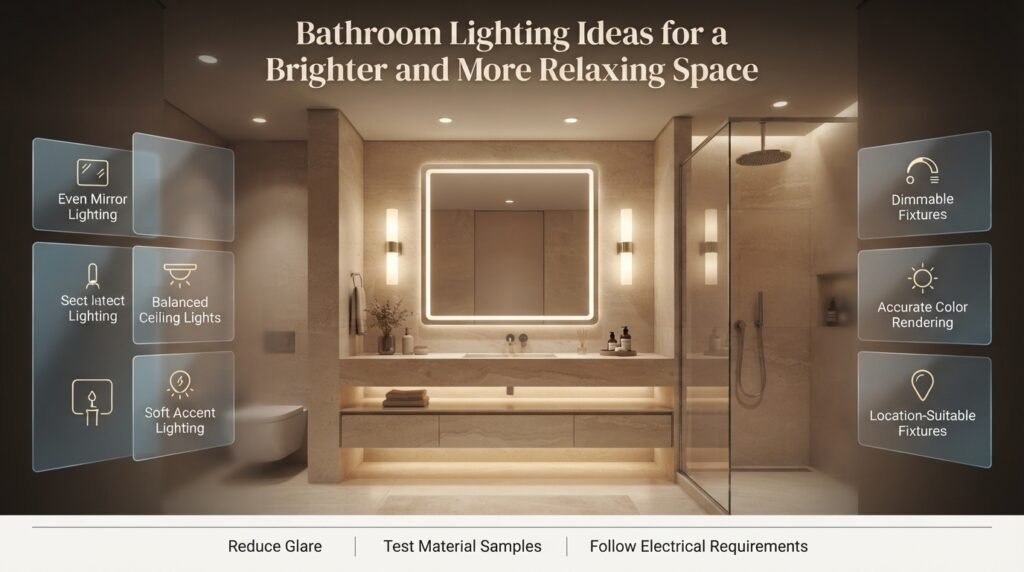
Effective bathroom lighting combines general illumination with focused light around the mirror. Optional accent lighting can add warmth, but every layer should serve a clear purpose and use fixtures suitable for its installation location.
Improve lighting around the mirror
Lighting positioned appropriately on both sides of the mirror can provide more even illumination for shaving, skincare, and makeup.
If side lights aren’t practical, consider a suitable mirror light or an appropriately designed overhead fixture. Avoid lights that create uncomfortable glare when reflected in the mirror.
Combine ceiling and accent lighting
Ceiling fixtures provide general illumination, while vanity lights help with grooming. Dimmable lighting can make the room more comfortable in the evening.
You don’t need many fixtures. A well-planned arrangement is often more effective than installing several lights without considering their purpose.
Choose suitable brightness and color rendering
Consider how accurately the lights show colors, how bright the room needs to be, and whether the color temperature suits the materials.
Neutral or warm-neutral lighting can work well in many bathrooms. The right choice depends on personal preference and the bathroom’s overall palette.
Electrical fixtures must meet the requirements for their specific bathroom locations. Wiring and other electrical work should comply with applicable local regulations and be handled by a qualified professional where required.
Common mistake: Selecting tiles and paint without checking how they appear under artificial light. Examine samples in the actual room before finalizing the design.
8. How Can You Create a Spa-Inspired Bathroom at Home?
A spa-inspired bathroom uses calm colors, comfortable lighting, natural textures, organized surfaces, and practical features that support relaxation. You can achieve this atmosphere without installing expensive equipment or undertaking a complete renovation.
Introduce warm and natural textures
Wood-look cabinetry, stone-inspired surfaces, soft towels, and woven storage baskets can make the room feel welcoming.
Choose products suitable for bathroom conditions. Materials exposed to repeated splashes or high humidity need appropriate construction and finishes.
Keep accessories simple
A coordinated soap dispenser, attractive towel set, and practical bath mat can make the room feel more polished.
Avoid filling every available surface with decorations. Leaving some counter space clear helps the room feel calm and makes cleaning easier.
Improve moisture management
Ventilation is essential to a comfortable bathroom. Persistent moisture can contribute to condensation, peeling paint, damaged cabinetry, and mold growth.
Use an appropriately sized exhaust fan or other suitable ventilation system, maintain it according to its instructions, and investigate persistent dampness rather than hiding the symptoms.
Use plants carefully
Some plants may thrive in humid bathrooms, but their needs depend on natural light, temperature, and watering conditions.
Choose plants suited to the actual environment, and consider pet or child safety where relevant. If the bathroom has little natural light, a realistic artificial plant may be more practical.
Make the shower feel comfortable
A handheld showerhead, convenient product storage, and well-positioned towel hooks can improve the bathing experience without changing the room’s structure.
Small conveniences often contribute more to daily comfort than decorative features that are rarely used.
9. What Are the Best Budget-Friendly Bathroom Ideas?
Budget-friendly bathroom improvements focus on changes that create visible benefits without unnecessary demolition. Updating hardware, refreshing suitable painted surfaces, improving lighting, organizing storage, and refinishing existing cabinetry can transform a room for less than a full renovation.
Replace outdated hardware
New cabinet handles, towel bars, and a coordinated soap dispenser can make a dated bathroom feel more intentional.
Choose finishes that complement existing fixtures where possible. Replacing every metal detail isn’t necessary if the current fixtures are in good condition.
Refresh suitable walls
A fresh coat of bathroom-appropriate paint can improve the appearance of suitable wall and ceiling surfaces.
Follow the manufacturer’s preparation and application instructions. Don’t paint over persistent dampness, damaged materials, or unresolved leaks.
Update the mirror
Replacing an outdated mirror can make the vanity area feel more contemporary. A larger mirror may also improve the impression of space when its proportions suit the room.
Check the mounting requirements and the position of existing lights before installation.
Improve storage before buying decorations
A cluttered counter can make an otherwise attractive bathroom feel untidy. Drawer dividers, baskets, and suitable wall storage may provide more noticeable benefits than additional decorative items.
Compare upgrades by their likely impact
| Upgrade | Relative cost | Main benefit |
|---|---|---|
| Towels and accessories | Low | Quick visual refresh |
| Cabinet handles | Low | Updates existing cabinetry |
| Drawer organizers | Low | Improves everyday storage |
| Mirror replacement | Low to moderate | Refreshes the vanity area |
| Lighting upgrade | Low to moderate | Improves visibility and atmosphere |
| Vanity refinishing | Low to moderate | Reuses existing furniture |
| New vanity or shower | Moderate to high | Improves function and appearance |
| Full renovation | High | Allows extensive changes |
Actual costs depend on location, labor, materials, and the condition of the existing bathroom.
Budget tip: Keep a contingency fund for unexpected repairs. Hidden leaks, damaged flooring, and failed waterproofing may need attention before decorative improvements can be completed.
10. How Should You Plan a Bathroom Renovation?
A successful bathroom renovation starts with measurements, a realistic budget, and a clear list of priorities. Confirm the layout and technical requirements before purchasing fixtures, and make sure the selected materials suit their intended locations.
Step 1: Measure the room
Record the room’s width, length, and height. Note the positions of doors, windows, drains, water supplies, electrical outlets, and ventilation equipment.
Measure existing fixtures and check how doors and drawers open. These details help identify practical layout options.
Step 2: Identify essential repairs
Separate necessary repairs from optional improvements.
Essential work may include addressing leaks, damaged surfaces, inadequate ventilation, failed waterproofing, or unsafe electrical installations.
Functional improvements might include additional storage, better lighting, and a more convenient shower.
Decorative changes could include new colors, accessories, and feature tiles.
Step 3: Finalize the layout
Keeping plumbing in its current location may reduce costs when the existing arrangement works well.
If you want to move a toilet, shower, or basin, ask a qualified professional to assess the plumbing and drainage requirements before finalizing the plan.
Step 4: Select suitable materials
Compare durability, cleaning requirements, moisture suitability, slip resistance, and installation needs.
Don’t choose a product based on appearance alone. Confirm that it is appropriate for the intended surface and the conditions in your bathroom.
Step 5: Establish the work schedule
Coordinate the installation of plumbing, electrical systems, waterproofing, wall finishes, flooring, cabinetry, and fixtures.
The exact sequence depends on the project, so your contractor should establish a plan that follows the product requirements and applicable building practices.
Step 6: Inspect the finished work
Before accepting the project, check that taps operate correctly, drains clear water, doors open freely, and ventilation works as intended.
Review visible joints and finishes, and keep the product information for future maintenance.
For wider renovation planning, the Build & Renovate Construction section provides a relevant place to explore related home improvement topics.
11. What Bathroom Design Mistakes Should You Avoid?
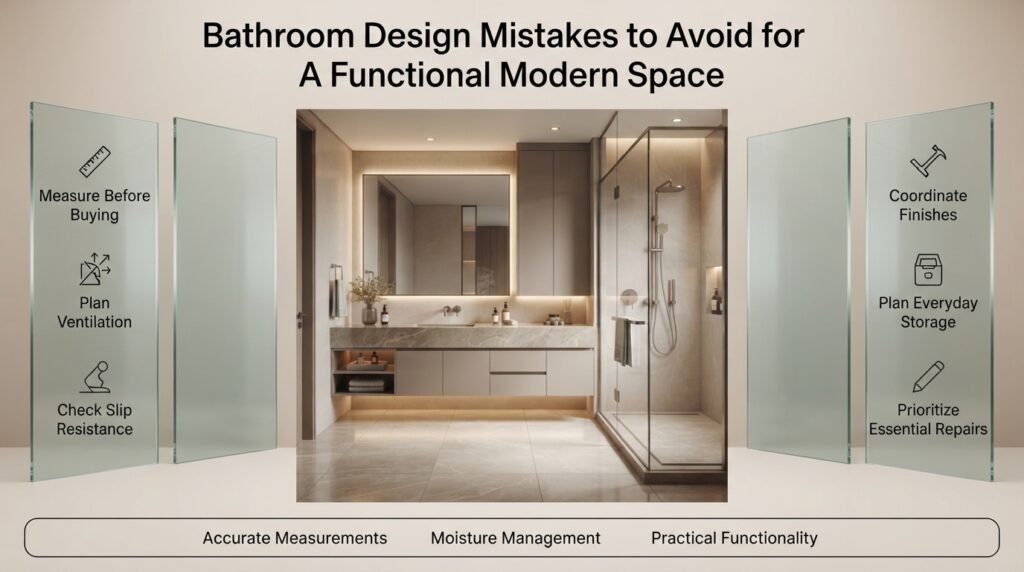
The most common bathroom design mistakes involve poor measurements, unsuitable materials, inadequate ventilation, insufficient storage, and choosing appearance over daily usability. Recognizing these problems early can prevent unnecessary spending and reduce maintenance issues.
Buying fixtures before measuring
A vanity or shower enclosure may look suitable in a showroom but interfere with doors or nearby fixtures at home.
How to avoid it: Measure the space, check product dimensions, and confirm access around the installed fixtures before ordering.
Ignoring ventilation
Moisture that remains trapped in the bathroom can damage finishes and encourage mold growth.
How to avoid it: Confirm that ventilation is adequate, maintain the fan or other system, and investigate recurring condensation.
Choosing flooring based only on appearance
A smooth tile may look attractive but may not provide suitable slip resistance when wet.
How to avoid it: Check the product’s specifications for the intended application and prioritize appropriate performance in wet areas.
Combining too many finishes
Several competing patterns, metal finishes, and cabinet colors can make a bathroom feel disorganized.
How to avoid it: Select a main material, a supporting finish, and a limited number of accents.
Forgetting everyday storage
A bathroom may look attractive when staged but become cluttered once toiletries and towels are added.
How to avoid it: Plan storage around the items your household actually uses and allow enough room for everyday products.
Spending the whole budget on decoration
Beautiful tiles won’t resolve hidden plumbing damage or poor waterproofing.
How to avoid it: Address safety, moisture management, and essential repairs before allocating money to decorative upgrades.
12. What Expert Tips Make a Bathroom Look More Expensive?
A bathroom often looks more expensive when its materials, lighting, proportions, and details feel coordinated. Professional-looking results usually come from careful planning rather than adding more luxury products.
Keep finishes consistent
Repeat complementary finishes across the faucets, shower hardware, and cabinet handles. They don’t need to match perfectly, but they should work together.
Pay attention to alignment
Thoughtful alignment between the vanity, mirror, grout lines, and other architectural features creates a more organized appearance.
Even affordable materials can look polished when they are installed carefully.
Invest in frequently used features
A comfortable faucet, smooth drawer mechanism, well-positioned mirror, and convenient towel hooks improve everyday use.
These details often provide more lasting value than decorative products that serve little practical purpose.
Maintain grout and sealant
Inspect grout and sealant around showers, baths, and sinks. Repair deterioration promptly and use cleaning products suitable for the installed materials.
Grout and sealant have different functions, and neither should be treated as a substitute for a properly installed waterproofing system.
Consider future accessibility
A bathroom should remain convenient as household needs change. Depending on the available space, consider a suitable shower entrance, appropriate floor finishes, accessible storage, and support for grab bars where needed.
Grab bars require proper structural support, so plan their placement before finishing the walls.
Coordinate the bathroom with the rest of the home
A bathroom doesn’t have to match every other room, but related colors and materials can create a more cohesive home.
For broader design inspiration, explore Home Interior Ideas and Residential Architecture Ideas. These topics can help you consider how interior finishes relate to the wider design of your property.
13. How Can You Make Bathroom Design Work With Your Whole Home?
Bathroom design is most successful when it reflects the home’s overall character without sacrificing the practical needs of the room. Consider the property’s architectural style, existing finishes, and the atmosphere you want to create.
For contemporary homes
Simple cabinetry, restrained colors, and clean lines can complement contemporary architecture. Choose materials that create contrast without introducing too many competing patterns.
For traditional homes
Classic tile patterns, framed mirrors, and carefully selected metal finishes can complement traditional interiors. Balance decorative details with modern storage and easy-to-maintain surfaces.
For nature-inspired homes
Warm neutrals, wood-look finishes, stone-inspired textures, and subtle green accents can create a connection with nature.
Use materials suited to bathroom conditions rather than assuming every natural-looking product is suitable for wet areas.
Consider the wider property
If you’re renovating an older property, consider the condition of the plumbing, the age of the existing finishes, and any restrictions affecting structural changes.
For broader planning, see Property and Real Estate Guide and What to Look for Before Choosing Your Next Property.
These subjects are especially relevant when bathroom improvements form part of a larger purchase, renovation, or property maintenance plan.
14. How Do You Maintain a Beautiful Bathroom Over Time?
A beautiful bathroom needs regular maintenance to remain clean, comfortable, and functional. Simple routines can help preserve finishes, identify developing problems, and prevent small issues from becoming expensive repairs.
Clean materials appropriately
Use cleaning products suitable for your tiles, fixtures, glass, and countertops. Some natural stones and specialty finishes can be damaged by harsh or acidic cleaners.
Follow the manufacturer’s instructions rather than assuming one cleaning product is safe for every surface.
Check for leaks
Inspect the areas around taps, toilets, shower fittings, and visible plumbing connections. Look for persistent dampness, discoloration, loose fixtures, or unusual odors.
Address suspected leaks promptly, particularly when moisture may be entering walls or flooring.
Keep ventilation working
Clean the exhaust fan as recommended and make sure the ventilation system functions properly. If condensation remains excessive, investigate whether the system is suitable for the bathroom.
Refresh deteriorating joints
Check grout and sealant periodically. Cracks, separation, or repeated moisture problems may indicate that repairs are needed.
If water damage continues despite surface repairs, have the underlying construction assessed.
Reassess storage as needs change
Bathroom products accumulate over time. Remove expired or unused items, reorganize drawers, and keep frequently used essentials accessible.
For related guidance on protecting the home over time, visit Property Care & Maintenance.
15. How Can You Make Your Bathroom Feel More Personal?
A well-designed bathroom should reflect your preferences while remaining easy to use. Personal touches can make the room feel welcoming without overwhelming the practical elements.
Choose accessories that reflect your style
If you prefer a minimalist bathroom, use a few coordinated accessories and leave most surfaces clear. If you prefer a warmer appearance, introduce natural textures, softer colors, or a small amount of decorative detail.
The key is to make each choice feel intentional.
Use textiles to introduce color
Towels and bath mats provide an easy way to introduce a new color palette without making permanent changes.
For example, a neutral bathroom can feel warmer with muted green towels or richer beige textiles. You can update these details later without replacing tiles or cabinetry.
Create a comfortable guest bathroom
A guest bathroom benefits from clear counters, accessible towels, convenient hooks, and a small amount of useful storage.
Keep essential items easy to find without filling the room with products that visitors may not need.
Let practicality guide the finishing touches
Choose a bath mat that suits the floor, accessories that can be cleaned easily, and storage that keeps products organized.
Personal style works best when it supports the room rather than making it harder to maintain.
What Are the Best Bathroom Ideas for a Modern and Stylish Home?
The best bathroom ideas for a modern home combine a practical layout, coordinated colors, attractive fixtures, effective lighting, and smart storage. A modern bathroom doesn’t need expensive materials or a complete renovation to look beautiful. The key is choosing elements that complement one another while making everyday routines more comfortable.
Start with a simple color palette, such as white and beige, soft gray and natural wood, or muted green with warm neutral finishes. Large mirrors can make the room feel brighter, while a well-designed vanity keeps toiletries organized. If you’re updating an existing bathroom, replacing outdated handles, improving lighting, and refreshing suitable surfaces can create a noticeable transformation.
Practical ideas to consider:
Choose two or three complementary colors instead of mixing too many finishes.
Install a large mirror that suits the vanity’s proportions.
Use moisture-resistant materials appropriate for the intended surface.
Keep countertops clear and store everyday essentials in drawers or cabinets.
Select fixtures that are attractive, comfortable to use, and easy to maintain.
The most successful modern bathrooms balance appearance with functionality. Before purchasing decorative items, identify the features that will improve your daily experience.
How Can I Make a Small Bathroom Look Bigger Without Renovating?
A small bathroom can feel more spacious without removing walls or changing the plumbing. The most effective improvements focus on reducing visual clutter, reflecting available light, and making better use of vertical space. Even a few carefully selected changes can improve the room’s appearance and usability.
Begin by removing unnecessary items from the countertop and organizing toiletries inside drawers, cabinets, or suitable baskets. A large mirror can reflect light and create a greater sense of depth. If your existing vanity occupies too much visual space, consider a slimmer replacement when your budget allows. Light-colored walls and coordinated finishes can also make the room feel more open.
Space-saving solutions worth trying:
Use wall-mounted shelves or a slim cabinet where clearance permits.
Choose a floating vanity if the wall can support it and the plumbing allows.
Install hooks behind the door to keep towels off limited wall space.
Use a clear shower screen when the layout and splash control requirements make it practical.
Select accessories that serve a purpose rather than filling every available surface.
Avoid buying storage units before measuring the bathroom. A cabinet that projects too far into the room can make movement uncomfortable, even when it provides additional storage.
Which Bathroom Tiles Are Best for Durability, Style, and Easy Maintenance?
The best bathroom tiles depend on where they will be installed, how frequently the bathroom is used, and how much maintenance you’re prepared to handle. Porcelain and ceramic tiles are popular choices, while mosaics and natural stone can provide distinctive design details when selected appropriately.
Porcelain is often a practical option for bathroom floors and walls because it is durable and generally requires relatively little routine maintenance. Ceramic tiles offer a wide variety of colors and patterns, but the specific product must be suitable for its intended location. Mosaics can work well on shower floors because their smaller pieces and grout joints can accommodate appropriately designed slopes.
Natural stone creates an individual, premium appearance, although some varieties need sealing and more careful cleaning. Stone-look porcelain can provide a similar visual effect with less demanding upkeep.
Before choosing bathroom tiles, consider:
Durability: Check whether the tile is suitable for the intended surface and level of use.
Slip resistance: Choose flooring appropriate for wet conditions, especially inside showers.
Maintenance: Consider grout cleaning, sealing requirements, and compatible cleaning products.
Appearance: Coordinate the tile’s color and pattern with the vanity, walls, and fixtures.
Installation: Confirm that the substrate, drainage, and waterproofing system suit the selected product.
A practical approach is to use simpler tiles across larger areas and introduce decorative patterns in a smaller section. This creates visual interest without making the bathroom feel overcrowded.
How Can I Upgrade My Bathroom on a Budget Without Compromising Quality?
You can upgrade a bathroom on a budget by focusing on improvements that make the greatest difference to its appearance and everyday use. Replacing every fixture isn’t always necessary. If the existing bathroom is structurally sound and its plumbing works correctly, refreshing selected features can deliver a more affordable transformation.
Start with the vanity area because it often attracts attention. New cabinet handles, an updated mirror, better lighting, and organized drawers can make an older bathroom feel more contemporary. Replacing worn towels, coordinating accessories, and repainting suitable surfaces with bathroom-appropriate paint can also improve the overall look.
However, cosmetic improvements should never hide leaks, damaged materials, or inadequate ventilation. Address these problems before spending money on decorative upgrades.
Budget-friendly improvements include:
Refinish a structurally sound vanity instead of replacing it.
Replace worn cabinet handles and outdated accessories.
Improve mirror lighting using suitable bathroom fixtures.
Organize toiletries with drawer dividers and practical storage.
Refresh suitable painted surfaces with compatible products.
Compare material costs and installation requirements before purchasing.
Create a budget that separates essential repairs from functional improvements and decorative changes. Keep some money available for unexpected problems, especially when removing old tiles or cabinetry.
The goal isn’t to choose the cheapest product in every category. It’s to spend carefully on features that provide lasting value, reliable performance, and a noticeable improvement in comfort.
What Should I Consider Before Planning a Bathroom Renovation?
Before planning a bathroom renovation, assess the existing layout, measure the room, identify essential repairs, and establish a realistic budget. Decisions made early can affect plumbing costs, fixture placement, storage, installation time, and the finished appearance.
Start by recording the dimensions of the room and the positions of doors, windows, water supplies, drains, and electrical fittings. Consider whether the existing layout works well or whether changing the position of the toilet, shower, or vanity is genuinely necessary. Keeping plumbing in its current location may help control costs when the arrangement is practical.
Next, choose materials according to their suitability for bathroom conditions. Flooring needs appropriate slip resistance, shower areas require correctly installed waterproofing, and ventilation must be adequate to manage moisture. Attractive finishes won’t compensate for poor construction or an inconvenient layout.
Important renovation planning steps:
Measure the room and check clearances around doors and fixtures.
Prioritize leaks, damaged surfaces, ventilation problems, and other essential repairs.
Finalize the layout before ordering the vanity, shower enclosure, or bathtub.
Compare tile, fixture, and cabinet maintenance requirements.
Confirm plumbing and electrical work with qualified professionals as appropriate.
Establish a realistic budget that includes labor and a contingency for unexpected repairs.
Inspect drainage, fixtures, visible joints, and ventilation before accepting the finished work.
A successful renovation balances the design you want with the practical needs of your household. When layout, materials, and essential systems are planned carefully, the finished bathroom is more likely to remain attractive, comfortable, and easy to maintain over time.
Conclusion
The best bathroom ideas combine style, comfort, functionality, and easy maintenance to create a space that works well for everyday life. Whether you’re updating a small bathroom, refreshing an outdated vanity, choosing modern tiles, or planning a complete renovation, thoughtful decisions can make a noticeable difference without requiring an unnecessarily large budget.
Start by understanding your bathroom’s available space, lighting, storage needs, and existing layout. Choose colors and materials that complement one another, invest in durable fixtures, and make practical storage a priority. In smaller bathrooms, mirrors, light finishes, and carefully selected fittings can create a more open feel, while appropriate ventilation and waterproofing help protect the room from moisture-related problems.
Remember that a beautiful bathroom is not defined by expensive finishes alone. Its real value comes from how comfortably it supports your daily routine, how easily it can be cleaned, and how well its features perform over time. By prioritizing essential improvements, selecting materials carefully, and balancing design with practicality, you can create a bathroom that feels welcoming, looks polished, and remains useful for years to come.
One Response