Introduction
Garden and Outdoor Living Ideas | An outdoor space can have plenty of potential and still feel uncomfortable, unfinished, or difficult to use. Perhaps your backyard has an empty patch of grass, your front entrance looks plain, or your patio receives so much direct sunlight that nobody wants to sit there during the afternoon. These problems are common, but they don’t always require expensive landscaping or a complete exterior renovation.
The right outside the home garden and outdoor living ideas can turn an ordinary outdoor area into a practical extension of your home. With thoughtful planting, comfortable seating, well-planned pathways, suitable lighting, and weather-resistant materials, you can create a space that looks attractive and supports your everyday lifestyle.
The secret is to plan around your property’s actual conditions rather than copying a garden design that looks impressive in photographs. A compact courtyard has different requirements from a large backyard, and a garden in a hot, dry climate needs different plants and materials from one in a cool, rainy region.
At Blog Home Ideas TheHomeTrotters, the goal is to make home improvement decisions easier to understand and apply. This guide focuses specifically on outdoor environments, helping you identify practical improvements that suit your space, budget, maintenance preferences, and long-term plans.
You’ll learn how to plan an outdoor layout, select plants, improve privacy, create comfortable seating areas, choose suitable materials, control costs, and maintain your garden throughout the year. You’ll also discover which common mistakes to avoid before spending money on landscaping.
1. What Are the Best Outside the Home Garden and Outdoor Living Ideas?
The best outdoor garden ideas combine visual appeal with everyday functionality. They make the outside of your home easier to enjoy, whether you need a quiet place to relax, a family-friendly garden, a comfortable dining area, or an attractive entrance.
Start with improvements that solve a real problem rather than adding features simply because they’re fashionable.
Create a garden that matches your lifestyle
Before choosing plants or buying furniture, consider how you want to use the outdoor space.
For example, a household that regularly entertains guests may benefit from a dining patio, comfortable seating, and pathway lighting. Someone who prefers quiet mornings might value a small bench surrounded by fragrant plants. A family with children may need an open play area and clear walking routes.
Popular ideas include:
- A landscaped garden with layered plants and defined borders.
- A compact patio with weather-resistant chairs and a small table.
- A vegetable garden with raised beds or containers.
- A shaded outdoor lounge beneath a pergola or umbrella.
- A welcoming entrance with planters and attractive lighting.
- A private garden corner using trellises and suitable shrubs.
- A low-maintenance landscape with hardy plants and mulch.
- A dining area connected conveniently to the kitchen.
- A vertical garden for a narrow courtyard or balcony.
- A simple pathway connecting the entrance, patio, and garden.
You don’t need to combine every idea. Select the features that will make the greatest difference to how you use the property.
Prioritize function before decoration
An outdoor area can look beautiful but become frustrating if furniture blocks the entrance, plants obstruct the windows, or rainwater collects near the house.
Think about movement, sunlight, drainage, privacy, and maintenance before adding decorative features.
Professional recommendation: Write down the three main things you want the outdoor space to accomplish. This simple exercise helps you avoid spending money on features that don’t support your priorities.
2. How Should You Plan an Outdoor Garden Before Starting?
A well-planned garden begins with understanding the site. Measure the available area, observe its environmental conditions, and identify the practical limitations that could affect your design.
Measure the space and map its existing features
Start with a basic sketch of the property. It doesn’t need to be professionally drawn, but it should show the house, doors, windows, existing trees, fences, paths, drains, and outdoor utility areas.
Measure the width and length of the main usable spaces. If you plan to add furniture, note the approximate dimensions of the items you’re considering.
Divide the garden into zones where appropriate:
| Zone | Main purpose | Planning priority |
|---|---|---|
| Entrance | Welcome visitors | Clear access and attractive planting |
| Patio | Dining or relaxation | Level flooring, seating, and shade |
| Garden beds | Flowers, shrubs, or vegetables | Soil, sunlight, and watering |
| Open lawn | Recreation or flexible use | Safe, unobstructed space |
| Service area | Storage or maintenance | Convenient access and durability |
| Private corner | Reading or quiet relaxation | Screening and comfortable seating |
Not every property needs six separate zones. In a small courtyard, a single area may serve as a sitting space and container garden.
Study sunlight throughout the day
Sunlight affects plant health, furniture comfort, and the usefulness of outdoor seating.
Observe where direct sunlight falls in the morning, at midday, and during the afternoon. Also consider seasonal changes, nearby buildings, and shade created by mature trees.
A sunny area may suit many flowering plants and vegetables, while a shaded corner may work better for suitable shade-tolerant varieties and a relaxing bench.
Remember that walls and paving can reflect heat. A seating area beside a sun-exposed wall may become considerably warmer than an open lawn.
Check drainage before installing new features
Water should drain away appropriately from the house and shouldn’t collect where it damages plants, creates slippery surfaces, or interferes with foundations.
After rainfall, inspect the garden for persistent puddles, muddy paths, and water accumulating beside exterior walls.
Correct drainage problems before installing paving, raised beds, or decorative gravel. If the site needs substantial grading, retaining walls, or a new drainage system, seek qualified advice.
Common mistake: Designing the garden entirely around its appearance. A beautiful patio won’t remain enjoyable if it becomes slippery, floods during rainfall, or blocks access to essential parts of the property.
3. How Can You Create an Attractive Garden on a Budget?
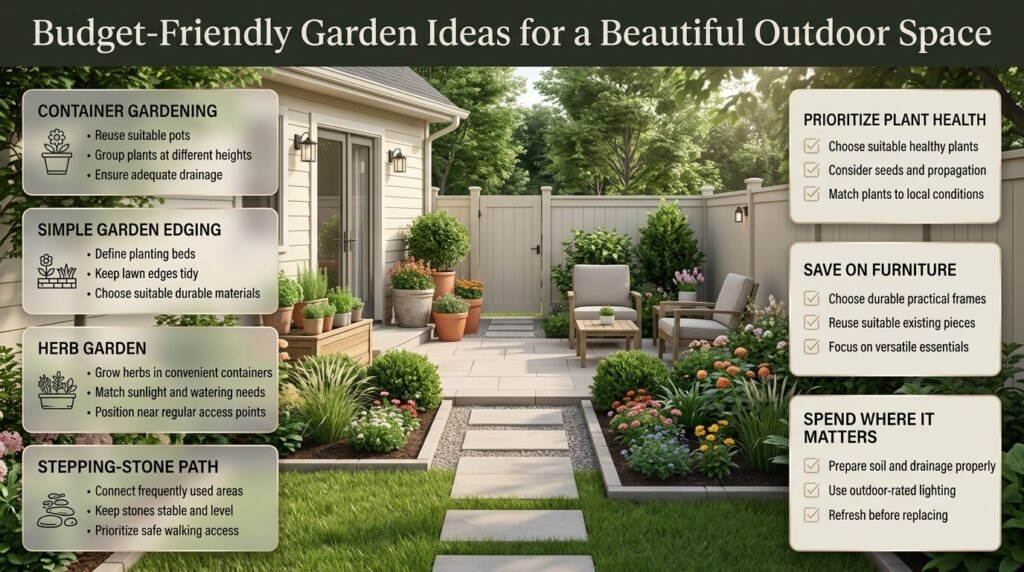
A beautiful garden doesn’t need expensive furniture, imported plants, or complicated landscaping. Good proportions, healthy vegetation, clean edges, and a consistent design can create a polished appearance with relatively modest improvements.
Refresh the features you already have
Before replacing everything, assess what can be repaired, cleaned, or reused.
Remove weeds, trim damaged growth, clean suitable outdoor furniture, and redefine the edges of planting beds. Existing pots can be grouped together, while healthy plants may be moved to more suitable locations if their roots and growing conditions allow.
If a fence is structurally sound but looks tired, cleaning or repainting it with an appropriate exterior product may improve the entire garden.
Choose improvements based on their condition rather than assuming that everything old must be replaced.
Use repetition to create a coordinated appearance
Professional-looking gardens often repeat a limited number of plant varieties, colors, and materials.
For example, a garden might combine green shrubs, ornamental grasses, natural timber, and neutral-colored paving. Repeating the same plant along a path creates continuity, while a contrasting specimen plant can become a focal point.
Avoid scattering unrelated decorations throughout the space. A smaller collection of coordinated features usually looks more intentional.
Try practical DIY garden projects
Container planting: Group pots of different heights near a doorway or seating area. Make sure each container has appropriate drainage and enough room for its plants to develop.
Simple garden edging: Define the boundary between lawn and planting beds with suitable edging materials. Secure installation makes mowing and maintenance easier.
Herb garden: Grow suitable herbs in containers near a convenient outdoor or kitchen access point. Choose varieties that share similar sunlight and watering needs.
Stepping-stone pathway: Connect frequently used areas with stable, level stepping stones. Check that the finished route is comfortable and safe to walk along.
Reused planters: Repurpose suitable containers after confirming that their materials are safe for plants and can withstand outdoor exposure.
Where should you spend your money first?
| Feature | Worth prioritizing | Where you can save |
|---|---|---|
| Plants | Healthy specimens suited to your conditions | Seeds and suitable propagated plants |
| Patio | Proper preparation and drainage | A simple layout |
| Furniture | Durable frames and practical construction | Fewer, versatile pieces |
| Lighting | Safe installation and outdoor-rated fixtures | A small number of strategically placed lights |
| Garden beds | Appropriate soil and sound edging | Reusing suitable existing materials |
| Decorations | One or two durable focal points | Reusing attractive accessories |
💡 Pro Tip: Complete one section before starting another. Finishing a small patio or entrance garden gives you a usable result and helps you understand what the remaining budget can realistically cover.
4. What Are the Best Small Garden Ideas for Limited Space?
Small gardens benefit from simple layouts, vertical planting, and furniture that serves more than one purpose. The objective isn’t to squeeze as many features as possible into a limited area. It’s to make the available space feel organized and comfortable.
Use vertical gardening to save floor space
Walls, fences, and sturdy trellises provide opportunities to grow plants without occupying the entire ground area.
Consider wall-mounted planters, tiered stands, climbing plants, or narrow containers arranged along a suitable boundary.
Vertical planting works particularly well in courtyards and compact patios, but installations must be securely attached. Wet soil and mature plants can weigh more than expected, so check the supporting structure before mounting heavy containers.
Choose plants according to the amount of sunlight, airflow, and watering access available.
Select compact and multipurpose furniture
Oversized furniture can make a small garden difficult to navigate.
Instead, consider folding chairs, a narrow bench, a compact bistro table, or a storage bench that keeps cushions and small accessories out of sight.
Before purchasing anything, mark the furniture footprint on the ground. This helps you determine whether doors can open fully and whether people can move around comfortably.
Keep the design visually simple
A restricted space often benefits from a limited palette of colors and materials.
For example, use two complementary planter colors, one main paving material, and a few plant varieties with different leaf shapes. This creates variety without visual clutter.
Keep the central area open whenever possible and concentrate planting along the edges.
Quick Tip: If a small garden feels crowded, remove one unnecessary item before purchasing something new. Opening up the layout may create more usable space than adding another decorative feature.
5. How Can You Design a Comfortable Outdoor Living Area?
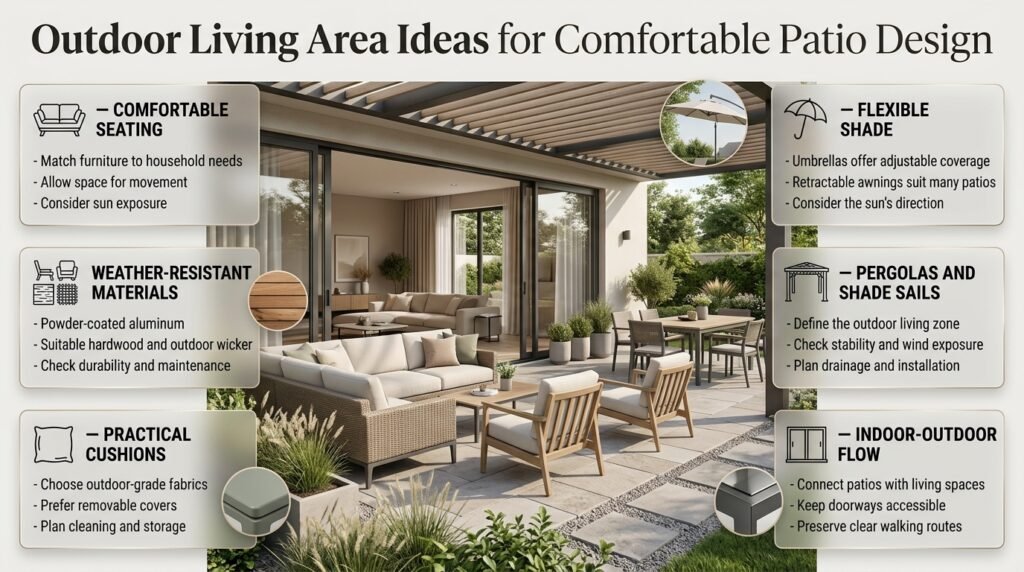
An outdoor living area should be designed around comfort, weather protection, and the activities you enjoy most.
A well-arranged patio can function as an outdoor sitting room, dining area, reading corner, or gathering place for family and friends.
Choose the right seating arrangement
Start with the number of people who regularly use the space. Two chairs and a small table may be sufficient for a quiet courtyard, while a family patio may need a larger dining table or sectional sofa.
Allow enough room to pull out chairs, walk behind seated people, and reach doors without moving furniture.
For many main outdoor walkways, approximately 75–90 cm of clear space is a useful starting point, although wider access may be necessary depending on the layout and accessibility requirements.
Consider furniture placement in relation to the sun. A seat that looks attractive at midday may be uncomfortable during the hottest part of the afternoon.
Choose weather-resistant materials
Outdoor furniture must withstand the conditions in which it will be used.
| Material | Benefits | Limitations |
|---|---|---|
| Powder-coated aluminum | Lightweight and generally corrosion-resistant when maintained | Can become hot in direct sunlight |
| Suitable hardwood | Natural appearance and potentially long service life | Requires appropriate care |
| Synthetic outdoor wicker | Comfortable and available in varied styles | Quality and UV resistance vary |
| Outdoor-grade resin | Often lightweight and easy to clean | Some products fade or become brittle |
| Protected steel | Strong and suitable for many designs | Damaged coatings can allow corrosion |
Look beyond appearance when choosing furniture. Check the construction, weight capacity, replacement cushion availability, and maintenance requirements.
Outdoor cushions should use appropriate fabrics, and removable covers make cleaning easier.
Add shade where it matters most
Shade can make the difference between a patio that gets used daily and one that remains empty during hot weather.
Possible options include umbrellas, retractable awnings, pergolas, and suitable shade sails.
An umbrella provides flexibility, while a permanent structure creates a more defined outdoor room. However, permanent installations require careful attention to structural stability, wind exposure, drainage, and local rules.
A pergola without a suitable covering may offer limited protection from direct sunlight and rain.
Connect the patio with the house
An outdoor living area is often more useful when it is conveniently located near the kitchen or main living room.
A clear route between indoor and outdoor spaces makes serving food, carrying drinks, and moving furniture easier.
For broader ideas about coordinating rooms and exterior spaces, explore home interior ideas.
6. Which Plants Are Best for an Attractive, Low-Maintenance Garden?
The best plants are those that naturally suit the garden’s sunlight, soil, moisture, and climate. Selecting appropriate species reduces the risk of repeated replacements and unnecessary maintenance.
Choose plants according to the site
Before visiting a nursery, identify the growing conditions in each planting area.
Consider:
- Hours of direct sunlight.
- Soil drainage and texture.
- Local rainfall and humidity.
- Seasonal temperature extremes.
- Mature plant height and width.
- Watering and pruning requirements.
- Potential toxicity to children or pets.
- Root growth near paths, pipes, and foundations.
A plant that thrives in a cool climate may struggle in intense heat. Similarly, a drought-tolerant plant may still require regular watering during establishment.
Native and locally adapted plants can be particularly useful because they may be better suited to regional conditions.
Create depth with different planting heights
An attractive planting scheme often combines low-growing plants, medium-height shrubs, and a few taller specimens.
Low plants can define bed edges, medium plants create fullness, and taller plants provide structure.
Use taller species where they won’t block windows, interfere with paths, or overwhelm the available space.
Repeating selected varieties across several beds creates visual consistency without requiring a large number of different plants.
Reduce watering and weeding
Group plants with similar water requirements together. This makes irrigation easier and reduces the risk of overwatering some plants while underwatering others.
Suitable mulch can reduce evaporation, suppress weeds, and help moderate soil temperature. Keep it away from tree trunks and plant stems, and follow the needs of the specific planting area.
Drip irrigation may be useful for established beds or containers, provided the system is properly designed and maintained.
Common mistake: Assuming low-maintenance plants need no care. Even hardy species require suitable planting conditions, establishment watering, occasional inspection, and pruning when appropriate.
7. How Can You Improve Garden Privacy Without Making It Feel Closed In?
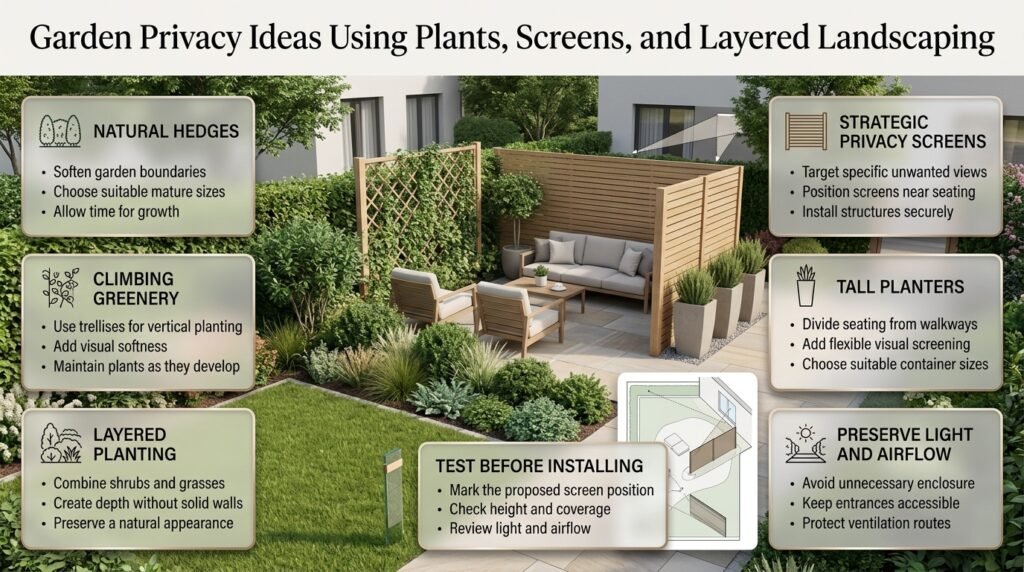
Privacy allows you to relax outdoors without feeling exposed to nearby windows, neighboring properties, or busy walkways.
The most effective solution depends on the direction of unwanted views, available space, and how much light and airflow you want to preserve.
Combine structural screens with plants
Hedges provide a natural boundary, but they take time to grow and require trimming. Timber or other suitable screens provide more immediate coverage but need secure installation.
Trellises can support climbing plants, while tall planters may help divide a seating area from a walkway.
Layered planting is another option. Combining shrubs with ornamental grasses and lower plants can soften a boundary without creating a solid wall.
Focus on the specific sightline
Walk around the garden and identify where you feel most exposed.
If neighboring windows overlook the seating area, a carefully positioned screen may be more effective than replacing the entire boundary fence.
Consider the height of nearby buildings and the mature size of any plants you intend to use.
Avoid blocking important windows, entrances, or ventilation routes.
⭐ Expert Tip: Test the proposed screen position before installing anything permanent. Temporary markers or a movable screen can help you understand whether the height and location provide the privacy you need.
8. What Outdoor Lighting Makes a Garden Safer and More Inviting?
Outdoor lighting improves visibility, highlights attractive features, and makes seating areas more comfortable after sunset.
A successful lighting plan uses different levels of illumination instead of installing bright lights everywhere.
Combine functional, accent, and ambient lighting
Functional lighting helps people navigate entrances, steps, and paths. Accent lighting highlights selected features such as a tree or textured wall. Ambient lighting creates a comfortable atmosphere around a dining table or lounge.
Use shielded fixtures where appropriate and avoid directing light into neighboring windows or unnecessarily into the night sky.
Motion-activated lighting can be useful near side entrances, while low-level path lights can help identify walking routes.
Solar fixtures may be convenient where wiring is difficult, although performance depends on sunlight exposure, battery quality, and maintenance.
Consider electrical safety
Outdoor electrical fixtures must be rated for their intended environment and installed according to applicable requirements.
For permanent wiring, outdoor outlets, or complex lighting systems, use a qualified electrician where required.
Keep cables away from walking routes, standing water, and areas where gardening tools may damage them.
Professional recommendation: Light the areas where people need to see first. Add decorative illumination only after entrances, steps, and main pathways have been addressed.
9. How Can You Make a Front Yard More Welcoming?
The front yard creates the first impression of your property. A clear pathway, healthy planting, tidy boundaries, and an attractive entrance can make the entire home feel more inviting.
Refresh the entrance
Begin by removing clutter and checking the condition of the walkway.
Trim plants that obstruct movement, clean suitable exterior surfaces, and replace damaged planters or broken edging.
Add one or two coordinated containers near the entrance if space allows. Avoid blocking doors, ramps, or accessible routes.
Suitable exterior lighting can highlight the entrance and improve visibility after dark.
Choose planting that complements the architecture
A modern property may suit simple planting groups and restrained colors, while a traditional home may look better with softer borders and a wider variety of flowering plants.
The garden doesn’t need to follow a strict design style. It simply needs to complement the house rather than compete with it.
For ideas that connect exterior appearance with the building’s structure, visit residential architecture ideas.
Keep the approach easy to maintain
Choose plants that won’t quickly cover windows, spill across pathways, or require constant pruning.
Keep sightlines clear near vehicle entrances and corners where people walk.
A simple entrance garden with healthy plants and well-maintained surfaces often creates a stronger impression than a crowded display of decorative objects.
10. What Are the Best Outdoor Garden Ideas for Families?
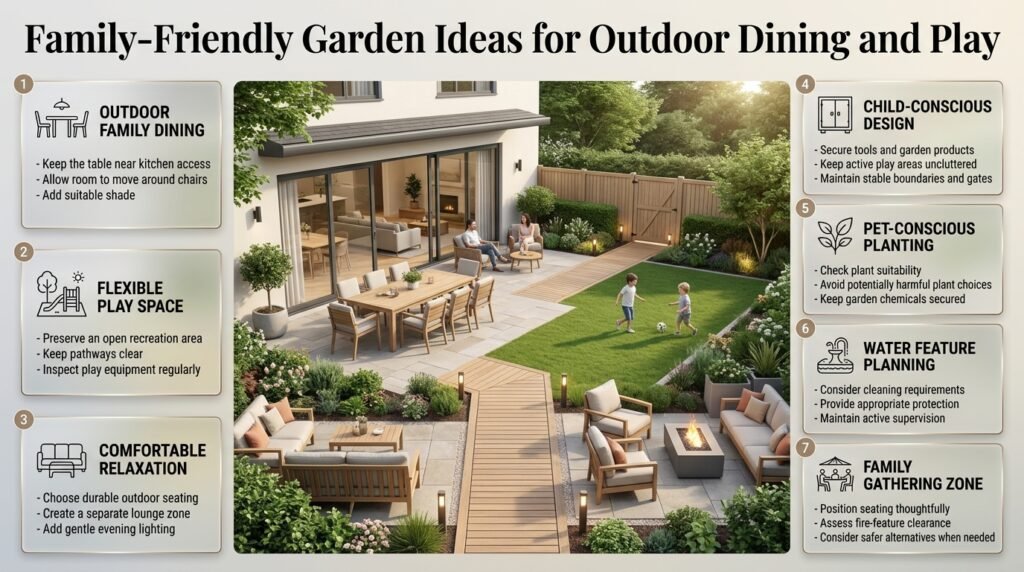
Family gardens should provide space for different activities while remaining easy to supervise and maintain.
Rather than filling the entire garden with furniture or play equipment, establish flexible areas for dining, relaxation, gardening, and recreation.
Create a useful dining space
Place an outdoor dining table near convenient kitchen access. A level surface helps keep chairs stable, while adequate shade makes meals more comfortable during warm weather.
Allow room for people to move around the table without bumping into planters or garden furniture.
If the space is small, a folding table or extendable dining set may offer more flexibility than a permanent oversized arrangement.
Make room for children and pets
An open area can support outdoor games, while a separate seating zone gives adults somewhere to relax.
Secure tools, fertilizers, and other potentially harmful products. Choose suitable plants and check whether they may be toxic to household pets.
Inspect play equipment regularly and make sure structures, gates, and boundaries are stable.
Avoid placing hard-edged ornaments or unstable pots beside play areas.
Add a gathering feature carefully
A water feature, outdoor dining table, or fire pit can become a focal point for family gatherings.
However, consider safety, maintenance, and supervision before installing one. Water features require cleaning and appropriate protection, while open flames require adequate clearance and compliance with local fire requirements.
If a fire feature isn’t suitable, comfortable seating and layered lighting can create an inviting gathering place without the additional hazards.
11. How Do You Choose the Right Outdoor Flooring and Pathways?
Outdoor flooring affects appearance, comfort, drainage, and safety. The best material depends on the area, expected foot traffic, local weather, budget, and maintenance requirements.
Compare common outdoor surfaces
| Surface | Best suited to | Important considerations |
|---|---|---|
| Concrete paving | Patios and main walking areas | Proper base preparation, drainage, and surface finish |
| Natural stone | Selected patios and garden paths | Cost, installation, slip resistance, and maintenance |
| Outdoor porcelain paving | Suitable patios and terraces | Correct outdoor rating and professional installation where needed |
| Decking | Seating areas and raised outdoor spaces | Structural support, drainage, and ongoing care |
| Gravel | Some informal paths and garden areas | Stability, accessibility, edging, and drainage |
| Stepping stones | Informal connections between garden areas | Secure placement and comfortable spacing |
Plan the route before choosing the material
Identify the paths people use most often. These may connect the front entrance with the driveway, the patio with the garden, or the house with an outdoor service area.
Main routes should be stable and easy to navigate. Avoid placing loose gravel where it makes movement difficult or creates a problem for wheeled equipment.
Check that surfaces don’t create abrupt height changes or collect water.
Think about maintenance over time
Different materials require different levels of cleaning, sealing, repair, and replacement.
A lower initial purchase price doesn’t necessarily mean lower long-term costs. Consider the expected service life, local weather exposure, installation requirements, and ease of repair.
For larger paving or decking projects, include preparation and drainage in the budget rather than focusing only on the visible surface.
12. What Are the Most Common Outdoor Garden Design Mistakes?
Many outdoor projects become unnecessarily expensive because decisions are made in the wrong order.
Understanding common mistakes before work begins can protect your budget and prevent a garden from becoming difficult to use.
Mistake 1: Buying plants before studying the conditions
Plants selected only for their appearance may struggle in the available sunlight or soil.
How to avoid it: Observe the garden at different times of day, inspect drainage, and check mature plant dimensions before purchasing.
Mistake 2: Ignoring drainage and ground preparation
Poorly prepared surfaces can settle, collect water, or become uneven.
How to avoid it: Address drainage, grading, and base preparation before installing patios, pathways, or permanent garden structures.
Mistake 3: Choosing oversized furniture
Large furniture can overwhelm a small patio and block essential routes.
How to avoid it: Measure the area and mark the intended furniture footprint before buying.
Mistake 4: Planting too closely
Young plants may look small in their containers, but their mature size can create overcrowding.
How to avoid it: Follow appropriate spacing recommendations and consider future growth rather than the initial appearance.
Mistake 5: Using indoor products outdoors
Indoor cushions, untreated timber, and unsuitable electrical fixtures may deteriorate quickly when exposed to weather.
How to avoid it: Choose products designed for the intended outdoor conditions.
Mistake 6: Adding too many decorative features
Numerous ornaments, unrelated pot styles, and competing colors can make a garden feel disorganized.
How to avoid it: Select a consistent palette and use a few meaningful focal points.
Mistake 7: Underestimating maintenance
A complex garden may require more watering, pruning, cleaning, and replacement than expected.
How to avoid it: Match the design to the time and resources you can realistically provide.
Mistake 8: Starting several projects at once
Beginning the patio, garden beds, fencing, and lighting simultaneously can create unnecessary disruption.
How to avoid it: Establish priorities, complete essential work first, and move to decorative improvements in stages.
For projects involving construction, drainage, or structural alterations, consult the build and renovate construction guide to explore the broader planning considerations.
13. What Do Professionals Recommend for Long-Lasting Outdoor Spaces?
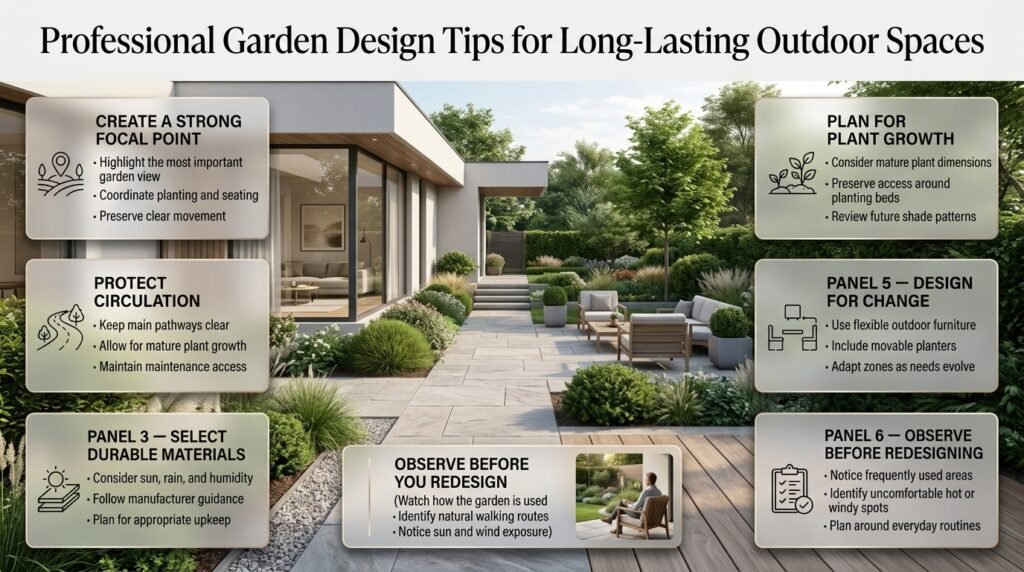
Professional planning focuses on durability, usability, and the relationship between different parts of the property.
The goal isn’t to create the most complicated garden. It’s to create a space that continues to work as plants grow and household needs change.
Design around the most important view
Identify the view you see most often from indoors or when entering the property.
This might be a planting bed outside a living-room window, a patio visible from the kitchen, or the main approach to the front door.
Place the strongest visual feature where it can be appreciated without obstructing movement or requiring excessive maintenance.
Protect circulation routes
Make sure the main routes between the house, garden, seating areas, and service spaces remain clear.
Allow for mature plant growth, furniture movement, gate openings, and routine maintenance access.
Avoid placing decorative objects where they create trip hazards.
Choose materials for the local environment
Strong sunlight, heavy rainfall, humidity, frost, and wind can affect outdoor materials differently.
Select finishes and furniture according to the conditions they will experience. Check manufacturer guidance for cleaning, installation, and maintenance.
Where permanent structures are involved, confirm that the proposed materials and installation methods are appropriate for the site.
Plan for future changes
Consider how the garden might need to adapt over the next several years.
Children may need more play space, a growing family may benefit from a larger dining area, or mature trees may eventually change the amount of sunlight available.
Flexible furniture, movable planters, and modular outdoor features can make future adjustments easier.
Expert Tip: Before committing to a large redesign, spend several days observing how the existing garden is used. Notice where people naturally sit, which paths they follow, and where heat or wind makes an area uncomfortable. These observations help turn a decorative plan into a genuinely useful space.
14. How Can You Maintain Your Garden Throughout the Year?
A garden stays attractive when routine care is manageable and consistent.
The exact maintenance schedule depends on your climate, plant species, irrigation system, and the materials used throughout the outdoor area.
Follow a practical maintenance checklist
Weekly or as needed
- Check soil moisture and water plants according to their requirements.
- Remove weeds before they spread.
- Clear leaves and debris from main pathways.
- Collect fallen fruit and remove damaged plant material.
- Inspect frequently used seating areas for visible problems.
Monthly
- Check irrigation lines for leaks or blockages.
- Clean suitable outdoor furniture and light fixtures.
- Inspect plants for pests and disease.
- Look for damage to paving, steps, and decking.
- Check whether branches or shrubs are obstructing access.
Seasonally
- Prune plants according to their species and growth cycle.
- Inspect fences, pergolas, and other outdoor structures.
- Refresh mulch where necessary.
- Check drainage before periods of heavy rainfall.
- Protect or store items that aren’t designed for prolonged seasonal exposure.
Reduce the amount of work required
Choose suitable plants, group them according to watering needs, and avoid features that require more attention than you’re willing to provide.
Use practical storage for tools and cushions so they can be put away easily.
Inspect problems early rather than waiting until a small issue becomes an expensive repair.
Homeowners who want a broader maintenance plan can also explore property care and maintenance for related property upkeep considerations.
15. How Much Should You Budget for an Outdoor Garden Project?
Outdoor project costs depend on the property’s size, local labor rates, material choices, soil conditions, drainage, and the complexity of the proposed work.
A small container garden may require relatively little investment, while a new patio, retaining wall, pergola, or outdoor kitchen can involve substantial expenses.
Divide the project into budget levels
| Budget level | Possible improvements | Main planning consideration |
|---|---|---|
| Basic | Cleaning, existing furniture rearrangement, simple planting, refreshing suitable pots | Time, plant selection, and soil |
| Moderate | New seating, defined garden beds, basic pathway improvements, selected lighting | Material quality and installation |
| Extensive | Major landscaping, new patio, pergola, irrigation, structural improvements | Design, professional labor, drainage, and applicable permissions |
These are general planning categories rather than fixed prices. Actual costs vary considerably by location and specification.
Separate essential work from optional upgrades
Essential work may include correcting drainage, repairing dangerous steps, addressing damaged structures, and making access routes safe.
Optional improvements might include premium furniture, elaborate decorative features, or a large collection of new planters.
Complete the essential work first so that your decorative investment isn’t damaged by later construction.
Allow for unexpected expenses
Older properties may reveal hidden drainage issues, deteriorated paving bases, damaged fencing, or other problems during the work.
Include a reasonable contingency in the budget and obtain clear estimates for major installations.
If your plans involve broader property improvements, the property and real estate guide can help you consider outdoor projects in the context of long-term property planning.
16. What Outdoor Garden Improvements Should You Make First?
When several improvements are needed, prioritize them according to safety, usefulness, and cost rather than visual appeal alone.
Step 1: Resolve safety and drainage problems
Inspect uneven paths, unstable steps, damaged structures, and places where water accumulates.
Address these issues before purchasing decorative materials or installing furniture.
Step 2: Improve the main usable area
Choose the space that will make the greatest difference to daily life. This could be the front entrance, a shaded patio, or a neglected section of the backyard.
Clean the area, remove unnecessary items, and determine what it needs to function properly.
Step 3: Add suitable plants
Choose plants based on sunlight, soil, water requirements, and mature dimensions.
Start with a manageable number of varieties rather than purchasing a large collection before understanding their maintenance needs.
Step 4: Improve comfort and privacy
Add suitable seating, shade, and screening where they solve a real problem.
Keep pathways clear and choose furniture that fits the space.
Step 5: Finish with lighting and decoration
Once the layout works, add appropriate lighting, planters, cushions, and other decorative details.
This sequence reduces the risk of purchasing items that later need to be moved or replaced.
How Can I Make the Outside of My Home Look Beautiful on a Budget?
Making the outside of your home look beautiful doesn’t require expensive landscaping or a complete garden makeover. The best approach is to improve the features that have the greatest visual impact, such as the entrance, garden borders, pathways, plants, and outdoor seating. Start by cleaning existing surfaces, removing weeds, trimming overgrown plants, and arranging your garden accessories more thoughtfully. You can then introduce a few healthy plants, coordinated planters, and suitable outdoor lighting to make the space feel more welcoming. By working on one area at a time, you can control costs while gradually creating an attractive outdoor environment.
Practical ways to improve your garden affordably:
Refresh existing planters instead of replacing every container.
Choose locally suitable plants that are easier to maintain.
Use mulch to improve the appearance of planting beds and help retain soil moisture.
Rearrange existing outdoor furniture before purchasing new pieces.
Add a few coordinated lights to highlight the entrance or main pathway.
Prioritize drainage, safety, and damaged surfaces before decorative upgrades.
What Are the Best Outdoor Living Ideas for a Small Backyard?
A small backyard can become a comfortable outdoor retreat when its layout is carefully planned. Instead of filling the space with too many plants and furniture pieces, focus on a few features that serve clear purposes. A compact seating area, vertical garden, narrow planting bed, and folding table can provide comfort without making the garden feel crowded. Using similar colors and repeating a small selection of plants also creates a more organized appearance. The most important consideration is keeping the main walking routes clear while making the available space useful for relaxing, dining, or spending time with family.
Ideas that work particularly well in small outdoor spaces:
Install vertical planters or a supported trellis to use wall space.
Choose folding chairs, compact tables, or benches with storage.
Place plants around the perimeter instead of spreading them across the entire area.
Use light, coordinated colors to create a calm and connected appearance.
Add a suitable umbrella or shade sail if direct sunlight makes the space uncomfortable.
Measure furniture before buying it to ensure doors and pathways remain accessible.
Which Plants Are Best for a Low-Maintenance Outdoor Garden?
The best plants for a low-maintenance garden are those that naturally suit your local climate, soil conditions, sunlight, and available water. Choosing plants based only on their appearance can lead to frequent watering, excessive pruning, or repeated replacements when they struggle to grow. Before visiting a nursery, observe how much sunlight your garden receives and check whether the soil drains properly. Locally adapted plants and suitable drought-tolerant varieties can be helpful in the right conditions. However, even hardy plants need appropriate care during establishment, so consider their watering requirements and mature size before planting them.
How to choose plants that require less maintenance:
Select plants according to the sunlight available in each part of the garden.
Group plants with similar watering needs to simplify irrigation.
Use suitable mulch to help reduce moisture loss and weed growth.
Check mature plant sizes to avoid overcrowding and constant pruning.
Consider locally adapted or native species where appropriate.
Choose plants that are suitable for children and pets if they use the garden.
How Can I Make My Outdoor Living Area More Comfortable Throughout the Year?
A comfortable outdoor living area needs more than attractive furniture. It should provide suitable shade, practical seating, safe pathways, and protection from the weather conditions common in your region. In hot climates, shade and airflow are especially important, while colder or wetter environments may require weather-resistant furniture and better protection for cushions and accessories. Start by positioning the seating where it is comfortable at the times you use it most. Then consider adding an umbrella, pergola, outdoor lighting, and durable flooring. These improvements can make the area more useful without requiring a complete redesign.
Features that improve outdoor comfort:
Use an umbrella, awning, or suitable pergola to reduce direct sunlight.
Choose furniture designed for outdoor exposure.
Add removable cushions made from appropriate outdoor fabrics.
Keep enough space between furniture for comfortable movement.
Install suitable lighting near steps, entrances, and seating areas.
Store cushions and other vulnerable accessories when they’re not in use.
How Can I Maintain My Outdoor Garden and Keep It Looking Good All Year?
Maintaining an attractive outdoor garden becomes easier when care is divided into manageable tasks rather than left until problems become noticeable. Regularly checking plants, removing weeds, cleaning pathways, and inspecting outdoor furniture helps prevent small issues from developing into expensive repairs. The exact maintenance schedule depends on the local climate, plant varieties, rainfall, and materials used in the garden. For example, plants in hot weather may need more frequent moisture checks, while gardens in rainy regions may require closer attention to drainage. A practical maintenance routine should focus on the actual needs of your property instead of following the same schedule throughout the year.
A simple garden maintenance routine:
Weekly or as needed: Check soil moisture, remove weeds, and clear debris from pathways.
Monthly: Inspect irrigation systems, clean outdoor furniture, and look for plant damage.
Seasonally: Prune plants according to their growth cycles and inspect fences, decking, and pergolas.
After heavy rainfall: Check for standing water, erosion, and slippery surfaces.
During hot weather: Monitor newly planted vegetation and water according to plant requirements.
Throughout the year: Remove damaged growth and address minor repairs before they become larger problems.
A well-maintained garden doesn’t have to be complicated. Choosing appropriate plants, using durable materials, and following a consistent routine will help your outdoor space remain attractive, practical, and enjoyable.
Conclusion
Creating a beautiful outdoor space is not just about planting flowers or adding attractive furniture. The best outside the home garden and outdoor living ideas combine thoughtful planning, practical design, comfortable seating, suitable plants, and easy maintenance to make your home’s exterior more inviting and useful. Whether you have a spacious garden, a small backyard, a front porch, or a narrow outdoor area, even a few well-planned improvements can make a noticeable difference.
Start by identifying how you want to use your outdoor space. You might prefer a peaceful garden for relaxing, a family-friendly backyard, an outdoor dining area, or a welcoming entrance that improves your home’s curb appeal. Choose durable materials, plants suited to your local climate, and lighting that supports both safety and atmosphere. Instead of trying to complete every improvement at once, prioritize the changes that offer the greatest practical value within your budget.
Remember that a successful outdoor design should look attractive while remaining comfortable and manageable over time. Regular cleaning, seasonal pruning, proper drainage, and timely repairs help protect your investment and keep the space looking its best. For more inspiration on creating a comfortable and well-planned home, explore Blog Home Ideas TheHomeTrotters.
Ultimately, you do not need a large garden or an unlimited budget to create an outdoor area you enjoy. With the right combination of greenery, functional layouts, comfortable features, and consistent care, you can transform the space outside your home into a welcoming extension of your everyday living environment.
3 Responses