Introduction
Create a Home That Feels Beautiful | A home can look beautiful and still feel uncomfortable to live in. The living room may have stylish furniture, the kitchen may feature attractive finishes, and the bedrooms may follow the latest design trends, yet everyday life can still feel stressful when belongings have no proper place, lighting feels harsh, or furniture makes movement difficult. These problems often have less to do with the size of a home and more to do with how its spaces are planned.
Learning how to create a home that feels beautiful, calm and easy to live in means looking beyond decoration. It involves understanding your routines, choosing practical materials, creating a comfortable atmosphere, and making thoughtful decisions about how each room should function. The most successful homes combine visual appeal with everyday convenience.
You don’t need an expensive renovation to achieve this balance. Sometimes, moving a sofa, improving the lighting, simplifying a color scheme, or reorganizing an entryway can make a noticeable difference. Other improvements, such as replacing unsuitable flooring or changing a poorly planned layout, may require more careful budgeting and professional guidance.
The goal is to create a home that reflects your personality while making ordinary activities easier. Whether you live in a small apartment, a family house, or a newly purchased property, this guide explains how to improve comfort, organization, lighting, furniture placement, and long-term practicality without creating unnecessary work or expense.
For broader inspiration and practical guidance, explore Blog Home Ideas TheHomeTrotters, where home design, renovation, property care, and everyday living come together.
1. Understand What Your Home Needs Before Changing Anything
A successful home improvement project begins with observation rather than shopping. Before choosing new furniture, changing paint colors, or purchasing decorative accessories, identify what makes your existing space uncomfortable or difficult to maintain.
Every household has different priorities. A family with young children may need durable surfaces and accessible storage. Someone working from home may require better task lighting and a quiet workspace. A person living in a compact apartment may need flexible furniture that supports several activities without overcrowding the room.
Identify the problems you experience every day
Walk through your home and pay attention to the areas where frustration occurs repeatedly.
Ask yourself:
- Where do belongings accumulate because they lack a proper storage place?
- Which rooms feel uncomfortable during the morning or evening?
- Are any furniture pieces too large for their surroundings?
- Does natural light reach the areas where you spend the most time?
- Are cleaning and maintenance more difficult than necessary?
- Do you have enough privacy, seating, and usable surface space?
- Which areas fail to support your everyday routines?
Write down your three most important problems. Prioritize the issues that affect comfort, safety, or daily convenience rather than those that simply look imperfect.
For example, a crowded hallway may be a greater priority than outdated decorative cushions because the hallway affects movement every time someone enters or leaves the house.
Establish a realistic design direction
Choose three words that describe how you want your home to feel. These might be warm, organized, and natural, or bright, relaxed, and timeless.
Use these words to evaluate future decisions. If your goal is a peaceful environment, buying numerous unrelated decorative objects may work against it. If you prefer a lively, expressive interior, removing every colorful object may make the home feel less personal.
The purpose is not to follow a rigid decorating formula. It is to create a consistent direction that helps you make better choices.
Expert tip: Photograph each room before making changes. Looking at a photograph can reveal overcrowded corners, competing colors, and awkward furniture arrangements that are difficult to recognize while moving around the space.
2. Create Visual Calm Without Removing Your Personality
A calm home does not have to be empty, completely neutral, or decorated in a minimalist style. Books, photographs, artwork, collections, and sentimental belongings can make an interior feel welcoming.
The important distinction is between objects that contribute to your enjoyment and belongings that create unnecessary visual or physical congestion.
Reduce clutter in manageable stages
Begin with the surfaces that attract the most everyday mess, such as the kitchen counter, coffee table, bedside table, or entrance console.
Remove the objects temporarily and return only what you genuinely use or want to display. Place the remaining belongings into categories: keep nearby, store elsewhere, donate, recycle, or discard.
Avoid emptying every cupboard at once. Completing one small area creates a visible improvement and prevents the home from becoming more disorganized during the process.
Once a surface is clear, decide how it will function. A dining table should remain available for meals, while a bedside table might hold a lamp, a book, and a small container for personal essentials.
Use repetition to create visual order
Repeated colors, materials, and shapes help a room feel coordinated. A living room might combine warm wood, cream upholstery, and muted green accents, while a bedroom uses the same wood tone with softer textiles.
This connection makes the home feel considered without requiring identical furniture in every room.
You can also group similar objects together. Three coordinated ceramic pieces on a shelf may appear more intentional than the same objects scattered across several surfaces.
Leave room for everyday life
Do not design every surface as a permanent display. Homes need space for shopping bags, mail, charging devices, meals, hobbies, and other ordinary activities.
A practical interior allows these activities to happen without requiring residents to move multiple decorative objects before using a table or counter.
The aim is to create enough order to make daily life easier while allowing the home to feel lived in.
3. Choose Colors That Support Comfort and Consistency

Color influences the atmosphere of a room, but the best palette depends on natural light, room proportions, existing finishes, and personal preferences. There is no single color combination that makes every home feel calm.
A thoughtful palette provides visual continuity and helps furniture, walls, textiles, and accessories work together.
Build a flexible color scheme
Start with a dominant color, a supporting color, and one or two accent colors.
| Color role | Suitable applications | Purpose |
|---|---|---|
| Dominant | Walls, large surfaces, major furnishings | Establishes the overall atmosphere |
| Supporting | Curtains, rugs, upholstery, secondary furniture | Adds depth and connection |
| Accent | Artwork, cushions, lampshades, small accessories | Introduces personality |
The familiar 60–30–10 color guideline can be a useful starting point, but it is not a requirement. A room with colorful artwork or dark walls may need a different balance.
Warm whites, beige, soft gray, muted greens, and natural wood tones can create a relaxed appearance. Stronger colors can also work beautifully when used intentionally rather than competing for attention.
Consider natural light before selecting paint
A paint color can look different under daylight, evening lighting, and nearby artificial light. Surrounding buildings, window direction, curtains, and the amount of glazing also affect the result.
Before painting an entire room, test samples on the wall. Observe them at different times of day and compare them with the flooring, furniture, and fabrics already in place.
This step is especially important when working with off-whites, grays, and subtle neutral colors, which may reveal unexpected undertones.
Connect adjoining rooms without making them identical
Open-plan spaces and connected hallways often benefit from a consistent palette. Repeating a wall color, wood finish, or accent tone can help different areas feel related.
However, each room can still have its own character. A bedroom may use softer shades, while a kitchen can incorporate more contrast around cabinetry or work surfaces.
For additional inspiration, explore Home Interior Ideas to consider different approaches to color, texture, and practical interior styling.
4. Make Lighting Work With Your Daily Routine
Lighting affects how comfortably you read, cook, work, relax, and move through your home. A room with beautiful furnishings can still feel unpleasant when it relies on a single harsh ceiling fixture or has insufficient illumination in important areas.
The solution is to match lighting to the activities performed in each space.
Combine different lighting layers
Ambient lighting provides general illumination. Ceiling fixtures and appropriately positioned recessed lights commonly perform this role.
Task lighting supports specific activities, such as reading, preparing food, grooming, or working at a desk. Accent lighting draws attention to artwork, architectural details, or selected decorative objects.
Using more than one layer allows the room to adapt throughout the day.
For example, a living room can use ceiling lighting for cleaning, a floor lamp for reading, and softer side lighting during the evening.
Use natural light strategically
Natural daylight can make interiors feel more open and pleasant. Keep important windows reasonably unobstructed, select window treatments that suit your privacy needs, and avoid placing tall furniture where it unnecessarily blocks useful light.
Mirrors can reflect daylight and increase the impression of brightness when positioned carefully. However, their effectiveness depends on what they reflect and where the light enters the room.
Choose comfortable light quality
Warm-white lighting around 2700–3000 K is often suitable for relaxed living areas and bedrooms. Kitchens, workspaces, and bathrooms may benefit from different settings according to the activities performed there.
Brightness matters too. A light that is comfortable for relaxing may be inadequate for detailed tasks, while excessive brightness can cause glare.
Common mistake: Installing identical high-intensity lighting throughout the house. Different rooms require different levels of illumination, so consider separate switches, suitable lamps, and dimmable fixtures where practical.
5. Arrange Furniture Around Movement and Comfort
Furniture arrangement should support the way people use a room rather than simply fill available floor space. Poor placement can make a spacious room feel cramped, while a thoughtful layout can help a modest room feel more functional.
Measure the room before purchasing furniture
Record the dimensions of the room, doorways, windows, and fixed features. Measure major furniture pieces and check whether they can pass through the entrance and fit into their intended positions.
Pay particular attention to circulation routes. People should be able to move between doors, seating areas, and frequently used furniture without repeatedly turning sideways or moving objects.
Useful starting measurements include:
- Approximately 14–18 inches between a sofa and a coffee table.
- Around 30–36 inches for a comfortable main passage where space allows.
- Additional clearance behind dining chairs so people can sit down and stand up.
- Sufficient space beside beds for access, cleaning, and everyday use.
These are practical guidelines rather than universal rules. Accessibility requirements, furniture dimensions, and household needs may call for different clearances.
Create purposeful seating arrangements
In a living room, arrange seating so people can communicate comfortably. A sofa and two chairs may form a more inviting conversation area than several seats placed far apart.
In open-plan interiors, furniture can define separate functions without building walls. A rug and sofa may identify the living area, while a dining table and pendant light establish the dining zone.
Avoid automatically pushing every piece against a wall. Sometimes a slightly different position creates a better relationship between furniture and improves circulation.
Evaluate the layout from different viewpoints
Stand at the entrance and look toward the main seating area. Then consider the view from the sofa, dining table, and other frequently used positions.
Notice whether furniture blocks natural light, interrupts important pathways, or creates uncomfortable visual congestion.
A layout should work from the perspectives of the people using the room, not just from one attractive photograph.
6. Select Furniture That Suits Your Lifestyle

The most suitable furniture is not necessarily the most expensive or fashionable. It is the furniture that fits the room, supports everyday activities, and remains comfortable over time.
Before making a purchase, consider dimensions, comfort, durability, maintenance, and flexibility.
Prioritize everyday comfort
A sofa should provide suitable seat depth and back support for the people who use it. A dining chair should allow comfortable sitting during meals. A desk chair should support the demands of regular work.
Whenever possible, test furniture before buying it. Product photographs may not communicate seat firmness, actual scale, or how a piece feels during prolonged use.
Consider maintenance before appearance alone
Different materials have different care requirements. Some fabrics tolerate regular cleaning, while others may require specialist treatment. Polished surfaces can show fingerprints, and certain natural materials need protection from moisture or direct sunlight.
Choose according to your household’s habits.
For example, a family with young children might prefer removable upholstery covers or a durable rug that can be cleaned easily. A household that entertains regularly may prioritize a sturdy dining table and flexible seating.
Mix furniture thoughtfully
Matching furniture sets are not essential for a coordinated interior. Different pieces can work together when they share complementary colors, proportions, materials, or shapes.
A wooden dining table, upholstered chairs, and a simple pendant light can create a cohesive arrangement without looking overly coordinated.
Avoid purchasing furniture solely because it is discounted or currently fashionable. An unsuitable piece can cost more in the long run if it needs replacing.
7. Design Storage Around the Way You Live
Storage is most effective when it makes everyday tasks easier. A cupboard that is difficult to reach or a container that requires several steps to open may be technically useful but inconvenient in practice.
The best storage systems reflect where belongings are used and how often they are needed.
Place belongings near their point of use
Keep cooking utensils near preparation areas, frequently used toiletries near the bathroom sink, and everyday clothing within easy reach.
In the entryway, hooks and shoe storage can prevent bags, coats, and footwear from spreading into adjoining rooms.
If several household members share the same space, create a system that everyone can understand and maintain.
Use vertical space without overcrowding it
Wall shelves, tall cabinets, and hooks can increase storage while preserving floor space. However, filling every shelf can make a room feel visually heavy.
Leave some empty space around displayed objects, keep heavy items at safe heights, and store frequently used belongings where they can be reached comfortably.
Match storage furniture to actual needs
Before purchasing a cabinet or shelving unit, identify what it needs to hold. Check shelf depth, drawer height, hanging space, and access requirements.
Closed cabinets are useful for belongings that would otherwise create visual clutter. Open shelves are suitable for frequently used objects and selected displays but generally require more regular dusting and editing.
Practical example: If the dining table becomes a permanent storage area for paperwork, create a designated document tray or cabinet nearby. The problem may not be a lack of discipline; it may be the absence of a convenient storage destination.
8. Introduce Natural Materials and a Sense of Warmth
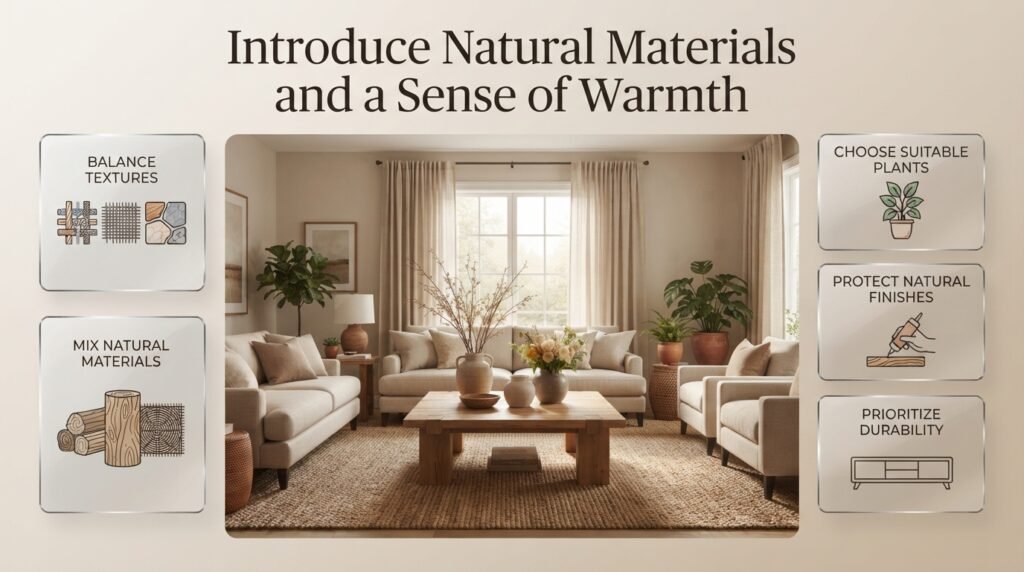
Natural materials can add texture and depth without requiring strong colors or elaborate decoration. Wood, linen, cotton, stone, ceramics, and woven fibers each bring different visual and practical qualities.
The aim is to use materials that suit the room rather than combining every available texture.
Balance smooth and textured surfaces
A room with smooth painted walls and simple furniture can feel more inviting with a woven rug, linen curtains, or a wooden side table.
Likewise, a room with heavy timber furniture may benefit from lighter fabrics and understated accessories.
Consider these combinations:
- Natural wood with soft upholstery.
- Matte ceramics with glass details.
- Textured rugs with simpler flooring.
- Linen curtains with understated metal finishes.
These combinations provide visual variety while maintaining a coherent atmosphere.
Choose plants according to conditions
Indoor plants can add life and color, but their suitability depends on available light, humidity, temperature, and maintenance requirements.
Research the needs of a plant before placing it in a dark corner or directly beside a strong heat source. Consider potential toxicity if children or pets may chew the leaves.
Containers should suit the plant’s drainage needs and the room’s surfaces. A beautiful planter is not useful if it causes persistent water damage.
Balance appearance with durability
Natural materials may require specific care. Wood can be affected by moisture, some stones need sealing, and certain fibers are more vulnerable to staining.
Consider how the material will perform over several years rather than choosing it only for its appearance.
For ideas that connect indoor comfort with outdoor surroundings, explore Garden and Outdoor Living Ideas.
9. Make the Bedroom a Comfortable Place to Rest
The bedroom should support sleep, relaxation, and practical routines such as dressing and getting ready in the morning.
Its atmosphere depends on more than decorative choices. Light, temperature, noise, bedding, and organization all influence how comfortable the room feels.
Keep bedside areas useful
A bedside table should accommodate the items you genuinely need, such as a lamp, reading material, or personal essentials.
If clothes repeatedly accumulate on a chair, provide a laundry basket or a designated place for garments that can be worn again.
These small changes reduce recurring mess without requiring a complete bedroom makeover.
Select suitable bedding and window treatments
Choose bedding that feels comfortable in your climate. Breathable fabrics and lightweight layers may be useful during hot weather, while additional blankets provide flexibility when temperatures fall.
Blackout curtains can help people who need a darker sleeping environment. Others may prefer lighter window treatments that allow morning daylight to enter.
The best choice depends on sleeping habits, privacy needs, and the room’s exposure to external light.
Reduce distractions without removing character
Artwork, photographs, and meaningful belongings can make a bedroom feel personal. However, unrelated storage boxes, excessive decorative objects, and work equipment may interfere with its relaxing atmosphere.
Keep what supports comfort and remove what creates unnecessary distraction.
10. Make the Kitchen Practical and Welcoming
A kitchen should support food preparation, cooking, cleaning, and storage without making everyday activities unnecessarily complicated.
Expensive cabinets and new countertops cannot compensate for a poorly organized workspace. Before considering a major renovation, assess how the existing kitchen is used.
Organize according to your cooking habits
Store frequently used utensils near the preparation area and keep everyday cookware accessible.
Group food containers with their matching lids, organize similar ingredients together, and avoid filling cupboards so tightly that items become difficult to retrieve.
If multiple people cook in the kitchen, make sure the organization system works for everyone.
Protect preparation space
Appliances, groceries, paperwork, and decorative accessories can quickly consume valuable counter space.
Identify which appliances are used daily and which can be stored elsewhere. Keep a clear area for preparing food whenever possible.
A small tray can organize frequently used cooking ingredients, but too many countertop arrangements can reduce usable space.
Choose finishes that are easy to maintain
Kitchen materials should withstand the conditions in which they are used. Consider resistance to heat, moisture, staining, and regular cleaning.
Follow the manufacturer’s care instructions for countertops, cabinetry, and appliances. Repair leaks promptly and keep cleaning products safely stored away from children.
A practical kitchen is not one that remains spotless throughout the day. It is one that can be cleaned and reset without excessive effort.
11. Improve Bathroom Comfort Through Organization and Maintenance
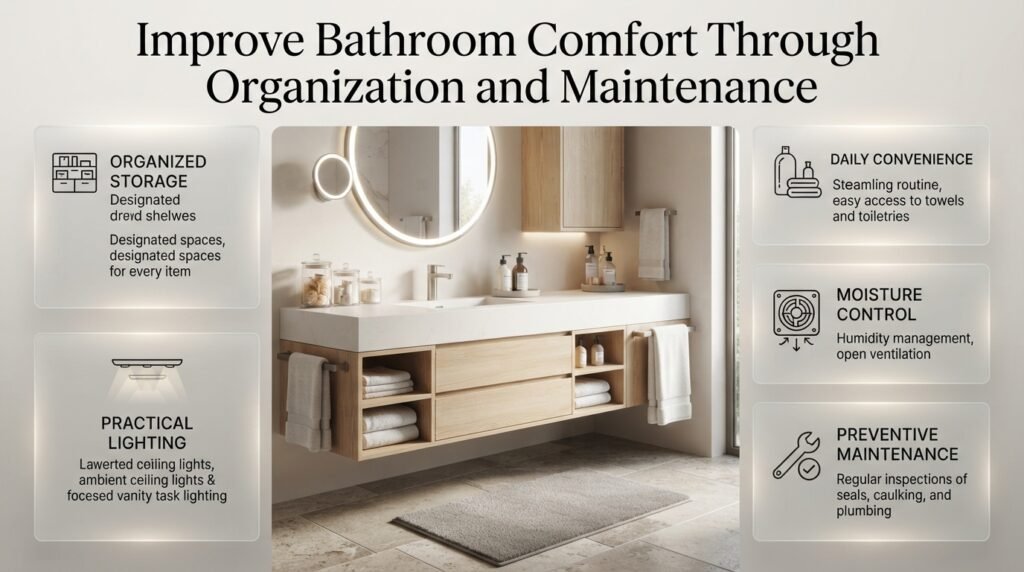
Bathrooms often feel more comfortable when frequently used items are accessible, surfaces are easy to clean, and ventilation manages moisture effectively.
Start by removing expired products and organizing toiletries. Use suitable drawers, cabinets, or trays to prevent small items from spreading across every available surface.
Improve lighting and daily convenience
Provide sufficient illumination for grooming and cleaning. Appropriate mirror lighting can help reduce shadows, while general lighting supports safe movement around the room.
Install hooks or towel rails where they are convenient to use. Choose bath mats that provide secure footing and dry appropriately between uses.
Manage moisture properly
Use an effective exhaust fan or suitable window ventilation to control humidity. Persistent moisture can damage finishes and contribute to mold growth.
Inspect plumbing connections and address leaks promptly. Follow suitable cleaning and maintenance practices rather than covering moisture problems with fragrance or decorative accessories.
If mold keeps returning or moisture damage is extensive, investigate the underlying cause and seek professional help when necessary.
These improvements support both appearance and long-term property care.
12. Make Small Homes Feel More Comfortable
Small homes can be attractive and practical when furniture, storage, and circulation are planned carefully. The goal is not to make every compact room look enormous but to use the available space efficiently.
Choose furniture that respects room proportions
Measure before buying large pieces. A deep sofa or oversized dining table can dominate a small room, leaving little room for movement.
Furniture with exposed legs or visually lighter shapes may help preserve an open appearance. Expandable dining tables, storage ottomans, and compact desks can provide flexibility when their additional functions are genuinely useful.
Avoid filling every corner
A small room does not need furniture in every available space. Too many side tables, baskets, and decorative accessories can interrupt movement and make cleaning more difficult.
Use vertical storage where appropriate and keep main pathways clear.
Use patterns and color intentionally
Light colors can help a room feel airy, but dark colors can also create an attractive, intimate environment. The result depends on lighting, proportions, contrast, and personal preference.
If a calm atmosphere is the priority, avoid combining too many competing patterns. A noticeable rug or patterned cushion can provide interest while simpler surrounding materials preserve balance.
For additional practical ideas, read Small Interior Changes That Can Transform the Feel of Your Home.
13. Create Outdoor Connections That Improve Everyday Living
A home can feel more welcoming when its indoor spaces connect naturally with balconies, patios, gardens, or outdoor views.
This does not require a large garden. Even a small balcony or a window overlooking greenery can contribute to the home’s atmosphere when the surrounding space is thoughtfully maintained.
Make transitions between indoors and outdoors practical
Keep doors and access routes clear. Choose outdoor furniture that suits the available space and can tolerate local weather conditions.
If a balcony is narrow, a compact seating arrangement may be more useful than several large chairs. For a family garden, durable seating and clearly defined activity areas may be more practical.
Use views and greenery thoughtfully
Position seating where it can take advantage of a pleasant view, when possible. Outdoor plants should suit sunlight, water availability, and maintenance requirements.
Choose materials appropriate for exposure to rain, heat, and changing temperatures. Outdoor fabrics and finishes may need different care from those used indoors.
Plan outdoor areas around actual use
Decide whether the space is primarily for relaxing, dining, gardening, or entertaining. This helps determine what furniture, lighting, and storage are necessary.
A well-planned outdoor area should add to daily enjoyment rather than becoming another space that requires constant upkeep.
14. Make Your Home Easier to Maintain Over Time
A beautiful interior is more enjoyable when maintaining it does not require hours of daily work.
The best maintenance systems are realistic, consistent, and suited to the household. They should prevent small problems from accumulating without turning home care into a demanding schedule.
Design for easier cleaning
Leave enough clearance around furniture for sweeping and vacuuming. Choose suitable washable textiles where spills are common, and avoid placing fragile objects in busy pathways.
Use materials according to their care requirements. A finish that requires frequent specialist treatment may be unsuitable for a heavily used family area.
Follow a manageable maintenance routine
| Frequency | Useful tasks |
|---|---|
| Daily | Return frequently used items, manage dishes, clear essential surfaces |
| Weekly | Clean bathrooms, vacuum, refresh textiles as needed |
| Monthly | Inspect high-use areas, clean neglected corners, review clutter |
| Seasonally | Check window treatments, inspect outdoor areas, review storage |
Adjust the routine to your circumstances. A home with pets, children, or frequent visitors will have different requirements from a household with fewer occupants.
Address small problems before they grow
A loose handle, dripping tap, damaged seal, or blocked drain may seem minor, but postponing repairs can create larger problems.
Keep a simple list of maintenance tasks and prioritize issues involving water, electrical safety, structural concerns, or other potential hazards.
For broader guidance, explore Property Care & Maintenance.
15. Common Mistakes That Make a Home Harder to Live In
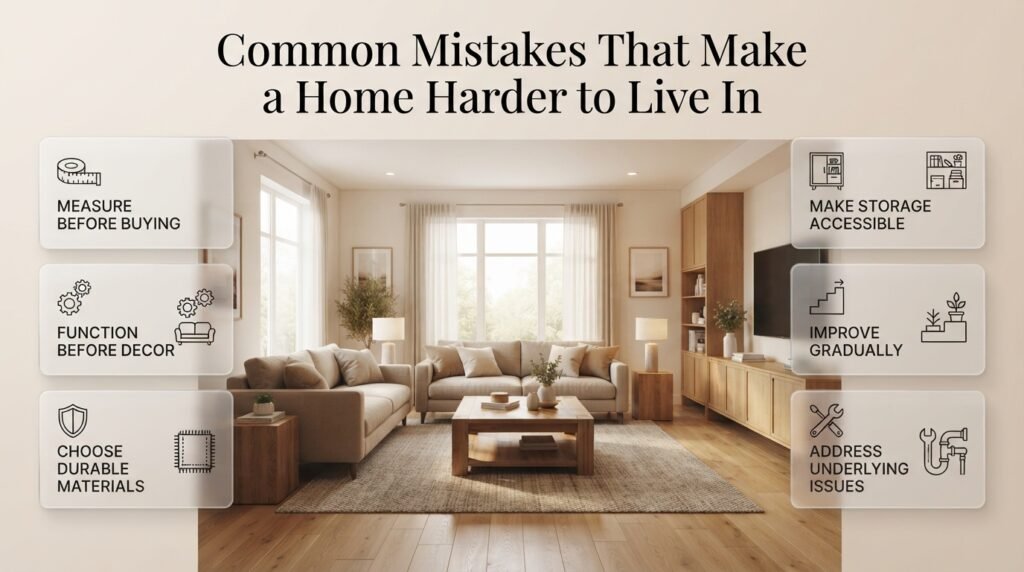
Many uncomfortable interiors result from reasonable decisions made without considering their long-term effects.
Buying furniture before measuring
Why it happens: A piece looks attractive online or in a showroom.
Why it causes problems: It may overwhelm the room, block a doorway, or leave insufficient clearance around other furniture.
How to avoid it: Measure the room, entrance routes, and existing furniture. Mark the proposed furniture footprint on the floor if you are uncertain about its scale.
Choosing decoration before solving practical problems
Why it happens: Accessories provide an immediate visual change.
Why it causes problems: New decorations cannot solve inadequate storage, uncomfortable furniture, or poor circulation.
How to avoid it: Address the underlying problem first. Add decorative details after the room functions comfortably.
Following trends without considering maintenance
Why it happens: Trend-led interiors often look attractive in photographs.
Why it causes problems: Certain fabrics, finishes, and decorative arrangements may not suit your household’s routines.
How to avoid it: Evaluate durability, cleaning requirements, comfort, and expected lifespan before making a purchase.
Creating storage that is difficult to use
Why it happens: Storage furniture is chosen mainly for appearance.
Why it causes problems: Belongings remain on visible surfaces because putting them away is inconvenient.
How to avoid it: Place everyday items near their point of use and keep frequently accessed storage within comfortable reach.
Making too many changes at once
Why it happens: Once problems become noticeable, replacing everything may seem like the fastest solution.
Why it causes problems: Costs rise, decisions become rushed, and suitable existing items may be discarded unnecessarily.
How to avoid it: Improve one room or one problem at a time. Live with the changes before committing to larger purchases.
Ignoring the property’s underlying condition
Why it happens: Cosmetic improvements receive more attention than maintenance issues.
Why it causes problems: Moisture, damaged wiring, inadequate ventilation, or structural defects may remain hidden behind attractive finishes.
How to avoid it: Investigate persistent defects and arrange qualified inspections when necessary. Appearance should never take priority over safety and building performance.
16. Expert Recommendations for Better Long-Term Decisions
A comfortable home is usually the result of several decisions working together. Layout, lighting, material selection, maintenance, and personal preferences should be considered as parts of one larger plan.
Invest in decisions that are difficult to reverse
Flooring, built-in cabinetry, plumbing fixtures, and major layout changes can be expensive to alter.
Consider how these elements will perform over time, whether they suit your household, and how easily they can be maintained.
Decorative accessories and smaller furnishings are generally easier to replace as preferences change.
Separate necessary improvements from optional upgrades
Create two lists: problems that affect daily function and changes that would simply improve appearance.
For example, repairing a leak or improving unsafe electrical fittings should take priority over replacing an otherwise usable coffee table.
This distinction helps you use your budget more effectively.
Think about future household needs
A room that works well today may need to support different activities in the future. A child may need a study area, a guest room may become a home office, or additional storage may become necessary.
Flexible furniture and adaptable layouts can help accommodate these changes without requiring a complete redesign.
Understand the building before planning major changes
When considering substantial improvements, assess the property’s condition, existing services, structural limitations, and applicable permissions.
Moving walls, altering plumbing, or changing electrical installations can involve technical and safety requirements. Consult appropriately qualified professionals before carrying out work that affects structural integrity or essential services.
For more guidance, explore Build & Renovate Construction and Residential Architecture Ideas.
17. A Practical Seven-Day Plan to Improve Your Home
You do not need to complete every improvement immediately. A simple schedule helps you make progress while avoiding rushed decisions.
Day 1: Observe and prioritize
Identify the three problems that affect your everyday comfort most. Photograph the rooms and note where clutter, poor lighting, or awkward furniture placement creates difficulties.
Day 2: Clear one important area
Choose a frequently used surface, entryway, or storage space. Remove unnecessary items and assign permanent places to the belongings you keep.
Day 3: Improve furniture placement
Review circulation routes and move furniture where practical. Make sure doors open properly and important pathways remain clear.
Day 4: Review lighting
Clean existing fixtures, assess dark corners, and consider whether additional task or ambient lighting would help.
Day 5: Improve storage
Organize the belongings used most often. Move infrequently used items elsewhere and make the system easy for everyone in the household to follow.
Day 6: Add comfort and personality
Review textiles, seating, plants, artwork, and other personal details. Keep what supports the desired atmosphere and avoid unnecessary purchases.
Day 7: Evaluate the results
Consider whether the room is easier to use, clean, and maintain. Identify what still needs attention and decide whether further spending is necessary.
This process can be repeated for each room. Progress matters more than completing an entire home in one week.
How Can I Make My Home Feel Beautiful, Calm, and Comfortable Every Day?
Creating a beautiful and calm home starts with understanding how you use each room. Instead of focusing only on decoration, pay attention to furniture placement, lighting, storage, colors, and the small details that affect your daily routine. A well-organized living room, a comfortable bedroom, and a practical kitchen can make your home feel more welcoming without requiring expensive renovations.
Choose a consistent color palette, reduce unnecessary clutter, and keep frequently used belongings within easy reach. Soft textiles, suitable lighting, natural materials, and meaningful decorative pieces can add warmth without making the space feel overcrowded. The most important thing is to create an environment that reflects your personality while supporting your everyday needs.
Practical ways to improve your home:
Use coordinated colors and textures to create visual harmony.
Arrange furniture to maintain comfortable walking routes.
Combine natural light with suitable lamps and task lighting.
Give everyday belongings permanent, accessible storage places.
Keep decorations that add meaning or character rather than filling every surface.
What Are the Best Budget-Friendly Ways to Make a Home Look More Expensive?
A home can look refined and thoughtfully designed without relying on luxury furniture or costly renovations. The secret is to focus on proportion, coordination, cleanliness, lighting, and material quality. Even inexpensive furniture can look attractive when it fits the room properly and complements the surrounding colors and finishes.
Start by removing unnecessary clutter and rearranging existing furniture to improve the room’s balance. Hang artwork at a suitable height, choose curtains that fit the windows properly, and introduce a few coordinated accessories instead of purchasing numerous unrelated decorations. Maintaining existing furniture and repairing minor defects can also improve the overall appearance.
Affordable improvements worth considering:
Choose a simple, coordinated color palette for walls and furnishings.
Use warm, comfortable lighting where it suits the room.
Replace worn cushion covers or refresh existing textiles.
Group decorative objects into intentional arrangements.
Keep furniture, mirrors, and glass surfaces clean and well maintained.
How Do I Make a Small Home Feel More Spacious and Less Cluttered?
A small home can feel comfortable and functional when its layout makes good use of the available space. The most effective approach is to reduce unnecessary obstacles, choose furniture that suits the room’s dimensions, and create storage systems that keep everyday belongings organized.
Begin by measuring your rooms and identifying furniture that restricts movement. Consider multifunctional pieces, such as storage ottomans, expandable dining tables, or compact desks, when they genuinely meet your needs. Wall-mounted shelves and tall storage units can make use of vertical space, while mirrors may help distribute the impression of natural light when positioned carefully.
Practical solutions for smaller spaces:
Keep main walking routes clear and avoid overcrowding corners.
Select furniture according to the room’s actual dimensions.
Use vertical storage to preserve useful floor space.
Choose a few complementary colors rather than many competing finishes.
Store seasonal and rarely used belongings separately from everyday essentials.
Which Interior Design Colors and Lighting Choices Help Create a Calm Home?
A calm interior usually benefits from a balanced combination of color, natural light, and comfortable artificial lighting. Soft neutrals, muted greens, gentle blues, and warm earth tones are popular options, but the right choice depends on the room’s natural light, existing materials, and personal preferences.
Lighting should also reflect the purpose of each space. Living rooms often benefit from layered lighting that supports conversation and relaxation, while kitchens and work areas need sufficient illumination for practical tasks. In bedrooms, softer evening lighting can create a more restful atmosphere without compromising the visibility needed for everyday activities.
Design choices that support a comfortable atmosphere:
Test paint samples in natural and artificial light before committing.
Combine ambient lighting with task lamps and selected accent lights.
Consider warm-white lighting around 2700–3000 K for many relaxing spaces.
Use curtains that balance daylight, privacy, and temperature control.
Repeat selected colors or finishes across adjoining rooms for visual continuity.
How Can I Keep My Home Organized, Beautiful, and Easy to Maintain Long-Term?
A home stays organized more easily when its design supports the routines of the people living in it. Instead of depending on frequent deep cleaning, create simple systems that make everyday tidying straightforward. Give frequently used belongings a permanent place, choose materials suited to your lifestyle, and address small maintenance problems before they become expensive repairs.
Storage should be convenient rather than complicated. Keep kitchen tools near preparation areas, provide suitable places for shoes and bags near the entrance, and organize bedroom storage around your daily dressing routine. A short, regular reset can help prevent clutter from accumulating without making home maintenance feel like another full-time responsibility.
Habits that help maintain a comfortable home:
Spend a few minutes each day returning everyday items to their places.
Clean high-use areas regularly instead of waiting for major messes to develop.
Choose durable, practical materials that suit your household.
Review storage arrangements when belongings repeatedly accumulate in the same place.
Inspect plumbing, ventilation, fixtures, and other household essentials periodically.
The best home organization system is one that remains practical during busy weeks, not just when everything is perfectly tidy.
Conclusion
Creating a home that feels beautiful, calm, and easy to live in is not about following every interior design trend or spending a large amount of money on new furniture. It is about making thoughtful choices that support your comfort, daily routines, and personal style. From choosing soothing colors and comfortable furniture to improving lighting, reducing clutter, and creating practical storage, even small changes can make a noticeable difference in how your home looks and feels.
The most successful homes balance appearance with everyday functionality. A beautiful living room should also be comfortable for relaxing, a well-designed kitchen should make daily tasks easier, and a peaceful bedroom should support rest rather than become a place for unnecessary clutter. Regular maintenance and simple organizing habits help preserve these improvements without turning home care into a stressful responsibility.
Start with the areas that affect your daily life most, then make gradual improvements according to your needs and budget. You do not need to transform every room at once. By focusing on comfort, simplicity, natural light, useful layouts, and meaningful personal touches, you can create a home that feels welcoming, organized, and genuinely enjoyable to live in. Ultimately, a well-designed home is not just attractive to look at; it makes everyday life feel easier, more comfortable, and more peaceful.
4 Responses