Introduction
Facades, Materials & Strong First Impressions | The exterior of a house can influence how people feel about a property before they even walk through the front door. A faded facade, mismatched finishes, or an unattractive entrance can make a home appear neglected, while balanced proportions, well-chosen materials, and thoughtful details can transform its entire appearance. However, creating an attractive exterior isn’t simply about choosing expensive stone or the latest architectural trend. It requires decisions that balance appearance, durability, comfort, and long-term maintenance.
Facades, Materials & Strong First Impressions is an important topic for homeowners planning a new build, renovating an older property, or improving curb appeal before selling. The right combination of exterior finishes can give a building a distinctive identity while helping it withstand local weather conditions and everyday wear.
At Blog Home Ideas TheHomeTrotters, our goal is to help readers make practical decisions about their homes, from architectural improvements to everyday maintenance. This guide explains how to choose facade materials, combine colors and textures, assess costs, avoid common mistakes, and create an exterior that remains attractive for years.
You’ll also discover how climate, workmanship, landscaping, lighting, and architectural proportions influence the final result. Whether you prefer a modern minimalist house, a traditional brick home, or a warm natural exterior, you’ll find practical guidance to help you make informed choices without wasting money on unnecessary upgrades.
What Is a Building Facade, and Why Does It Matter?
A building facade is the visible exterior face of a structure, particularly its front elevation. It includes the walls, windows, entrance, exterior finishes, architectural details, and other elements that define the building’s appearance.
A facade does more than make a house look attractive. Depending on its construction, it also contributes to weather protection, thermal performance, privacy, and the overall durability of the building envelope.
How does a facade influence first impressions?
A well-designed facade creates a sense of visual order. The entrance is easy to recognize, windows appear appropriately positioned, materials complement one another, and the building feels connected to its surroundings.
For example, imagine two houses with similar floor areas. The first has several unrelated exterior colors, uneven decorative details, and a poorly maintained entrance. The second uses a restrained color palette, consistent window frames, and a clearly defined entrance. Even if the second house uses moderately priced materials, it may appear more refined because its design feels intentional.
A strong first impression usually depends on several factors:
- Proportion: The relationship between the building’s height, width, windows, doors, and architectural features.
- Material selection: The suitability of brick, stone, timber, render, metal, or other finishes.
- Color coordination: The way exterior colors work together in natural light.
- Workmanship: The quality of joints, edges, surface preparation, and installation.
- Maintenance: The visible condition of the walls, entrance, gutters, and other exterior components.
The most effective approach is to consider the facade as one complete design rather than a collection of separate products.
Which Facade Materials Are Best for Residential Properties?
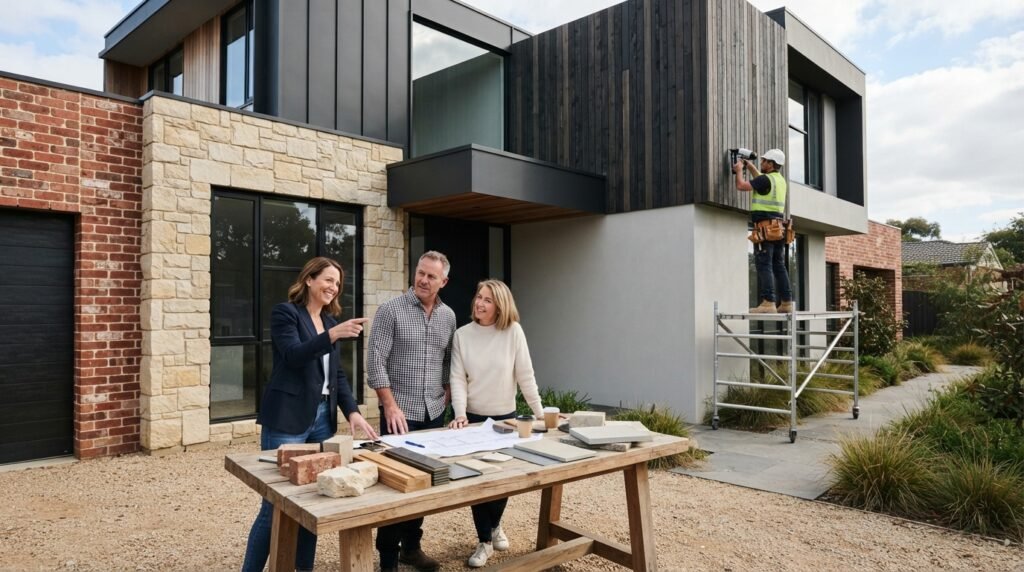
The best facade material depends on your architectural style, budget, climate, existing wall structure, and willingness to perform maintenance. Brick, natural stone, timber, metal, fiber cement, and render each offer different visual and practical benefits.
Before choosing a finish, ask two questions: Does it suit the appearance I want, and can it perform reliably under the conditions my property will experience?
1. Brick: A Timeless Choice for Residential Exteriors
Brick remains a popular facade material because it offers natural texture, visual warmth, and a traditional sense of permanence. It can suit classic homes, contemporary architecture, and industrial-inspired designs.
Red and terracotta bricks create a warm appearance, while cream, pale grey, and light-colored brickwork can produce a softer, more contemporary exterior.
Why homeowners choose brick
- It provides an attractive surface with natural variation.
- It can have a long service life when properly constructed.
- It works well with timber, metal, glass, and stone.
- It generally doesn’t require frequent repainting when left as exposed masonry.
However, brickwork isn’t automatically maintenance-free. Mortar joints may deteriorate, water can enter through poorly detailed areas, and unsuitable cleaning methods can damage the surface.
Practical example: A homeowner renovating a traditional house could retain the original brickwork, repair deteriorated mortar, and introduce updated window frames. This may deliver a more authentic result than covering the entire exterior with a new material.
Choose brick when you want a durable-looking, textured facade that can complement both traditional and modern architectural styles.
2. Natural Stone: An Elegant and Textured Exterior
Natural stone creates depth and visual character through its variations in color, grain, and surface texture. Limestone, granite, sandstone, and slate offer different appearances and physical properties.
Stone can cover an entire facade, but it is often used selectively around entrances, lower wall sections, garden walls, or architectural features.
Main benefits
- Creates a substantial, high-quality appearance.
- Introduces natural patterns that are difficult to reproduce exactly.
- Can offer excellent durability when the stone suits the environment.
- Combines effectively with restrained paint colors and natural timber.
The disadvantages include potentially high material and installation costs, significant weight, and the need for suitable support and fixing systems. Some stones also absorb more moisture than others.
Practical example: Instead of covering every exterior wall with stone, a homeowner might use it around the entrance and combine it with a smooth neutral finish elsewhere. This approach preserves the stone’s visual impact while controlling costs.
Stone is particularly useful when you want a facade to feel grounded, distinctive, and connected to natural materials.
3. Timber Cladding: Warmth and Natural Character
Timber cladding introduces warmth to a building and can soften the appearance of concrete, metal, and glass. Horizontal boards emphasize width, while vertical boards can make a building appear taller.
Natural timber develops character as it ages, although the rate of color change and deterioration depends on the species, exposure, protective finish, and maintenance routine.
Advantages of timber cladding include:
- A warm, natural appearance.
- Compatibility with contemporary, rustic, and Scandinavian-inspired homes.
- Opportunities to emphasize entrances and selected wall sections.
- A distinctive contrast with smooth render and dark window frames.
The main concern is moisture management. Timber can deteriorate if water becomes trapped, ventilation is inadequate, or protective coatings are neglected.
Manufactured wood-look cladding may provide an alternative, but its appearance, environmental impact, and performance vary by product.
Before installing timber, review the fixing method, ventilation requirements, fire performance, and maintenance instructions.
4. Metal Cladding: A Modern Architectural Finish
Metal cladding is often used in contemporary homes because it creates precise lines and a clean, controlled appearance. Aluminum and steel systems are available in different colors, profiles, textures, and finishes.
Dark metal panels can complement warm timber, while lighter metallic finishes can work with concrete and pale masonry.
Benefits include:
- A crisp, contemporary architectural character.
- A broad selection of finishes and panel profiles.
- Potentially lightweight construction, depending on the system.
- The ability to create consistent lines across walls and roof elements.
However, metal surfaces can scratch or dent, and unsuitable coatings or fixings may corrode. Thermal movement must also be accommodated through appropriate detailing.
Metal cladding is a good option when clean geometry and a modern appearance are central to the design. Its success depends on correct installation, drainage, compatible components, and exposure-specific material selection.
5. Fiber Cement: Versatile and Practical
Fiber cement cladding is available in board and panel formats, with finishes ranging from smooth contemporary surfaces to wood-like textures.
It can provide a consistent exterior appearance without relying entirely on natural materials.
Potential advantages include a broad range of colors, relatively straightforward visual coordination, and reduced maintenance compared with some natural timber products.
However, the performance of fiber cement depends on its formulation and installation. Cut edges, joints, fasteners, and connections around windows require appropriate detailing.
It is worth considering when you want a clean exterior finish with flexibility in color and design.
6. Render and Concrete: Simple, Clean, and Adaptable
Rendered walls and architectural concrete can create a minimalist facade in which the building’s proportions, openings, and overall form take priority.
Render offers flexibility in color and texture, while exposed concrete can provide a more industrial appearance.
These finishes work particularly well with carefully selected window frames, simple entrances, and restrained decorative details.
However, render can crack if movement joints, substrate preparation, or reinforcement are inadequate. Concrete can also develop staining or surface defects, and repairs may be difficult to match.
Choose these finishes when you want a unified exterior, but ensure that the substrate, drainage, and installation details are suitable for the building.
How Should You Compare Facade Materials Before Choosing?

A material should be assessed according to more than its appearance. Compare its initial cost, expected maintenance, weather resistance, installation complexity, repair options, and suitability for your existing structure.
The following table provides a general starting point.
| Material | Visual character | Maintenance considerations | Relative initial cost |
|---|---|---|---|
| Brick | Traditional or contemporary texture | Inspect mortar and moisture-prone areas | Moderate to high |
| Natural stone | Distinctive and substantial | Depends on stone type and exposure | High |
| Timber | Warm and natural | May need protective coatings | Moderate to high |
| Metal | Clean and contemporary | Inspect finishes, fixings, and corrosion | Moderate to high |
| Fiber cement | Consistent and versatile | Maintain joints and coatings | Moderate |
| Render | Smooth and understated | Inspect cracks and repaint when needed | Low to moderate |
These categories are approximate. Local labor, transportation, product availability, supporting structures, and project complexity can significantly affect the total cost.
What is the most cost-effective facade material?
The most cost-effective option is usually the one that meets the building’s requirements without creating unnecessary installation or maintenance expenses.
A cheaper finish may become expensive if it needs frequent repairs. A more expensive material may provide better long-term value if it performs well and can be maintained economically.
Before making a decision, consider:
- Initial purchase and installation costs.
- Surface preparation and supporting structures.
- Insulation and weatherproofing requirements.
- Cleaning and maintenance expenses.
- The availability of replacement materials.
- Expected service life under local conditions.
Pro Tip: Request a complete installation quotation rather than comparing material prices alone. Two products with similar purchase prices can have very different total costs once labor, accessories, and preparation are included.
How Can You Combine Facade Materials Without Creating Visual Clutter?
A successful facade usually has a clear visual hierarchy. One material establishes the main appearance, a second introduces contrast, and an optional accent highlights a specific feature.
Using several materials isn’t necessarily a problem. The difficulty arises when every material competes for attention.
Establish a primary, secondary, and accent material
Start by choosing a primary finish for the largest wall surfaces. Then select a complementary material that adds contrast without overpowering the design.
For example, a contemporary house might use warm white render across most of its walls, natural stone around the entrance, and charcoal-colored window frames.
The render creates visual continuity, the stone provides texture, and the dark frames define the openings.
A third material may be appropriate when it serves a clear purpose. Timber could introduce warmth beneath a sheltered balcony, for example, but it shouldn’t be added simply because the design seems incomplete.
How much contrast is appropriate?
There is no universal percentage for dividing facade materials. The appropriate proportions depend on the building’s scale, architectural style, and the visual strength of each finish.
Large areas of heavily patterned stone can dominate a small house, whereas a modest stone accent may add depth without making the elevation feel crowded.
Follow these practical principles:
- Keep the largest surface visually consistent.
- Use stronger textures where they help emphasize the building’s form.
- Repeat selected colors in window frames, doors, or exterior fixtures.
- Avoid introducing multiple unrelated accent colors.
- Test materials together before purchasing them in large quantities.
A good material combination should look intentional from a distance and remain attractive when viewed close up.
For more ideas about coordinating materials and decorative details, explore Home Interior Ideas.
Which Exterior Colors Create the Strongest First Impression?
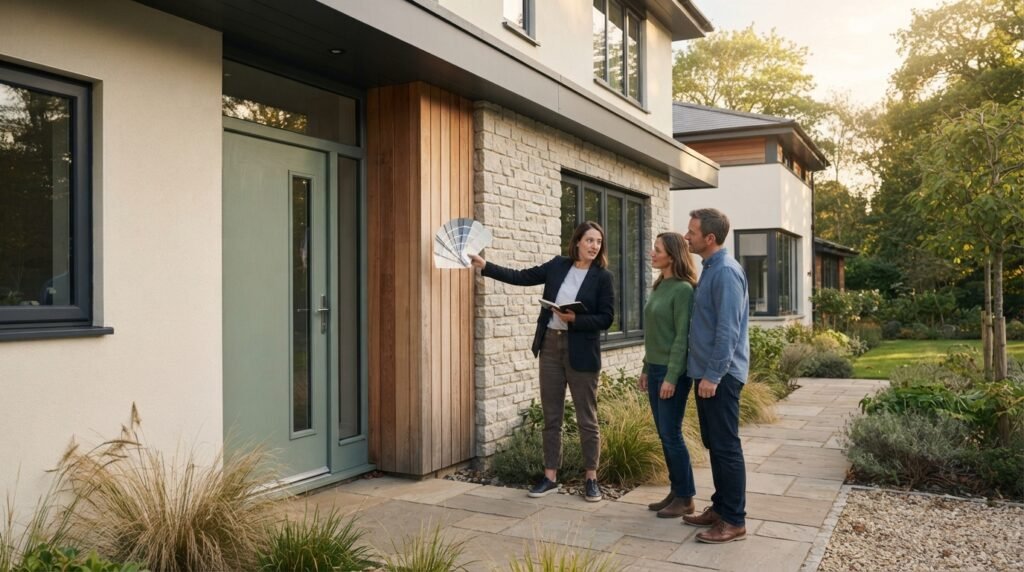
Exterior colors influence the mood of a property and affect how its materials appear in different lighting conditions. The best palette complements the architecture, surrounding landscape, roof, windows, and entrance.
Neutral colors remain popular because they are adaptable, but a successful facade doesn’t have to be entirely white or grey.
Warm neutral colors
Cream, beige, sand, and warm white create a welcoming appearance. They complement brick, natural stone, timber, and greenery.
These shades are useful when you want an exterior that feels comfortable rather than stark. However, choose the undertone carefully because yellowish cream can clash with cool grey stone.
Cool neutral colors
Light grey, charcoal, and cooler whites can emphasize geometric forms and suit contemporary architecture.
They work well with metal cladding, concrete, and dark window frames. Very dark surfaces, however, can absorb more solar radiation and become hotter in direct sunlight.
Natural colors
Muted green, brown, terracotta, and earthy grey can connect a building with its surroundings.
These colors are particularly effective when a property includes natural stone, timber, or substantial planting.
How do you test exterior paint colors?
Never rely entirely on a small digital image. Screens can display colors differently, and large exterior surfaces appear different from small paint samples.
Instead:
- Obtain physical samples of the proposed finishes.
- Place them next to each other.
- View them in morning and afternoon light.
- Check their appearance in direct sunlight and shade.
- Consider how the roof, paving, and neighboring buildings affect the palette.
Common Mistake: Choosing every material independently. A wall color may look attractive on its own but clash with the roof or stone once everything is installed.
A coordinated palette makes the building feel more considered and helps prevent expensive changes later.
How Do Architectural Proportions Affect Facade Design?
Architectural proportions describe the relationships between the building’s height, width, windows, doors, wall surfaces, and decorative features.
Even attractive materials can look disappointing when openings are poorly aligned or decorative details overwhelm the architecture.
Window placement and scale
Windows are major visual features. Their size, spacing, frame color, and alignment influence whether a facade appears balanced.
In a contemporary design, aligning window heads or sills can establish a clear rhythm. In a traditional home, consistent relationships between windows and architectural details can preserve the building’s character.
Consider the following:
- Avoid changing window sizes without assessing the overall elevation.
- Coordinate frame colors with the primary facade materials.
- Consider privacy, daylight, ventilation, and views.
- Check structural requirements before enlarging openings.
- Avoid decorative surrounds that overpower the windows.
Designing an attractive entrance
The entrance is often the natural focal point of a residential facade. A well-designed doorway should be easy to recognize and comfortable to approach.
A distinctive door, sheltered threshold, suitable lighting, and carefully selected materials can make the entrance memorable without making the entire exterior elaborate.
Practical considerations matter just as much. Ensure that the door can open comfortably, visitors have a safe approach, and rainwater doesn’t collect near the threshold.
For broader inspiration on creating a cohesive home, see Create a Home That Feels Beautiful.
How Does Climate Affect Facade Material Selection?
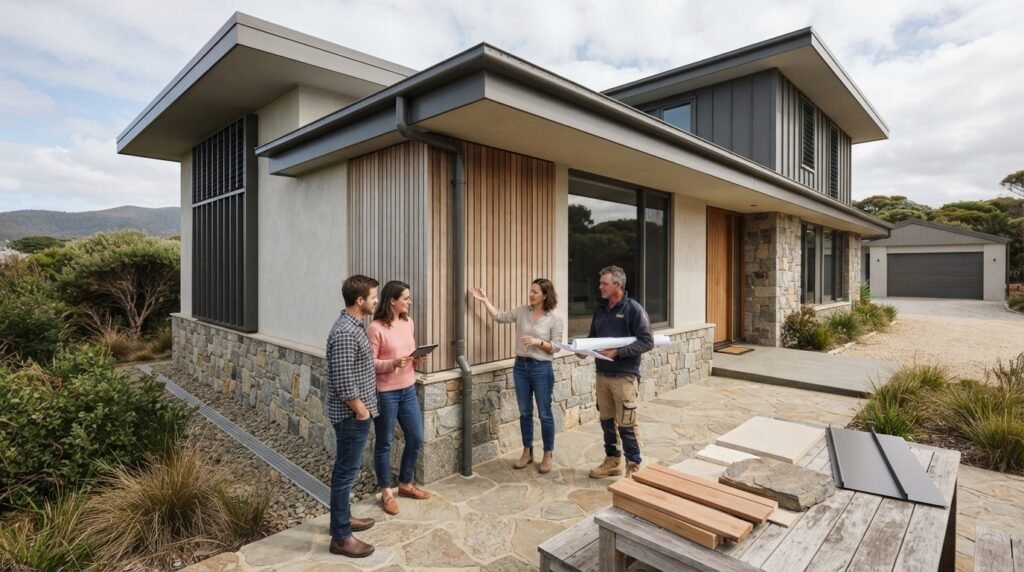
Climate influences how exterior materials age and perform. Sunlight, rainfall, humidity, wind, temperature changes, and salt exposure can affect coatings, joints, fixings, and the movement of materials.
The facade should therefore be designed around the conditions the building will actually experience.
Hot and sunny climates
In hot environments, pay attention to solar exposure, shading, insulation, and surface temperatures.
Useful strategies include:
- Selecting finishes rated for strong sunlight.
- Providing appropriate shading for exposed windows.
- Considering lighter colors where reduced solar heat absorption is desirable.
- Improving insulation and air sealing.
- Reviewing the orientation of large glazed areas.
For example, a house with extensive west-facing glazing may become uncomfortable during hot afternoons. Exterior shading and suitable glazing can help address the problem more effectively than changing the wall color alone.
Humid and rainy climates
In wet conditions, water management becomes a priority. Correct flashing, drainage paths, joints, and connections around openings help prevent moisture from entering the wall assembly.
Pay particular attention to roof intersections, window frames, balconies, and ground-level walls.
No decorative finish can compensate for poor weatherproofing.
Coastal environments
Salt in coastal air can accelerate corrosion in unsuitable metal components. Specify suitable finishes, fixings, and protective systems according to the level of exposure.
Timber coatings, stone selection, and sealants should also be appropriate for the local conditions.
Quick Tip: Ask suppliers for technical specifications, cleaning instructions, warranty limitations, and exposure ratings. Confirm that the complete facade system is suitable for your location rather than assuming that a material is appropriate simply because it is marketed for exterior use.
Can Facade Design Improve Energy Efficiency?
Yes. A properly designed facade can contribute to better energy performance when it forms part of a complete building envelope that includes suitable insulation, airtightness, windows, shading, and moisture management.
The material alone doesn’t determine the building’s energy efficiency. How the entire wall system is assembled is usually more important.
Insulation and thermal performance
Insulation reduces unwanted heat transfer through walls. Its effectiveness depends on the material, thickness, continuity, installation quality, and the rest of the building envelope.
Gaps around windows, poorly sealed joints, and thermal bridges can reduce performance even when the main wall contains suitable insulation.
Shading and glazing
Exterior shading can reduce direct solar gain through windows, particularly on exposed elevations.
The right solution depends on orientation, climate, window size, and the building’s use. Overhangs, external screens, and carefully positioned openings can contribute to comfort when appropriately designed.
Airtightness and moisture control
Uncontrolled air leakage can increase heating or cooling demand. However, improving airtightness must be coordinated with appropriate ventilation and moisture management.
The objective is a building that remains comfortable without trapping damaging moisture inside its construction.
For homeowners considering technology alongside architectural improvements, Smart Home Upgrades offers additional ideas for improving everyday comfort and efficiency.
How Can You Improve an Existing Facade on a Limited Budget?
A facade renovation doesn’t always require replacing the entire exterior. Often, the best results come from repairing visible defects, simplifying the color scheme, refreshing the entrance, and improving a few carefully selected details.
Step 1: Inspect the building before spending money
Look for damaged paint, cracked render, deteriorated mortar, loose cladding, rust stains, leaking gutters, and signs of moisture intrusion.
Determine whether the problem is cosmetic or indicates a deeper issue. Persistent dampness, significant cracking, or loose exterior components may require professional assessment before renovation begins.
Step 2: Repair before decorating
Clean and prepare surfaces using methods suitable for the material. Repair damaged joints, correct drainage problems, and resolve moisture issues before applying new finishes.
Painting over a damp wall may temporarily hide the problem, but the underlying defect can cause the new coating to fail.
Step 3: Refresh the entrance
A clean entrance can significantly improve the first impression. Depending on the property’s condition, consider repainting the door, updating suitable hardware, improving exterior lighting, or repairing the entrance paving.
Avoid decorative changes that interfere with weather protection or safe access.
Step 4: Improve landscaping
Planting, pathways, and boundary treatments can soften hard surfaces and connect the house to its surroundings.
However, vegetation should not obstruct drainage, block access, or remain in direct contact with vulnerable exterior materials where moisture could become trapped.
Step 5: Add selective accents
If the budget allows, introduce a limited material upgrade around the entrance or another important feature.
A carefully positioned stone or timber accent may provide more visual benefit than covering every wall with a premium finish.
For renovation planning and practical construction guidance, explore Build & Renovate Construction.
What Are the Most Common Facade Design Mistakes?
Many exterior design problems result from choosing materials without considering the complete building, overlooking technical details, or spending too much on decorative features.
Choosing materials before establishing a design
Why it happens: Individual products may look attractive in a showroom or online.
Why it’s harmful: The finishes may conflict in color, texture, or architectural character.
How to avoid it: Establish the overall design, primary material, accent finishes, and color palette before ordering products.
Ignoring drainage and moisture protection
Why it happens: Flashings and joints receive less attention than visible surfaces.
Why it’s harmful: Water intrusion can damage finishes and concealed building components.
How to avoid it: Resolve the wall assembly, drainage, flashing, and window interfaces before installation.
Using too many contrasting finishes
Why it happens: More materials may seem like an easy way to make a home appear expensive.
Why it’s harmful: The facade can lose its visual hierarchy and become unnecessarily busy.
How to avoid it: Choose a dominant finish and add contrast only where it supports the design.
Prioritizing purchase price over total cost
Why it happens: Initial material prices are easy to compare, while future expenses are less obvious.
Why it’s harmful: A low-cost product may need frequent repairs or specialist maintenance.
How to avoid it: Compare installation, cleaning, repair, and replacement costs over a realistic ownership period.
Neglecting workmanship
Why it happens: Budgets may focus on the visible material rather than installation quality.
Why it’s harmful: Uneven joints, poor alignment, exposed fixings, and defective edges can undermine the appearance and performance of the facade.
How to avoid it: Agree on installation details in advance and inspect work before important components are concealed.
Forgetting the surrounding environment
Why it happens: Homeowners may concentrate exclusively on the front wall.
Why it’s harmful: Poor lighting, neglected pathways, and unsuitable planting can make an otherwise attractive facade feel unfinished.
How to avoid it: Coordinate the building, entrance, landscaping, lighting, and access routes as one design.
What Do Professionals Recommend for Better Facade Results?
Professional facade planning starts with the building’s requirements and site conditions. Appearance develops alongside performance rather than replacing it.
Review the complete elevation
Assess the roofline, windows, entrance, wall surfaces, and architectural features together. A material that looks attractive on a small sample may dominate the entire building when installed across a large area.
Test materials in natural light
View physical samples in different lighting conditions. Compare undertones, surface texture, reflectivity, and the way adjacent materials interact.
A larger mock-up can be particularly useful when the facade combines strongly textured stone, timber, and smooth finishes.
Resolve installation details early
Cladding systems have specific requirements for support, fixing, movement, ventilation, drainage, and weather protection.
These details should be agreed upon before construction rather than improvised on site. Suitable professional advice is especially important when altering existing walls or changing the weight of exterior finishes.
Plan for future maintenance
Choose materials that can be cleaned and repaired without unreasonable cost or disruption.
Ask whether damaged sections can be replaced individually and whether matching materials are likely to remain available. Keep product specifications and maintenance instructions for future reference.
Coordinate lighting and landscaping
Exterior lighting can emphasize the entrance and reveal textured surfaces after dark. However, excessive brightness can create glare and disturb neighboring properties.
Choose appropriate exterior-rated fittings, control light spill, and coordinate planting with drainage and access requirements.
How Do You Plan a Facade Project from Start to Finish?
A structured process makes it easier to control costs and avoid expensive changes during construction.
Step 1: Define your priorities
Decide whether your main goal is improved curb appeal, reduced maintenance, better energy performance, or a more contemporary appearance.
List the three most important outcomes and use them to evaluate every material choice.
Step 2: Assess the property
Review the building’s condition, orientation, climate, existing wall construction, and surrounding architecture.
For renovation projects, establish whether the existing structure can support the proposed cladding and whether hidden defects need to be repaired.
Step 3: Set a complete budget
Include materials, labor, surface preparation, scaffolding, supporting structures, insulation, weatherproofing, waste, and future maintenance.
Allow for unexpected repairs, particularly when working with older buildings.
Step 4: Create a material palette
Choose the primary finish first, then select complementary and accent materials.
Compare physical samples alongside the proposed roof, windows, doors, and paving.
Step 5: Confirm technical requirements
Review structural fixing, weather resistance, insulation, fire performance, and applicable building regulations.
Consult appropriately qualified professionals where structural changes, significant moisture problems, or complex cladding systems are involved.
Step 6: Document the design
Specify material locations, colors, joint patterns, corners, window interfaces, flashings, and termination details.
Clear drawings and specifications reduce misunderstandings between the designer, supplier, and installer.
Step 7: Inspect and maintain the finished facade
Check alignment, joints, surface quality, drainage, and the consistency of finishes. Address defects promptly and retain information about the installed products.
Regular inspections can help identify minor issues before they develop into expensive repairs. For ongoing upkeep advice, visit Property Care & Maintenance.
Which facade materials are best for a modern home?
The best facade materials for a modern home are those that combine a clean appearance with durability, practical maintenance, and suitability for the local climate. Brick, natural stone, timber cladding, metal panels, fiber cement, and smooth render are popular choices because each offers a different visual character. The right material depends on your architectural style, budget, exposure to weather, and the amount of maintenance you’re prepared to undertake.
For example, a contemporary house can combine smooth white render with charcoal window frames and a small section of natural stone around the entrance. This creates contrast without making the exterior look overcrowded. Timber accents can introduce warmth, while metal cladding can emphasize clean architectural lines.
Important points to consider:
Choose materials that perform well in your local weather conditions.
Compare installation costs, expected maintenance, and repair requirements.
Combine a dominant material with one or two complementary finishes.
Check the compatibility of cladding, insulation, drainage, and the existing wall structure before installation.
How can I make my house facade look expensive without spending too much?
A facade can look sophisticated without relying on premium materials across every exterior wall. The most effective improvements often involve balanced proportions, coordinated colors, careful workmanship, and a well-defined entrance. Repairing damaged surfaces and removing unnecessary decorative details can sometimes improve the appearance more than adding expensive finishes.
Start by assessing the existing exterior. If the walls are structurally sound, cleaning suitable surfaces, repainting in a coordinated palette, refreshing the entrance, and updating exterior lighting may provide noticeable improvements. If you want additional texture, use stone or timber-look cladding selectively rather than covering the entire facade.
Budget-friendly improvements include:
Repair cracked render, damaged mortar, and deteriorated paint before decorating.
Use two or three complementary exterior colors instead of several competing shades.
Refresh the front door and choose suitable, coordinated hardware.
Improve entrance lighting and keep pathways and surrounding areas well maintained.
Invest in skilled installation rather than choosing materials solely because they are inexpensive.
How do I choose the right facade material for my local climate?
Choosing the right facade material starts with understanding the environmental conditions your house will experience. Strong sunlight, heavy rainfall, humidity, temperature changes, wind, and coastal salt exposure can affect materials differently. A finish that performs well in one location may require additional protection or maintenance in another.
In hot climates, consider solar exposure, suitable exterior coatings, insulation, and window shading. In humid or rainy environments, give particular attention to drainage, flashing, joints, and moisture control. Coastal properties may require corrosion-resistant metal components and fixings. Timber cladding also needs appropriate protection and detailing where moisture exposure is significant.
Before making your final decision:
Ask suppliers for technical specifications and exposure recommendations.
Check cleaning, maintenance, and warranty requirements.
Confirm that the complete facade system is compatible with the existing wall.
Consider insulation, ventilation, weatherproofing, and fire performance where applicable.
Consult a qualified building professional when structural changes or complex cladding systems are involved.
What is the best way to combine different facade materials and colors?
The best way to combine facade materials is to establish a clear visual hierarchy. Choose one primary material for the largest wall surfaces, then introduce a complementary finish to add texture or contrast. A third material can be used as a small accent if it supports the architectural design.
For instance, warm white render, natural stone around the entrance, and dark window frames can create a balanced contemporary exterior. The render keeps the design visually simple, the stone adds depth, and the dark frames define the windows. The materials work together because each has a specific role.
Follow these practical guidelines:
Coordinate undertones, not just the apparent colors of materials.
Use contrasting textures to create interest without introducing too many colors.
Consider the size of each material’s surface area before finalizing the design.
Test physical samples outdoors in both sunlight and shade.
Coordinate facade finishes with the roof, windows, doors, paving, and landscaping.
Does improving a house facade increase property value?
Improving a house facade can strengthen curb appeal and influence how potential buyers perceive the property’s condition. A clean, well-maintained exterior suggests that the home has received attention, while visible deterioration may raise concerns about maintenance and possible hidden defects. However, the financial return depends on the local property market, the quality of the work, the property’s existing condition, and the cost of the improvements.
Before investing in an expensive exterior renovation, identify which changes are most likely to address visible problems and improve the property’s overall presentation. Repairing moisture damage, restoring deteriorated finishes, and improving the entrance may be more practical than installing premium cladding across every wall.
To make a more informed investment:
Prioritize essential repairs and weather protection before cosmetic upgrades.
Choose finishes that suit the property’s architectural style and surrounding neighborhood.
Compare renovation costs with similar properties in your local market.
Avoid assuming that expensive materials will automatically produce a higher resale price.
Keep maintenance records and product information for future owners.
A thoughtful facade renovation can improve the property’s presentation and long-term usability, but it should be planned around realistic costs and local buyer expectations.
Conclusion
A well-designed facade does more than create an attractive first impression. It reflects the character of a home, improves its relationship with the surrounding environment, and contributes to long-term durability, comfort, and property appeal. The right combination of materials, colors, textures, architectural details, and lighting can make a house feel welcoming and visually balanced without relying on expensive finishes or complicated design features.
When planning a facade, focus on the practical qualities of each material as much as its appearance. Consider your local climate, maintenance requirements, installation costs, moisture resistance, and expected lifespan before making a final decision. Combining materials thoughtfully, maintaining consistent proportions, and choosing colors that complement the architecture can help create a polished exterior that remains appealing over time.
It is equally important to look beyond the front elevation. Landscaping, pathways, entrance design, windows, outdoor lighting, and regular maintenance all influence how the property is perceived. Even small improvements, such as refreshing the front door, repairing damaged finishes, or updating exterior lighting, can make a noticeable difference when they support the overall design.
Ultimately, the strongest facade designs balance beauty with everyday performance. Whether you are building a new home, renovating an existing property, or preparing a house for sale, thoughtful material selection and careful planning can help you achieve an exterior that feels distinctive, functional, and lasting. Explore more practical inspiration at Blog Home Ideas TheHomeTrotters to discover ways to improve your home’s appearance, functionality, and long-term appeal.
3 Responses