Introduction
The best bedroom ideas combine comfortable furnishings, practical storage, balanced lighting, and a color scheme that suits your preferences. Start by arranging the bed properly, making walking routes accessible, and choosing lighting for different activities. Once these essentials work well, introduce decorative elements that add warmth without creating unnecessary clutter.
A bedroom serves several purposes. It is where you sleep, get dressed, relax, read, and sometimes work. A design that looks beautiful but makes these activities difficult will eventually become frustrating.
Before changing anything, identify the three biggest problems in your current room. You might need more storage, a better place for reading, or a calmer environment at night. These priorities should guide every purchase.
Start with the bed and its surroundings
The bed is usually the largest piece of furniture in the bedroom, so its position affects the entire layout. Place it where you can access it comfortably without blocking doors, windows, wardrobes, or important walking routes.
If two people share the room, consider whether both can get into bed easily. A layout that forces one person to climb over the other every night may look acceptable on paper but is inconvenient in practice.
Make the room feel personal
A bedroom should reflect the person using it. Some people prefer a simple, uncluttered environment, while others enjoy books, artwork, colorful bedding, or meaningful decorative objects.
You can personalize the room through:
- Artwork that reflects your interests.
- Bedding in your favorite colors.
- Photographs or small keepsakes.
- Textured curtains and cushions.
- A comfortable reading chair, if space permits.
- Plants suitable for the room’s light and maintenance conditions.
Practical tip: Choose a few meaningful details instead of filling every surface. Personal touches feel more intentional when they have enough space to stand out.
2. How Can You Design a Modern Bedroom Without Making It Feel Cold?
A modern bedroom combines simple furniture shapes, coordinated materials, functional lighting, and a restrained color palette. However, modern design doesn’t have to mean an empty room with white walls and hard surfaces. Natural wood, comfortable fabrics, warm lighting, and carefully selected accessories can make the space feel inviting.
Choose furniture with clean lines
Furniture with straightforward shapes often works well in contemporary bedrooms because it creates a sense of order. A simple upholstered bed, a streamlined dresser, and bedside tables with practical storage can establish a consistent appearance.
You don’t need to buy matching furniture from one collection. Instead, coordinate the pieces through related finishes, colors, or proportions.
For example, a light oak bed can work with cream bedside tables and dark metal lamps. The materials differ, but the combination feels balanced when the colors and shapes complement each other.
Use contrast carefully
A modern bedroom benefits from contrast, but too many competing elements can make the room feel disorganized.
Consider these combinations:
| Color palette | Design effect | Suitable approach |
|---|---|---|
| Warm white and natural wood | Bright and welcoming | Pair with linen bedding and soft lighting |
| Beige and charcoal | Contemporary and balanced | Use darker accents sparingly |
| Sage green and cream | Calm and nature-inspired | Combine with wood and woven textures |
| Navy and warm white | Bold and sophisticated | Balance dark walls with lighter textiles |
| Greige and walnut | Understated and elegant | Add subtle texture through bedding |
Add warmth through materials
A modern room can feel flat when every surface is smooth and every color is similar. Introduce a few different textures to create depth.
Cotton bedding, a woven rug, a fabric headboard, wooden furniture, and soft curtains can work together without making the room feel busy.
For wider decorating inspiration, explore Home Interior Ideas. The principles of proportion, texture, and coordinated finishes can help you make a bedroom feel connected to the rest of your home.
3. What Are the Best Ideas for Decorating a Small Bedroom?
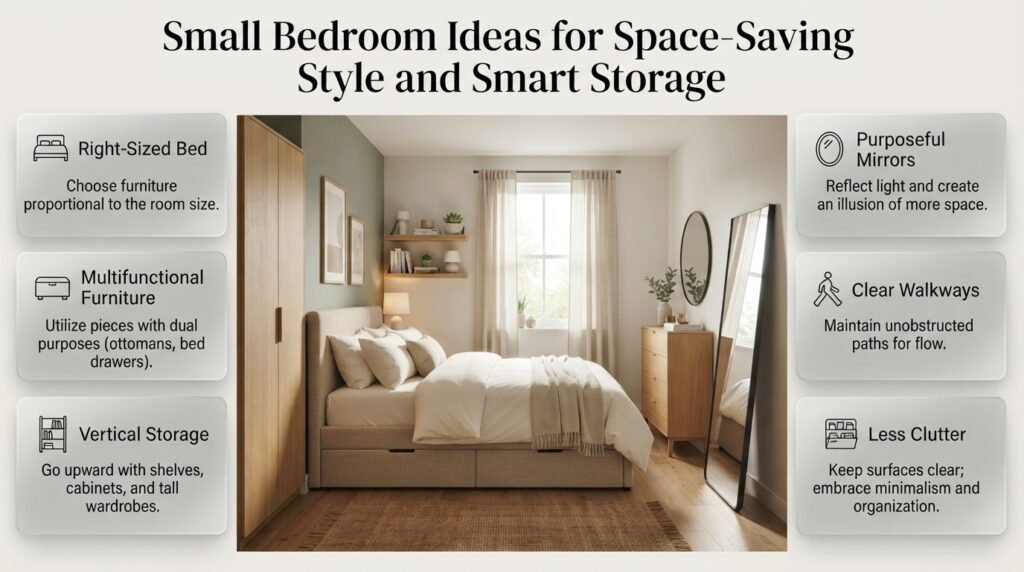
Small bedroom ideas should prioritize movement, useful storage, and furniture that fits the available floor area. Choose pieces according to the room’s actual dimensions, use vertical storage where practical, and keep unnecessary objects off the floor. Light colors and mirrors can help, but an efficient layout usually makes the greatest difference.
Choose the right bed size
A bed that occupies nearly the entire room can restrict access to storage and make everyday movement uncomfortable.
Before buying a bed, measure the mattress, frame, and any protruding headboard or footboard. Then check the remaining space around it.
Consider whether you genuinely need a larger mattress or whether a more compact frame would provide a better balance between comfort and circulation.
Use furniture that serves more than one purpose
Multifunctional furniture is especially useful when a bedroom needs to accommodate several activities.
Useful options include:
- A bed with drawers for spare bedding.
- A storage ottoman for blankets or seasonal items.
- Wall-mounted shelves instead of deep bedside tables.
- A narrow dresser that fits beside the wardrobe.
- A desk that can also serve as a dressing table.
- A wardrobe with internal organizers that use the available space efficiently.
Choose multifunctional pieces carefully. A storage bed is useful only if you can open its drawers or lift its mattress without hitting nearby furniture.
Make better use of vertical space
Tall wardrobes, wall-mounted shelves, and hooks can provide additional storage without taking up much floor space.
Keep frequently used belongings within easy reach. Reserve higher shelves for items you use occasionally, and avoid placing heavy objects above the bed where they could fall.
Use mirrors with a purpose
A mirror can reflect daylight and make a room feel more open. A full-length mirror is also useful for dressing, so it can serve both decorative and practical purposes.
Position it where it reflects a window or a bright area rather than a cluttered corner.
Common mistake: Buying several small decorative objects because the bedroom is compact. Too many accessories can make a small room feel crowded. A few well-chosen pieces usually create a cleaner and more attractive result.
4. How Can You Make a Bedroom Feel Cozy and Relaxing?
A cozy bedroom combines comfortable bedding, soft textures, appropriate lighting, and a layout that makes it easy to unwind. You can achieve this atmosphere without using dark colors or filling the room with decorations. The key is to create a comfortable environment that suits your habits and the climate where you live.
Layer bedding for comfort
Start with sheets that feel comfortable against your skin and a duvet or blanket suited to the season. Add a throw or a small selection of cushions if you enjoy a layered appearance.
The number of layers should reflect how you use the bed. A decorative arrangement that takes several minutes to remove every night may not be worthwhile for someone who prefers a simple routine.
Choose fabrics according to their feel, durability, washing requirements, and suitability for your climate.
Introduce soft textures
Textiles can make a bedroom feel less stark. Curtains, rugs, upholstered furniture, and bedding soften the appearance of hard surfaces.
If the floor is cold, a rug beside the bed can make getting up in the morning more comfortable. In a warmer climate, lightweight cotton or breathable fabrics may be more practical than heavy blankets and thick upholstery.
Create a calming evening atmosphere
Lighting affects how the bedroom feels at different times of the day. A bright overhead light is useful when cleaning or organizing clothes, but softer bedside lighting is often more comfortable when reading or preparing for sleep.
Consider using warm-white lamps, dimmable fixtures, or individual reading lights.
Keep the room visually calm
A cozy bedroom doesn’t need to be completely minimalist. However, excessive objects, visible cables, overflowing laundry baskets, and crowded bedside tables can make it difficult to relax.
Give everyday belongings designated storage places. Keeping frequently used items accessible while concealing unnecessary clutter helps the room feel comfortable without making it impractical.
Expert tip: Think about the first and last five minutes of your day. A clear route to the wardrobe, convenient bedside lighting, and an accessible place for your phone or glasses can improve the bedroom more than decorative accessories alone.
5. Which Bedroom Wall Colors Work Best?
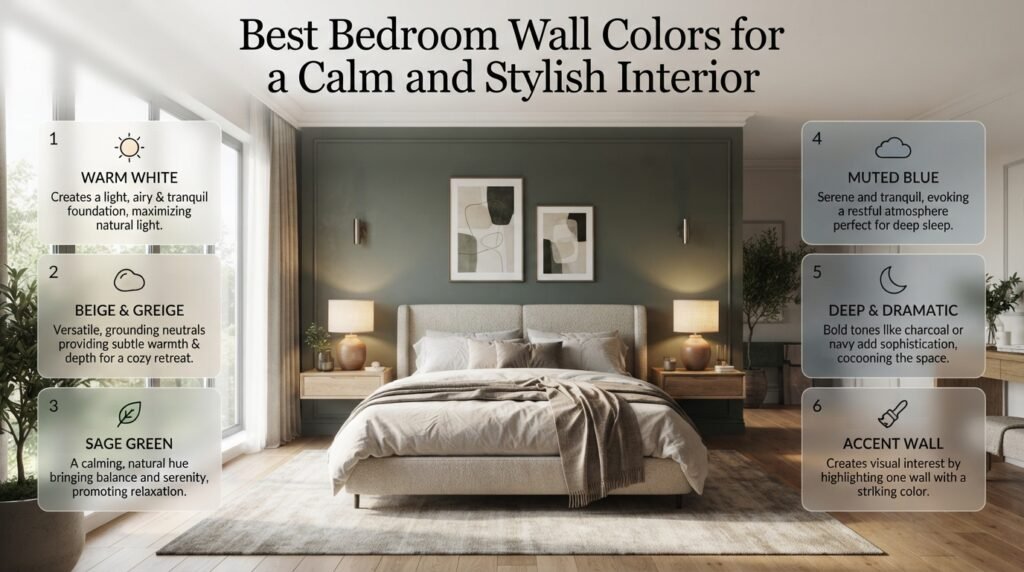
The best bedroom wall colors depend on natural light, room dimensions, furniture finishes, and personal taste. Warm whites and beige create a flexible foundation, muted greens and blues introduce subtle color, and deeper shades add drama. Test paint samples in the actual room before choosing a final color.
Warm white for a flexible foundation
Warm white works well when you want a bright room that doesn’t feel too stark. It complements natural wood, neutral bedding, and many furniture styles.
However, not every white paint looks the same. Some have yellow or beige undertones, while others appear cooler. Compare samples beside your flooring and furniture before making a decision.
Beige and greige for understated warmth
Beige and greige can create a calm, coordinated backdrop for bedrooms. These colors work particularly well with cream fabrics, wooden furniture, and restrained dark accents.
They are useful when you want the room to feel warmer than a purely white interior without introducing a strong color.
Sage green for a natural atmosphere
Sage green offers a muted alternative to brighter greens. It pairs well with cream bedding, warm wood, woven textures, and simple black or bronze details.
Use it across all the walls for a coordinated look or introduce it through an accent wall if you prefer a more subtle change.
Blue for a balanced, restful appearance
Muted blue shades can create a calm atmosphere, especially when combined with warm white, beige, or natural wood.
Very cool blues may feel less inviting in a room with limited daylight. Test your preferred shade under both daytime and evening lighting.
Dark colors for visual depth
Navy, deep green, and charcoal can give a bedroom a more dramatic appearance. They often work best when balanced with lighter bedding, suitable lighting, and enough contrast to keep the room from feeling visually heavy.
Dark paint isn’t automatically unsuitable for small rooms. Its success depends on the lighting, proportions, and overall arrangement.
Should you use an accent wall?
An accent wall can highlight the bed or introduce a stronger color without changing the entire room. The wall behind the headboard is a common option because the bed already acts as a focal point.
However, an accent wall isn’t essential. A consistent wall color can look equally attractive, particularly when furniture, textiles, and lighting already provide enough variation.
6. What Bedroom Lighting Ideas Make the Biggest Difference?
Good bedroom lighting combines general illumination, task lighting, and accent lighting. General lighting helps you move around the room, task lighting supports activities such as reading or dressing, and accent lighting adds atmosphere. Using these layers gives you more flexibility than relying on a single ceiling fixture.
Plan three types of lighting
| Lighting type | Main purpose | Examples |
|---|---|---|
| General lighting | Illuminates the overall room | Ceiling fixtures and recessed lights |
| Task lighting | Supports specific activities | Reading lamps and wardrobe lights |
| Accent lighting | Adds visual interest | Wall lights and indirect lighting |
Choose useful bedside lighting
Bedside lamps should provide enough light for reading without shining directly into your eyes. Wall-mounted fixtures can be particularly useful when the bedside tables are small.
For couples, separate lights allow each person to read or prepare for bed independently.
Before installing new fixtures, consider switch locations, cable routes, and the position of the bed. Planning these details early can prevent inconvenient changes later.
Use adjustable lighting where possible
Dimmers help you adjust brightness for different activities. Brighter illumination can be useful for organizing clothes, while softer light may be more comfortable in the evening.
Warm-white bulbs around 2700K–3000K are a practical starting point for a relaxed bedroom atmosphere. The best choice still depends on the fixture, room finishes, and personal preference.
Don’t overlook wardrobe lighting
A dark wardrobe can make it difficult to distinguish clothing colors or find smaller items. Suitable internal lighting can improve visibility, especially in deep cupboards.
Choose lighting designed for the intended installation and follow the manufacturer’s electrical and safety requirements.
7. How Can You Improve Your Bedroom on a Budget?

A bedroom makeover doesn’t have to begin with new furniture. Decluttering, rearranging existing pieces, refreshing bedding, and improving lighting can make a noticeable difference without requiring a major investment.
The most effective budget strategy is to spend money on problems that cannot be solved through simple changes.
Begin with a free refresh
Before shopping, remove items that no longer belong in the bedroom. Clear the tops of dressers and bedside tables, organize clothing, and decide which decorative objects you genuinely want to keep.
Next, experiment with the existing furniture layout. A dresser moved away from a crowded doorway or a bedside table repositioned beside the bed can improve the room’s usability.
Clean curtains, wash bedding, and restyle artwork you already own.
Spend on the areas that matter most
If your budget is limited, prioritize improvements that affect comfort or dominate the room visually.
| Budget level | Useful improvements |
|---|---|
| No-cost changes | Decluttering, cleaning, rearranging furniture |
| Low-cost refresh | Pillow covers, lampshades, storage organizers |
| Moderate update | New bedding, curtains, rug, or paint |
| Larger investment | Bed replacement, wardrobe improvements, flooring, electrical work |
Refresh instead of replacing
A sturdy dresser may need new handles rather than replacement. A plain headboard can look different with suitable bedding and coordinated bedside lighting. A tired wall may benefit from repainting before you consider new furniture.
Evaluate each item according to its condition, comfort, and usefulness.
Avoid false savings
The cheapest product isn’t always the most economical choice. Bedding that wears out quickly, poorly fitting curtains, and unsuitable storage furniture may need to be replaced sooner.
Compare quality, dimensions, maintenance, and expected use before purchasing.
For broader planning ideas, Property and Real Estate Guide can complement your thinking when evaluating the practical features of a home and deciding which improvements deserve priority.
8. How Can You Make a Bedroom Look More Luxurious?
A luxurious bedroom feels coordinated, comfortable, and carefully finished. You can create this impression through a well-proportioned bed, quality-looking textiles, suitable lighting, coordinated materials, and uncluttered surfaces rather than expensive decorative products.
Make the bed the main feature
Because the bed occupies a large part of the room, it often determines how polished the space feels.
Choose bedding that fits properly, arrange it neatly, and select a headboard that suits the room’s dimensions. Upholstered headboards add softness, while wood or panelled designs introduce a more architectural appearance.
Coordinate materials
Choose a small group of complementary finishes. Walnut wood, brushed brass, cream fabric, and muted wall colors can work together without making every item look identical.
You can mix materials as long as their tones and proportions feel balanced.
Pay attention to curtains
Curtains can make a significant difference to the finished appearance of a bedroom. Choose a suitable length, enough width for the desired fullness, and a fabric that matches your privacy and light-control requirements.
Hanging curtains higher can make a wall feel taller when the window and ceiling layout permit it. Make sure the fabric doesn’t obstruct doors, radiators, or other essential features.
Keep decorative surfaces organized
A bedside table with a lamp, a book, and a small tray can feel more refined than one covered with unrelated objects.
Apply the same approach to dressers and shelves. Leave enough clear space for everyday use.
Practical lesson: A luxurious appearance comes from consistency, comfort, good proportions, and attention to detail. Expensive accessories cannot compensate for an awkward layout or poor lighting.
9. What Are the Best Bedroom Ideas for Couples?
A shared bedroom should accommodate both people’s sleeping preferences, storage needs, and daily routines. Separate bedside lighting, convenient storage, suitable window treatments, and enough room to move around can make the space more comfortable for everyone.
Give each person practical storage
If one person owns more clothes or accessories, divide storage according to actual needs rather than insisting on identical amounts.
Use drawer organizers, separate wardrobe sections, or labelled storage where helpful. Keep frequently used items accessible so getting ready doesn’t become unnecessarily complicated.
Consider different bedtime routines
One person may enjoy reading while the other prefers darkness. Separate reading lights and convenient switches can help both people use the bedroom comfortably.
Curtains that control outside light and a suitable mattress can also support a better sleeping environment.
Balance symmetry with practicality
Matching bedside tables can create a balanced look, but they aren’t necessary. If one side of the bed is close to a wall, a narrow shelf or wall-mounted lamp may work better than a full-sized table.
The room should serve its occupants rather than forcing them to follow a decorative formula.
Make space for personal preferences
You can maintain a cohesive design while allowing each person to contribute favorite colors, artwork, books, or accessories.
Choose a shared foundation for larger elements and introduce individual preferences through smaller details.
10. How Should You Decorate a Child’s or Teenager’s Bedroom?

A child’s or teenager’s bedroom should support sleep, study, storage, and changing interests. Flexible furniture, durable finishes, and a neutral foundation make it easier to update the room as the occupant grows without replacing everything.
Keep large furniture adaptable
Choose a bed, wardrobe, and desk that can remain useful for several years if the budget permits. Introduce temporary themes through bedding, posters, cushions, and removable decorations.
This approach reduces the need for expensive changes when interests develop.
Create practical activity zones
Where space allows, separate the bedroom into three areas:
- Sleeping area: A comfortable bed with a suitable bedside light.
- Study area: A desk, chair, task lighting, and organized supplies.
- Storage area: Drawers, wardrobe space, shelves, and a laundry basket.
In smaller rooms, these zones may overlap. A desk can sit beside a wardrobe, or storage can fit beneath an appropriately designed bed.
Prioritize safety and maintenance
Secure tall furniture to suitable wall supports, keep walking routes clear, and select finishes that can withstand regular use.
Avoid heavy objects above the sleeping area unless they are securely installed using an appropriate mounting system. Choose furniture and accessories suited to the occupant’s age.
11. What Bedroom Storage Solutions Help Reduce Clutter?
Effective bedroom storage makes everyday belongings easy to find while keeping unnecessary visual clutter out of sight. The best system reflects your habits and the items you own rather than simply adding more shelves or drawers.
Organize storage by frequency of use
Keep everyday clothing, accessories, and personal items within easy reach. Store seasonal bedding and occasional-use belongings in higher shelves, under-bed storage, or other suitable areas.
A useful storage arrangement might include:
- Drawer dividers for small accessories.
- Under-bed containers for seasonal items.
- Hooks for frequently used bags or clothing.
- A dedicated laundry basket.
- A small tray for everyday essentials.
- Closed cupboards for belongings you don’t need to display.
Make open shelves look intentional
Open shelves are useful for books, photographs, and decorative objects, but they can become visually busy when filled with unrelated items.
Group similar objects, leave some empty space, and use closed storage for everyday clutter.
Plan wardrobe access before installation
Measure the wardrobe’s doors and drawers as well as its overall dimensions. Make sure the bed doesn’t block access and that there is sufficient room to use the storage comfortably.
A wardrobe that technically fits the wall may still be impractical if its doors collide with nearby furniture.
Include maintenance in the plan
Storage systems work best when they’re easy to maintain. Avoid arrangements that require you to move several objects before reaching everyday belongings.
For advice on keeping a property in good condition, explore Property Care & Maintenance. Practical maintenance habits help protect furniture, finishes, and other bedroom investments.
12. What Bedroom Decorating Mistakes Should You Avoid?
The most common bedroom decorating mistakes include buying furniture without measuring, choosing colors without testing them, relying on a single light source, and following too many trends. These mistakes happen when individual purchases are made without considering how the room functions as a whole.
Buying oversized furniture
Why it happens: A bed or wardrobe looks attractive in a showroom or online.
Why it causes problems: The piece may obstruct movement, doors, drawers, or access to storage.
How to avoid it: Measure the room, furniture, and required clearance before purchasing. Include the space needed to open doors and drawers.
Choosing colors from photographs alone
Why it happens: A paint color looks appealing on a screen.
Why it causes problems: The finished color may appear darker, cooler, or more saturated in your room.
How to avoid it: Test samples under daytime and evening lighting before painting every wall.
Using only overhead lighting
Why it happens: One ceiling fixture seems sufficient when the room is empty.
Why it causes problems: Reading, dressing, and relaxing require different lighting conditions.
How to avoid it: Add suitable bedside and task lighting, with adjustable brightness where practical.
Following every decorating trend
Why it happens: Different online photographs make individual styles look equally appealing.
Why it causes problems: Too many competing colors, textures, and furniture styles can make the bedroom feel disconnected.
How to avoid it: Choose a consistent foundation and introduce trends through smaller accessories.
Ignoring everyday maintenance
Why it happens: Some decorative features look attractive but require little visible effort in photographs.
Why it causes problems: Delicate fabrics, open shelves, and complicated arrangements may become difficult to clean or organize.
How to avoid it: Choose materials and furnishings that suit your cleaning routine, household needs, and available time.
Overfilling the room
Why it happens: Each new accessory seems to improve the room individually.
Why it causes problems: Too many objects reduce usable surfaces and make the space feel crowded.
How to avoid it: Review the whole room after each change. Keep items that provide comfort, function, or genuine personal value.
13. What Bedroom Design Advice Do Professionals Recommend?
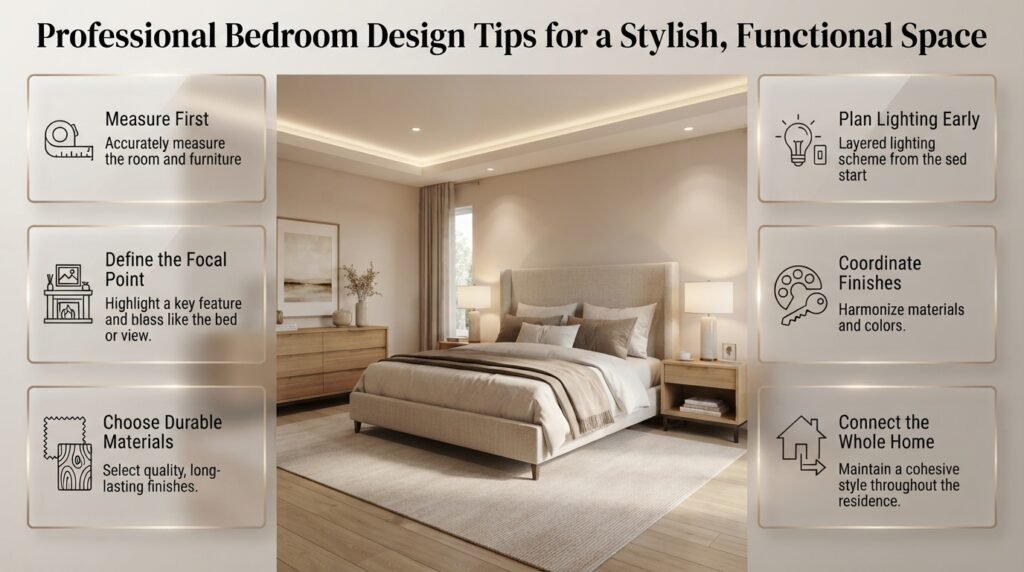
A professional approach begins with the room’s dimensions, intended use, natural light, and practical requirements. Decorative choices come later. This order helps avoid expensive mistakes and creates a more coherent design.
Measure before planning
Record the room’s dimensions, window positions, door swings, electrical points, and any unusual architectural features.
Sketch a simple floor plan and test different furniture arrangements. This is particularly useful when buying a larger bed or installing fitted wardrobes.
Establish a clear focal point
In many bedrooms, the bed naturally becomes the main focal point. Arrange the furniture and lighting so it feels intentional without blocking windows or creating awkward circulation.
If the room has a distinctive architectural feature, consider how the furniture can complement it rather than compete with it.
Select materials for real-life use
Consider cleaning requirements, durability, comfort, and climate before selecting bedding, upholstery, rugs, and curtains.
For example, a thick rug may feel comfortable in a cool room but become less practical in a hot climate. Delicate bedding may look attractive but require more maintenance than you can reasonably manage.
Plan lighting before finishing the room
Decide where bedside lights, switches, and other fixtures should go before finalizing furniture placement or undertaking electrical work.
This is especially important if you plan to install wall lights, fitted wardrobes, or concealed lighting.
Think about the whole home
A bedroom can have its own identity while sharing selected materials and colors with nearby spaces.
For example, the wood finish used in the bedroom might relate to the living room furniture, while the wall colors remain different.
You can explore Living Room Ideas for inspiration on creating visual continuity between rooms without making every space identical.
For a more architecture-led approach, Home Modern Architecture Uses Form, Light & Space offers a relevant perspective on the relationship between spatial planning, daylight, and interior design.
14. How Can You Plan a Bedroom Makeover Step by Step?
A successful bedroom makeover follows a practical sequence: identify the problems, set a budget, plan the layout, select the main finishes, improve lighting and storage, and add decorations last. Working in this order helps prevent impulse purchases and reduces the risk of having to redo completed work.
Step 1: Identify what needs to change
Write down the three main problems with your current bedroom.
For example:
- The bed makes the room difficult to move around.
- The wardrobe doesn’t provide enough accessible storage.
- The lighting feels too harsh in the evening.
This list gives your project a clear direction.
Step 2: Establish your budget
Divide your available budget into categories such as furniture, bedding, lighting, paint, storage, and installation.
Keep some money aside for unexpected costs, particularly if the project involves electrical work, repairs, or built-in furniture.
Step 3: Plan the furniture arrangement
Measure the room and sketch the bed, wardrobe, doors, and windows. Test whether you can move around comfortably and access storage.
If possible, mark furniture dimensions on the floor using removable tape before purchasing larger pieces.
Step 4: Select colors and materials
Choose a main wall color, furniture finishes, and a bedding palette. Compare paint samples with the existing flooring and furnishings.
Avoid buying every decorative accessory at this stage. Establishing the main materials first makes later decisions easier.
Step 5: Complete practical improvements
Address repairs, lighting installation, curtain hardware, and storage changes before styling the room.
If the project includes structural changes or electrical alterations, use appropriately qualified professionals and follow applicable local requirements.
Step 6: Add the finishing touches
Introduce bedding, curtains, artwork, rugs, and selected accessories.
Live with the arrangement for a few days before buying additional decorations. You may discover that the room already feels complete.
Example: If your bedroom feels cramped and unfinished, replacing bulky bedside tables with wall-mounted shelves, rearranging the dresser, improving the curtains, and adding a warm reading lamp may deliver a noticeable improvement without replacing the bed.
15. How Can Bedroom Design Reflect a Travel-Inspired Lifestyle?
A bedroom can reflect the atmosphere of a favorite destination without becoming a themed room. Choose a few elements inspired by places you enjoy, such as natural materials, layered textiles, coastal colors, or understated patterns, and combine them with furniture that suits your everyday needs.
Create a calm retreat
If you enjoy the atmosphere of a peaceful hotel or holiday destination, focus on comfortable bedding, convenient lighting, uncluttered surfaces, and practical storage.
You don’t need to recreate an entire hotel room. A well-made bed, coordinated textiles, and a comfortable place to sit can create a similar sense of care.
Use destination-inspired details sparingly
A coastal-inspired bedroom might use soft blue, cream, and natural wood. A mountain-inspired room could feature warm neutrals, textured blankets, and darker wooden furniture.
Choose details that complement the room’s architecture rather than adding unrelated souvenirs and decorative objects everywhere.
For broader inspiration when exploring places and design influences, visit Travel Places and Destinations.
Keep comfort more important than the theme
The room should still support sleep, dressing, storage, and relaxation. A decorative concept is successful when it adds personality without making everyday life more complicated.
16. What Should You Consider Before Making Major Bedroom Changes?
Before committing to a major bedroom renovation, assess the room’s existing condition, storage requirements, electrical layout, ventilation, and long-term usefulness. Cosmetic changes are relatively simple to reverse, but structural alterations, flooring replacements, and fitted furniture require more planning.
Check the existing room
Look for signs of moisture, damaged finishes, poorly functioning windows, inadequate ventilation, or electrical issues before decorating.
Painting over a persistent moisture problem won’t solve the underlying cause. Address the source of the problem first and obtain professional help when necessary.
Consider long-term needs
Think about whether your bedroom requirements may change. You might need additional storage, a more accessible layout, or a different furniture arrangement in the future.
Flexible furniture can help you adapt the room without undertaking another major project.
Evaluate the property as a whole
If you’re renovating a bedroom before buying or improving a property, consider how the room fits into the larger floor plan.
The position of windows, available storage, privacy, noise, and access to bathrooms may influence how practical the bedroom will be.
For more context, read What to Look for Before Choosing Your Next Property. Considering these broader factors can help you distinguish between a room that looks attractive and one that genuinely meets your needs.
Know when professional advice is worthwhile
Furniture rearrangement, styling, and many simple decorating tasks can be handled independently. Structural changes, significant electrical work, and complicated built-in installations may require specialist planning.
Professional advice is most valuable when it helps you avoid costly mistakes or resolve a problem that cannot be solved through decoration alone.
What Are the Best Bedroom Ideas to Make a Room Look Stylish and Comfortable?
The best bedroom ideas combine a practical furniture arrangement, comfortable bedding, coordinated colors, and lighting that creates the right atmosphere. A bedroom doesn’t need expensive furniture or elaborate decorations to look stylish. Often, the biggest improvement comes from removing unnecessary clutter, choosing suitable textiles, and making the bed the main focal point of the room. The design should reflect your personal taste while supporting everyday activities such as sleeping, reading, and getting dressed.
To achieve a balanced look, choose a consistent color palette and introduce different textures through curtains, rugs, bedding, and upholstered furniture. Keep bedside tables organized and use a combination of ceiling lighting and bedside lamps to make the room suitable for both daytime activities and evening relaxation.
Practical ideas to consider:
Choose two or three complementary colors for walls, bedding, and accessories.
Use comfortable, well-fitted bedding to give the bed a neat appearance.
Add warm bedside lighting for a relaxing evening atmosphere.
Display a few meaningful decorations instead of overcrowding surfaces.
Arrange furniture to maintain comfortable walking space.
How Can I Make a Small Bedroom Look Bigger Without Spending Too Much Money?
Making a small bedroom look bigger starts with improving the layout rather than purchasing more decorations. Oversized furniture, crowded walkways, and poorly organized storage can make a compact room feel even smaller. Measure the available space, remove items you rarely use, and arrange essential furniture so the room remains easy to navigate. These changes can improve the appearance and functionality of the bedroom without requiring a complete makeover.
Choose furniture that suits the room’s dimensions, such as wall-mounted bedside shelves, a narrow dresser, or a bed with built-in storage. Light and coordinated colors can help the room feel more open, while a strategically placed mirror can reflect available daylight. However, keeping the floor and frequently used surfaces clear is often more effective than adding numerous decorative accessories.
Budget-friendly solutions:
Rearrange existing furniture to create clearer walking routes.
Use vertical shelves to free up floor space.
Choose light-colored bedding and curtains to create a cohesive appearance.
Store seasonal clothing in suitable under-bed containers.
Use mirrors where they reflect daylight or brighten a darker area.
Remove unnecessary furniture that serves no practical purpose.
Which Bedroom Colors Are Best for Creating a Calm and Relaxing Atmosphere?
The best bedroom colors are those that create a comfortable visual environment and complement the room’s lighting and furnishings. Warm white, beige, muted blue, sage green, and soft greige are popular choices because they can be combined with a variety of materials and decorating styles. However, the final result depends on the shade you select, the amount of natural light, and the colors of nearby furniture and flooring.
For example, sage green works well with natural wood and cream bedding, while warm white creates a flexible background for different decorative styles. Muted blue can introduce subtle color, and deeper shades such as navy or forest green can create a more dramatic atmosphere when balanced with suitable lighting and lighter textiles.
Before committing to a color, test paint samples on the actual walls. Observe them in daylight and under your bedroom’s artificial lighting, as colors can look noticeably different throughout the day.
Helpful color-selection tips:
Use warm white or beige when you want a flexible, understated foundation.
Combine sage green with natural wood for a nature-inspired appearance.
Pair muted blue with cream or warm white for a balanced color scheme.
Introduce darker colors through an accent wall or selected accessories.
Coordinate wall colors with your flooring, curtains, and existing furniture.
Test paint samples before painting the entire bedroom.
How Can I Decorate My Bedroom on a Budget and Still Make It Look Expensive?
A bedroom can look polished on a limited budget when you focus on consistency, cleanliness, comfortable materials, and thoughtful details. Replacing every piece of furniture is rarely necessary. Start by identifying the elements that make the room feel unfinished, such as worn bedding, harsh lighting, crowded surfaces, or mismatched accessories. Addressing these issues individually can create a more refined appearance without unnecessary spending.
Refreshing bedding, repainting a tired wall, updating lampshades, or replacing outdated drawer handles can make an existing room feel more coordinated. Pay attention to how different materials work together. For example, cream bedding, natural wood, and warm lighting can create a welcoming look without requiring expensive decorative products.
The most important principle is to spend on improvements that have a noticeable impact rather than purchasing many inexpensive items that contribute to clutter.
Affordable upgrades worth considering:
Declutter and rearrange furniture before shopping for replacements.
Invest in comfortable bedding that fits the bed properly.
Refresh walls with a suitable paint color.
Coordinate curtains, cushions, and rugs instead of mixing unrelated patterns.
Improve bedside lighting with practical lamps or suitable fixtures.
Restyle existing artwork and accessories before buying new decorations.
How Should I Arrange Bedroom Furniture for Better Comfort and Functionality?
A good bedroom furniture arrangement provides comfortable access to the bed, wardrobe, windows, and storage while keeping the room visually balanced. Start by measuring the room and identifying the position of doors, windows, electrical points, and built-in cupboards. Place the bed where it allows convenient movement, then arrange other furniture around the available space rather than forcing oversized pieces into the room.
Where the layout permits, leave access on both sides of a shared bed and position bedside tables within easy reach. Make sure wardrobe doors and drawers can open fully without hitting the bed or other furniture. In a small bedroom, consider a wall-mounted shelf instead of a bulky nightstand or a narrow dresser instead of a deep chest of drawers.
Before purchasing new furniture, test the proposed arrangement using a simple floor plan or removable tape on the floor to mark furniture dimensions. This can help you identify circulation problems before spending money.
Furniture-planning tips:
Measure the bed, wardrobe, dresser, and available walking space.
Keep doorways and main circulation routes unobstructed.
Position bedside lighting where it is convenient to use.
Avoid placing furniture where it blocks essential windows or access points.
Choose multifunctional furniture when floor space is limited.
Prioritize comfortable movement and everyday usability over perfect symmetry.
Conclusion
The best bedroom ideas are not simply about following the latest design trends or buying expensive furniture. They are about creating a space that feels comfortable, looks beautiful, and supports your everyday routine. From choosing calming colors and practical furniture to improving lighting, organizing storage, and adding personal decorative details, small, thoughtful decisions can make a meaningful difference to your bedroom.
Before making major changes, consider the size of your room, your storage needs, your preferred style, and the atmosphere you want to create. A small bedroom can feel spacious with smart furniture placement and a lighter color palette, while a larger room can become more inviting through balanced proportions, layered lighting, and carefully selected accessories. Even simple updates, such as fresh bedding, coordinated curtains, attractive bedside lighting, or a well-organized wardrobe, can refresh the entire space without requiring a complete renovation.
Remember that a beautiful bedroom should also be easy to maintain and practical to live in. Choose materials that suit your lifestyle, keep unnecessary clutter under control, and invest in comfort where it matters most. For more inspiration, explore Blog Home Ideas TheHomeTrotters and discover ideas that can help you create a home that feels welcoming, functional, and uniquely yours.
Ultimately, the right bedroom design is one that combines personal expression with everyday comfort. Start with the improvements that matter most to you, make changes gradually, and build a bedroom that feels peaceful, organized, and genuinely enjoyable every day.
One Response