Introduction
Home Decor | Have you ever looked around your home and felt that something was missing, even though you already have furniture, curtains, and all the basic things you need? Perhaps your living room feels unfinished, your bedroom lacks personality, or your home looks different from the beautiful spaces you save for inspiration. The problem isn’t always a lack of money or expensive furniture. Often, it’s the way different elements work together.
Home decor is about making your living space feel comfortable, attractive, practical, and personal. It includes much more than choosing colors or buying decorative accessories. The way you arrange furniture, use empty walls, manage clutter, select lighting, and display meaningful objects can change how you experience your home every day.
At Blog Home Ideas TheHomeTrotters, the focus is on practical ideas that help readers improve their homes, make informed decisions, and find inspiration that fits their real lives. You don’t need to follow every trend or replace everything you own to create a welcoming interior.
This guide explains how to plan your decorating choices, select suitable styles, improve individual rooms, work with different budgets, and avoid common mistakes. Whether you’re moving into a new property, updating a rented apartment, or simply trying to make your existing home feel more inviting, you’ll find practical suggestions you can adapt to your space.
1. What Does Home Decor Actually Include?
Home decor includes the choices that shape the appearance and atmosphere of a room, from wall finishes and curtains to furniture placement, textiles, lighting, and personal accessories. Good decorating combines these elements so the space feels intentional without sacrificing comfort, movement, or everyday usefulness.
Many people think decorating begins when they visit a furniture shop. In reality, it begins with understanding what they want their home to do.
A family that spends most evenings together may need flexible seating and easy-to-clean fabrics. Someone who works from home may need a calm corner with appropriate lighting. A small apartment may benefit from multifunctional furniture and carefully planned storage.
The difference between decorating and furnishing
Furnishing means providing a room with the essential items needed for its use. Decorating adds visual character and helps those items work together.
For example, a bedroom may already contain a bed, wardrobe, and bedside table. Coordinated bedding, suitable curtains, a bedside lamp, and carefully selected wall art can make it feel more complete without replacing the existing furniture.
The same principle applies throughout the house.
- Furniture establishes the room’s practical foundation.
- Colors create a visual atmosphere.
- Lighting affects comfort and how finishes appear.
- Textiles introduce softness and texture.
- Accessories reflect personal taste.
- Storage keeps the finished space manageable.
Why your home should reflect your lifestyle
A beautiful room isn’t successful if it becomes difficult to use. Delicate decorative objects may be unsuitable for a busy family room, while a large formal dining table may not make sense for someone who rarely entertains.
Before choosing a decorating direction, consider your routines, available space, maintenance preferences, and budget. These details will help you make choices that remain useful after the initial excitement of decorating has passed.
2. How Do You Choose a Home Decor Style That Suits You?
The right decorating style is one that fits your preferences, property, and daily habits. Modern, traditional, minimalist, rustic, Scandinavian, and eclectic interiors each offer different visual qualities, but you don’t need to follow one style perfectly to create a cohesive home.
Modern and contemporary interiors
Modern-inspired interiors often emphasize clean lines, simple forms, purposeful furniture, and uncluttered surfaces. Contemporary interiors reflect current design preferences and can change as materials, shapes, and decorating trends evolve.
These approaches suit people who appreciate organized spaces and furniture with a clear purpose.
To create this look, choose a few complementary finishes, avoid unnecessary decorative clutter, and introduce warmth through wood, textured fabrics, or comfortable lighting.
A neutral sofa, simple side table, and carefully chosen artwork can create a polished living room without requiring a large collection of accessories.
Traditional interiors
Traditional decor draws inspiration from established furniture forms, decorative details, balanced arrangements, and familiar materials.
It can work particularly well in homes with substantial wood furniture, decorative architectural features, or rooms intended for formal entertaining.
To prevent a traditional room from feeling too heavy, balance darker furniture with lighter textiles, appropriate lighting, and some open visual space.
Rustic and natural interiors
Rustic decorating emphasizes natural textures, visible wood grain, woven materials, stone, and a relaxed atmosphere. It can make a room feel grounded and comfortable without relying on perfectly matched furniture.
The key is to balance rougher textures with softer elements. A wooden dining table, upholstered chairs, and a simple fabric runner can feel more inviting than combining numerous distressed finishes throughout the same room.
Scandinavian and minimalist styles
Scandinavian interiors commonly emphasize practical furniture, natural materials, simplicity, and a bright, comfortable atmosphere. Minimalist interiors take a more restrained approach, keeping decorative elements to a deliberate minimum.
Both styles can be useful in smaller homes, although neither requires an entirely white room or empty shelves.
Use storage that keeps daily essentials accessible, choose furniture suited to the available space, and introduce texture through curtains, rugs, and bedding.
Eclectic decorating
Eclectic interiors combine elements from different styles, periods, and influences. They can feel personal and distinctive when the objects share some relationship through color, shape, material, or proportion.
For example, a contemporary sofa can work with a vintage wooden cabinet if the finishes and surrounding accessories create a connection.
Practical advice: Save examples of rooms you genuinely enjoy, then look for repeated characteristics. You may discover that you prefer warm wood, muted colors, curved furniture, or colorful artwork. Those patterns provide a more useful starting point than simply choosing a fashionable style name.
3. How Can You Create a Color Scheme That Works?
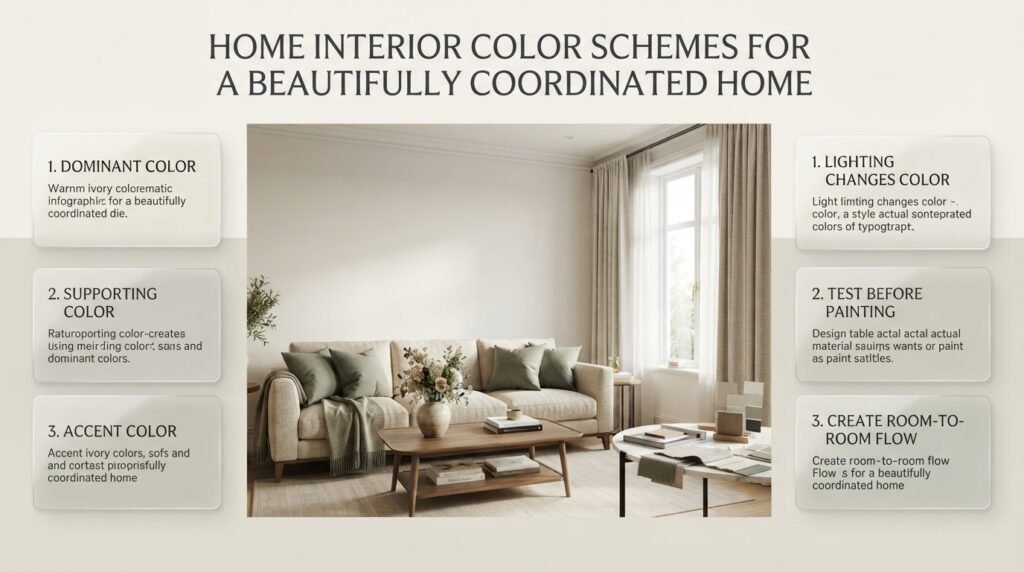
A successful color scheme connects walls, flooring, furniture, textiles, and accessories. Start with elements that are expensive or difficult to replace, then select additional colors that complement them.
If your flooring has a strong warm undertone, for example, cool gray furniture may look different from what you expected. Comparing samples together helps you understand how the finishes interact.
Start with three color roles
A simple approach is to choose a dominant color, a supporting color, and an accent color.
The dominant color usually covers the largest area, such as walls or substantial upholstery. The supporting color connects larger furnishings and secondary surfaces. The accent color appears in smaller details, such as cushions, artwork, or decorative objects.
Consider a living room with warm-white walls, a beige sofa, medium-toned wood, and muted green accessories. The palette feels coordinated because the colors complement one another without competing for attention.
This is a flexible starting point rather than a strict formula. Some rooms benefit from stronger contrasts or a richer range of colors.
Understand how lighting changes color
Natural daylight, shaded windows, and artificial lighting can make the same paint sample appear noticeably different.
Before committing to a wall color:
- Test a sample on more than one wall if possible.
- Observe it in daylight and after sunset.
- Compare it with your flooring and major furniture.
- Check how it looks under the lighting you intend to use.
This small step can prevent expensive repainting.
Should every room use the same colors?
Not necessarily. Bedrooms may benefit from softer colors, while dining rooms or creative spaces can support more expressive choices.
However, repeating one or two elements throughout the property can create continuity. These might include a particular wood tone, a recurring accent color, or similar metal finishes.
For further inspiration on planning the appearance of different spaces, explore Home Interior Ideas.
4. What Makes a Living Room Feel Inviting?
An inviting living room combines comfortable seating, a useful layout, appropriate lighting, and a few well-chosen decorative details. The most important first step is deciding how the room will be used rather than immediately choosing accessories.
Arrange furniture around everyday activities
Think about what normally happens in your living room.
If the family watches television together, seating should provide comfortable views without blocking the main walking routes. If guests visit frequently, arrange chairs so people can talk without having to turn awkwardly toward one another.
Measure the room and major furniture before moving everything. Check the space required for doors, drawers, and frequently used pathways.
A layout that looks attractive from the doorway may still be inconvenient if people have to walk around a coffee table every time they enter the room.
Use rugs to connect furniture
A rug can make a seating arrangement feel like one coordinated area rather than a collection of separate pieces.
Choose a size that relates to the sofa and chairs. A rug that is too small may visually separate the furniture, while one that is excessively large can dominate a compact room.
Consider cleaning requirements, especially if the living room is used heavily or contains pets.
Make lighting more flexible
One central ceiling fixture may provide general illumination but leave reading corners or seating areas poorly lit.
A combination of ceiling lighting, floor lamps, table lamps, and suitable accent lighting can create a more adaptable environment.
For example, a floor lamp beside an armchair supports reading, while a table lamp can make a side table feel more useful during the evening.
Finish with personal details
Books, family photographs, artwork, plants, and meaningful objects give a living room its identity.
Rather than placing numerous small items across every surface, group a few related pieces together. A tray can organize objects on a coffee table, while a larger artwork can provide a clear focal point.
Use Living Room Ideas to explore additional approaches to seating, layout, and styling.
5. How Can You Make a Bedroom More Comfortable?
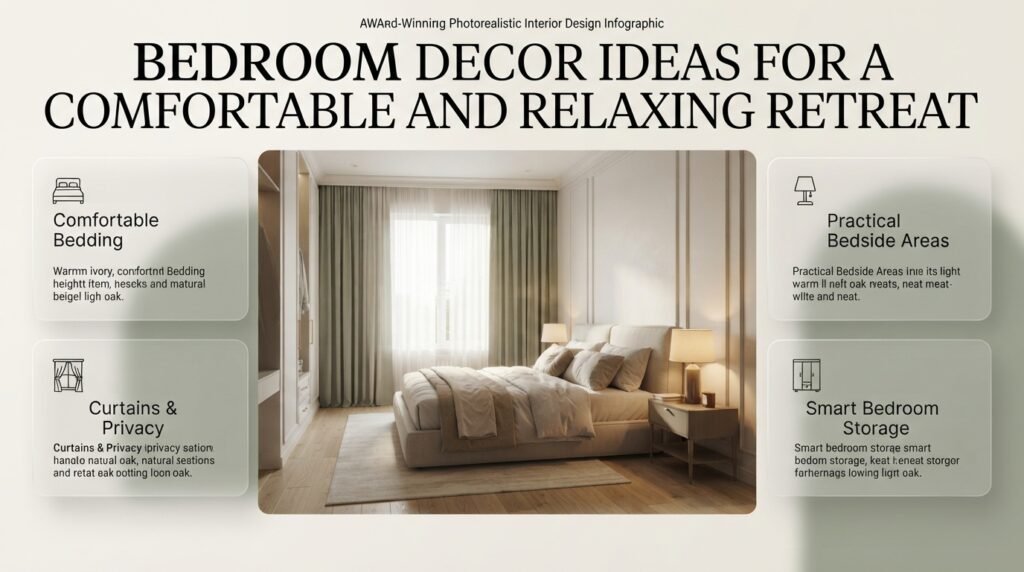
Bedroom decor should support rest, privacy, storage, and personal comfort. Bedding, curtains, bedside lighting, furniture placement, and the choice of wall colors can all influence how the room feels.
Make the bed the visual starting point
Because the bed usually occupies a substantial part of the room, its bedding and surrounding furniture influence the entire appearance.
Choose bedding that works with the wall color and flooring. Add a throw blanket or a small selection of cushions if you enjoy layered styling, but don’t make the bed unnecessarily difficult to prepare every morning.
Natural textures, coordinated colors, and well-maintained bedding can make an ordinary bedroom feel more considered.
Choose curtains according to your needs
Sheer curtains can soften incoming daylight while preserving a degree of privacy. Heavier or lined curtains can offer greater privacy and light control.
Consider how much sunlight enters the room, whether street lighting affects sleep, and how frequently the curtains will need cleaning.
Measure the window carefully before purchasing, and check whether the curtain pole or track can support the chosen fabric.
Make bedside areas practical
Bedside tables should accommodate the objects you actually use, such as a lamp, phone, book, or glass of water.
If space is limited, a wall-mounted light or narrow bedside shelf may be more useful than a bulky table.
Keep cables organized and make sure electrical equipment is positioned safely.
Plan storage before adding decoration
A bedroom with insufficient storage often becomes cluttered, regardless of how attractive its furniture may be.
Use wardrobe organizers, under-bed storage where appropriate, and drawers for frequently used belongings. Avoid buying storage containers before checking the dimensions of the available spaces.
More bedroom inspiration is available in Bedroom Ideas.
6. How Can You Refresh Kitchen Decor Without Replacing Everything?
Kitchen decorating works best when appearance and food preparation remain equally important. Small updates to cabinet hardware, lighting, accessories, and organization can improve an existing kitchen without the cost of a full renovation.
Update the details you notice most
Cabinet handles, drawer pulls, and visible accessories can influence the kitchen’s overall appearance.
Choose finishes that complement the existing faucet, appliances, cabinet color, and other visible hardware. Before ordering replacements, check the dimensions and spacing of the existing fittings.
Changing every finish at once is not always necessary. A few carefully selected improvements may be enough to make the room feel more consistent.
Keep work surfaces usable
Decorative accessories should not interfere with food preparation or cleaning.
A small tray can group commonly used seasonings, while a fruit bowl or a simple vase can add color. Keep frequently used appliances accessible, but avoid filling every available section of countertop.
Improve the lighting where you work
Under-cabinet lighting can improve visibility on preparation surfaces, while suitable overhead fixtures provide general illumination.
If your kitchen includes an island or dining counter, pendant lighting can provide a decorative feature as long as it doesn’t interfere with movement or sightlines.
Select products suitable for the installation environment, and use a qualified professional when electrical changes are required.
For additional inspiration, visit Kitchen Ideas.
7. What Simple Changes Can Improve Bathroom Decor?
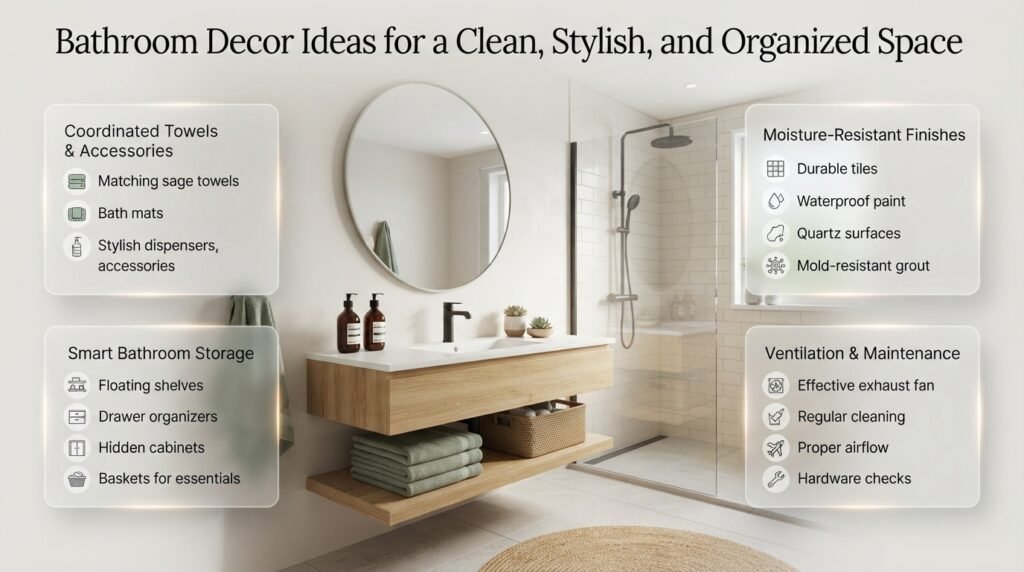
Bathroom decor can be improved through coordinated towels, suitable storage, mirrors, lighting, and accessories designed for humid conditions. You don’t necessarily need to replace tiles, sanitaryware, or the vanity to create a cleaner, more coordinated appearance.
Coordinate towels and accessories
Choose a small group of complementary colors for towels, bath mats, soap dispensers, and storage containers.
White and cream can create a simple look, while muted blue, green, sand, or charcoal can introduce more character.
The goal is to create visual consistency without purchasing matching accessories that you don’t actually need.
Use storage to control clutter
Toiletries, cleaning products, and personal-care items can quickly overwhelm bathroom surfaces.
Use vanity drawers, shelves, or suitable baskets to keep everyday essentials accessible. Select moisture-resistant materials and make sure storage doesn’t obstruct movement or cleaning.
Protect finishes from moisture
Ventilation is an important part of maintaining an attractive bathroom. Persistent moisture can damage finishes and encourage mold growth.
Use an appropriate exhaust fan where needed, address leaks promptly, and allow wet surfaces to dry. Decorative materials should be suitable for the humidity and cleaning products they will encounter.
Explore Bathroom Ideas for more ways to improve a bathroom’s appearance and usability.
8. How Can You Decorate Your Home on a Limited Budget?
Budget-friendly decorating starts with identifying what needs improvement and using existing resources before buying replacements. Rearranging furniture, decluttering, updating textiles, and improving lighting can deliver noticeable results without a large investment.
Rearrange before purchasing
A room may feel uncomfortable because furniture is poorly positioned rather than because the furniture itself is unsuitable.
Try moving a chair closer to natural light, shifting a sofa to open a walking route, or removing a table that serves little purpose.
Take photographs of different arrangements if you find it difficult to compare them. Viewing the room from the doorway can help you identify obstacles that are less obvious when standing inside it.
Refresh textiles
Cushion covers, throws, curtains, and bedding are often easier to change than large furniture items.
Choose fabrics that work with your existing furniture instead of purchasing a new color scheme for every room.
If you already own attractive neutral furniture, a small number of colorful accessories can provide variety without requiring a complete makeover.
Give existing furniture another purpose
A side table from a bedroom may work beside a living room chair. A sturdy basket may become useful storage for blankets, while an existing cabinet may provide additional space in a dining area.
Before reusing an item, check its condition, dimensions, and suitability for the new location.
Prioritize purchases carefully
| Priority | Possible improvement | Budget approach |
|---|---|---|
| First | Decluttering and rearranging | Usually free |
| Second | Reusing existing accessories | Usually free |
| Third | Cushion covers or small textiles | Relatively inexpensive |
| Fourth | Lighting or cabinet hardware | Low to moderate cost |
| Fifth | Rugs, mirrors, or occasional furniture | Moderate cost |
| Sixth | New major furniture or renovation | Higher cost |
The exact cost depends on your location, materials, quality, and available products.
Budget tip: Set aside money for practical essentials before buying decorative accessories. A comfortable chair or adequate storage may improve daily life more than several attractive objects that serve little purpose.
9. How Do Natural Materials Improve Home Decor?
Natural materials can introduce warmth, texture, and visual variation into a room. Wood, cotton, linen, wool, stone, jute, and woven fibers each have different characteristics, so the best choices depend on how the space is used.
Combine smooth and textured surfaces
A room with only smooth finishes may feel visually flat. Adding textured fabrics or natural materials can create contrast without requiring stronger colors.
For example, a simple sofa can be complemented by a woven rug, wooden side table, linen curtains, and ceramic accessories.
These materials don’t need to match exactly. They should simply work together in terms of color, scale, and overall character.
Choose plants according to their environment
Indoor plants can add color and soften the appearance of hard surfaces. However, not every plant suits every room.
Consider available light, temperature, humidity, and the amount of care you can provide. Check plant safety if pets or young children live in the home.
Use suitable pots and protect wooden surfaces from standing water.
Consider maintenance before buying
Natural materials aren’t automatically more durable or easier to maintain than synthetic alternatives.
Some wood finishes need periodic care, certain fabrics stain easily, and some stones require sealing. Compare maintenance requirements with the way you actually use the room.
A practical material that remains attractive with reasonable care is often a better investment than a delicate finish that creates ongoing work.
10. How Can You Make Different Rooms Feel Connected?
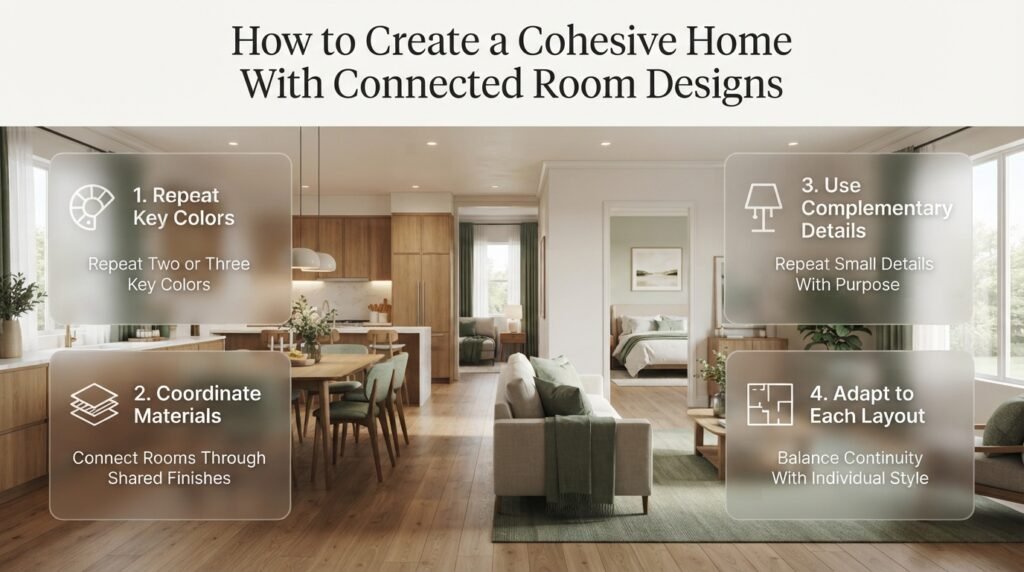
A cohesive home uses repeated visual details to create a relationship between rooms. This may involve recurring colors, similar wood finishes, complementary metal hardware, related artwork, or a consistent approach to lighting.
Every room doesn’t need identical furniture or decoration.
A bedroom can feel softer than a living room, while the kitchen can use a different accent color. Continuity comes from a few carefully repeated elements rather than copying the same arrangement throughout the property.
Create a simple whole-home plan
Choose two or three elements to repeat across selected rooms.
For example, warm-white walls, medium-toned wood, and muted green accents could connect a living room, bedroom, and dining space.
You might use green cushions in the living room, a green throw in the bedroom, and a small green accessory in the kitchen. The repeated color creates a relationship without making the rooms look identical.
Adapt the approach to your property
In open-plan homes, adjacent areas are visible together, so colors and finishes often need closer coordination.
In properties with separate rooms, you have greater freedom to create distinct atmospheres. A bold dining room may work perfectly well alongside a quiet neutral bedroom.
For additional ideas on how architecture and interiors work together, explore Residential Architecture Ideas.
11. What Home Decor Mistakes Should You Avoid?
Common decorating mistakes include buying furniture without measuring, mixing unrelated finishes, ignoring lighting, overfilling rooms, and prioritizing appearance over practical use. These problems often occur when people purchase individual items without considering how the complete room will function.
Buying furniture without checking measurements
A sofa or dining table can appear suitable in a showroom but overwhelm the available space.
Measure the room, doorways, hallways, and intended furniture positions before ordering. Check whether drawers, cabinet doors, and windows can open without obstruction.
Following too many trends
A room can become visually confusing when every new trend introduces a different color, material, or decorative style.
Instead of copying every fashionable idea, identify which elements fit your home and personal preferences. Introduce trend-led accessories in small amounts so they’re easier to replace later.
Filling every empty surface
Empty space is not necessarily a decorating problem. It allows furniture and meaningful objects to stand out.
Before adding another accessory, ask whether the room genuinely needs it. Removing unnecessary objects can make an existing arrangement feel more balanced.
Ignoring maintenance
Delicate fabrics may be difficult to clean in busy family rooms. Some decorative finishes may not tolerate humidity, frequent wiping, or direct sunlight.
Choose materials according to the room’s conditions and the amount of care you can realistically provide.
Changing everything at once
Large decorating projects can become expensive when purchases are made before the layout and palette are established.
Complete the essential planning first. Introduce furniture and major finishes before deciding which smaller accessories are necessary.
12. How Should You Plan a Home Renovation Before Decorating?
Decorating decisions are easier when major building, repair, and renovation work has been considered first. If a room requires repairs, new flooring, electrical changes, or alterations to walls, these should be planned before delicate finishes and decorative accessories are installed.
Identify essential repairs
Inspect walls, ceilings, windows, flooring, plumbing, and visible electrical fittings.
Resolve issues such as leaks, damaged surfaces, or inadequate ventilation before investing in decorative finishes that could be damaged later.
Establish a realistic sequence
A practical sequence might include:
- Assess the room and identify essential repairs.
- Plan the layout and any required professional work.
- Finalize major materials and fixed finishes.
- Complete necessary construction and installation.
- Add furniture, lighting, and window treatments.
- Finish with accessories and personal details.
The precise order depends on the project, but planning ahead reduces the risk of damaging completed work.
Allow for unexpected costs
Renovations can reveal problems that weren’t visible during the initial inspection. Keep some flexibility in your budget and avoid spending the entire amount on decorative finishes before essential work is complete.
If your project involves structural changes, significant electrical work, or plumbing alterations, consult an appropriately qualified professional.
For more guidance, explore Build & Renovate Construction.
13. How Does Property Maintenance Help Preserve Home Decor?
Regular maintenance helps protect the appearance and useful life of furniture, finishes, textiles, and decorative features. Even well-designed interiors can deteriorate when moisture, dust, sunlight, or minor damage is ignored.
Create simple maintenance routines
Clean surfaces according to their material requirements, inspect areas exposed to moisture, and address small problems before they become more serious.
For example, promptly cleaning a spill from a suitable fabric may prevent a lasting stain. Checking for leaks beneath a sink can help protect nearby cabinets and flooring.
Protect furniture and finishes
Use appropriate cleaning products rather than assuming one product is suitable for every surface. Harsh chemicals, excessive water, or abrasive tools may damage some finishes.
Follow the manufacturer’s care instructions where available.
Plan maintenance around your lifestyle
A household with children or pets may need washable textiles and durable furniture finishes. A lightly used guest room may accommodate more delicate decorative items.
Selecting practical materials from the beginning makes maintenance easier and helps the home remain attractive over time.
Find more practical guidance in Property Care & Maintenance.
14. How Can Your Outdoor Space Complement Your Home Decor?

Outdoor spaces can extend the feeling of your home beyond its interior. A balcony, patio, porch, or garden can become more welcoming through comfortable seating, suitable lighting, coordinated textiles, and practical planting arrangements.
Treat outdoor areas as functional spaces
First decide how the area will be used. A balcony may need compact seating and planters, while a larger patio might accommodate dining furniture or a place to relax.
Measure the available space before purchasing outdoor furniture, and leave enough room to open doors and move safely.
Choose weather-appropriate materials
Outdoor furniture and accessories face different conditions from indoor furnishings. Sunlight, rain, humidity, and temperature changes can affect finishes and fabrics.
Choose products intended for the conditions in your area. Store cushions appropriately and follow maintenance recommendations to help extend their useful life.
Create a connection between indoors and outdoors
You can connect an interior and nearby outdoor area through related colors, natural materials, or a similar relaxed atmosphere.
For example, wooden furniture and green accents used inside can be echoed by suitable outdoor seating and planters.
Explore Garden and Outdoor Living Ideas for more ways to improve patios, balconies, and garden spaces.
15. How Do Property Decisions Affect Decorating Choices?
Home decor is influenced by more than personal taste. Property size, layout, natural light, rental restrictions, renovation plans, and long-term ownership decisions can all affect which improvements are sensible.
Consider the property before making major purchases
A small apartment may benefit from flexible furniture that can be moved easily. A long-term family home may justify more durable furniture or built-in storage.
If you’re planning to move soon, prioritize portable improvements and avoid expensive permanent changes that may not suit your next property.
Understand rental and ownership restrictions
Renters should check their agreements before painting, drilling, changing fixtures, or installing permanent shelving.
Property owners should consider the condition of existing finishes and whether planned changes will interfere with essential repairs or future renovation work.
Think about long-term value
Not every decorative change increases a property’s market value. Personal styling can make a home more enjoyable without necessarily producing a financial return.
If resale is an important consideration, focus on maintenance, functionality, durable finishes, and choices likely to appeal to a broad range of future occupants.
For additional guidance on property decisions, visit Property and Real Estate Guide.
16. How Can You Make Your Home Feel More Personal?
A home feels personal when its decoration reflects the people who live there rather than simply reproducing a showroom arrangement. Photographs, artwork, collected objects, favorite books, and meaningful furniture can create a sense of identity.
Display meaningful items with intention
You don’t need to display every souvenir or photograph you own. Select items that matter to you and arrange them where they’ll be appreciated.
A small collection on a shelf may have more impact than dozens of unrelated objects spread throughout the room.
Balance personal expression with visual consistency
Personal objects can vary in age, style, and color while still working within a coordinated space.
For example, a colorful travel souvenir can become an accent in a neutral room. A family photograph can complement a wall arrangement when its frame relates to nearby finishes.
Leave room for your home to evolve
Your needs and preferences may change over time. Children grow, work routines shift, and furniture may eventually need replacing.
Choose a practical foundation that allows smaller decorative elements to change without requiring a complete redesign.
If you’re looking for more inspiration on creating an inviting living environment, explore Create a Home That Feels Beautiful.
17. How Can You Decorate More Sustainably?
Sustainable decorating involves making choices that reduce unnecessary waste, extend the useful life of existing items, and consider the resources required to produce, transport, and maintain new purchases.
Reuse before replacing
Repairing a chair, refinishing a table, or changing a lampshade may be more practical than purchasing a completely new item.
Before discarding furniture, assess whether it can be repaired safely and economically.
Choose durable, suitable materials
A product’s long-term performance depends on its construction, intended use, maintenance requirements, and environmental conditions.
Look beyond marketing claims and consider whether the item can be cleaned, repaired, or adapted when your needs change.
Buy with a clear purpose
Impulse purchases often create clutter and waste money. Make a list of the items that will genuinely improve your home, check their dimensions, and compare their suitability before buying.
Sustainable decorating doesn’t require purchasing expensive products marketed as eco-friendly. Often, using what you already own for longer is a sensible place to start.
18. What Do Professionals Consider Before Finishing a Room?
Professional-looking rooms generally reflect careful attention to scale, visual balance, lighting, circulation, and material compatibility. These principles can be applied at home even when you’re decorating without a professional.
Check the scale of every major item
Furniture should relate to the room’s dimensions and to nearby objects.
A small artwork may appear lost above a large sofa, while a very large coffee table may make movement uncomfortable. Consider the visual weight of each item as well as its physical measurements.
Create a clear focal point
A focal point gives the eye somewhere to settle. It might be a fireplace, a large artwork, an attractive window, or a carefully arranged furniture grouping.
Avoid creating too many competing focal points in one small room. Supporting elements should help the main feature stand out rather than compete with it.
Pay attention to circulation
People should be able to move through the room without repeatedly navigating around furniture.
Check the route between doors, seating, storage, and frequently used features. In busy households, slightly more open floor space may be more valuable than another decorative table.
Review the room in different lighting
A room may look balanced during the day but feel too dark at night. Check whether reading areas have enough light and whether decorative fixtures create unwanted glare.
If the room still feels unfinished, identify the specific problem before buying anything else. The missing element may be a suitable lamp, a better furniture arrangement, or simply less clutter.
19. How Can You Start Decorating Today?
You don’t need to complete an entire property at once. A manageable plan allows you to improve one room, learn what works, and make the next set of decisions with greater confidence.
A simple weekend decorating plan
First, identify the biggest problem. Decide whether the room needs better storage, a more practical layout, improved lighting, or a more coordinated appearance.
Second, use what you already have. Declutter surfaces, move furniture where practical, and collect accessories that could work together.
Third, identify the most useful affordable improvement. This might be a new lampshade, a suitable cushion cover, a repaired item of furniture, or a better storage arrangement.
Fourth, assess the result. Spend time using the room before buying anything else. Notice whether movement is easier and whether the space feels more comfortable.
Finally, plan the next improvement. Keep a list of remaining priorities so you can spend gradually instead of making rushed purchases.
If you’re planning a move, a renovation, or improvements across several rooms, the wider guidance available through Blog Home Ideas TheHomeTrotters can help you consider your home’s practical needs alongside its appearance.
How Can I Decorate My Home to Make It Look Beautiful and Expensive on a Budget?
You can make your home look elegant without spending a large amount of money by focusing on color coordination, furniture placement, lighting, and a few carefully selected accessories. An expensive-looking interior isn’t necessarily filled with luxury products. It usually feels organized, balanced, and thoughtfully arranged.
Start by decluttering visible surfaces and removing items that no longer serve a purpose. Choose a consistent color palette, such as warm white, beige, natural wood, and a muted accent color. Then improve the room with coordinated curtains, attractive cushion covers, suitable lighting, and artwork that complements the existing furniture.
Before purchasing anything new, consider whether rearranging your current furniture could improve the room’s appearance. Sometimes moving a sofa away from a crowded corner or creating a clearer focal point makes a greater difference than buying another decorative item.
Practical tips to follow:
Choose two or three complementary colors instead of mixing too many unrelated shades.
Keep countertops, coffee tables, and shelves organized without removing every personal detail.
Use warm, comfortable lighting in living rooms and bedrooms where appropriate.
Refresh existing furniture with suitable cleaning, repairs, or updated hardware.
Invest in durable essentials before spending money on purely decorative accessories.
The most important principle is to spend intentionally. A coordinated room with comfortable furniture and good lighting often looks more polished than a space filled with expensive but unrelated purchases.
What Are the Biggest Home Decor Trends to Follow in 2026?
Home decor in 2026 can be approached through several continuing design directions, including natural materials, warmer neutrals, comfortable furniture, personalized interiors, and practical multifunctional spaces. Rather than treating every fashionable look as a requirement, choose trends that suit your property and are likely to remain useful as your needs change.
Natural textures, including wood, linen, woven fibers, and ceramic finishes, can add depth without making a room visually overwhelming. Earth-inspired colors such as olive green, clay, warm brown, and muted beige can create a welcoming atmosphere. Curved furniture and softer shapes can also introduce visual contrast into rooms dominated by straight architectural lines.
Another useful direction is personalization. Instead of creating a room that looks exactly like a furniture showroom, combine meaningful artwork, collected objects, family photographs, and practical furniture that reflects how you actually live.
Decorating ideas worth considering:
Introduce natural textures through rugs, curtains, cushions, and wooden accessories.
Use earthy accent colors to add character to a neutral room.
Choose furniture that supports comfort and everyday activities.
Combine contemporary pieces with selected vintage or handmade objects.
Consider multifunctional furniture when space or storage is limited.
Trends should provide inspiration rather than dictate every purchase. If you want to experiment with a new color or decorative style, start with reversible accessories instead of expensive permanent changes. This allows you to refresh your home without committing to a look you may quickly outgrow.
How Do I Choose the Right Home Decor Style and Colors for My House?
Choosing the right home decor style begins with understanding your preferences, the layout of your property, and the atmosphere you want each room to create. Modern, minimalist, Scandinavian, traditional, rustic, and eclectic styles can all work well, but the best choice is one that complements your lifestyle rather than simply following current fashion.
Start by collecting examples of rooms you genuinely like. Look for repeated details, such as natural wood, soft colors, bold artwork, simple furniture, or layered textures. These patterns can help you identify your preferred style more clearly than choosing a label alone.
Next, consider the permanent features of your home. Flooring, countertops, existing furniture, and natural light can influence which colors and materials will work best. For example, warm beige may complement honey-toned wood, while a cooler palette might suit a room with different existing finishes.
A practical way to make your decision:
Select one main decorating style and allow room for personal touches.
Choose a dominant color, a supporting color, and one or two accent colors.
Test paint samples in different lighting conditions before painting an entire room.
Compare fabric and material samples with existing flooring and furniture.
Repeat a few colors or finishes throughout the home to create visual continuity.
You don’t need every room to look identical. A bedroom can feel softer than a living room, while a kitchen can introduce a stronger accent color. Repeating a few carefully selected elements helps the spaces feel connected without making your home look repetitive.
How Can I Make a Small Home Look Bigger, Brighter, and More Organized?
A small home can feel more spacious when furniture fits the available area, natural light is used effectively, and everyday belongings have suitable storage. The goal isn’t necessarily to make every room appear larger; it’s to reduce visual clutter and create enough comfortable space for movement and daily activities.
Begin by identifying furniture that blocks walkways or occupies space without serving a useful purpose. A bulky table may be unnecessary in a compact living room, while a storage ottoman or a narrow console may provide a more practical alternative.
Light colors can help reflect available light, although they aren’t the only solution. Mirrors may brighten a room when positioned to reflect a window or another light source. Curtains that fit the window appropriately and well-placed lamps can also improve the overall atmosphere.
Useful ideas for smaller spaces:
Measure furniture before buying it and check the space needed to open doors and drawers.
Use wall-mounted shelves or tall storage units where suitable.
Choose multifunctional furniture when it genuinely meets your needs.
Keep frequently used items accessible and store occasional-use belongings elsewhere.
Use mirrors and light-colored finishes to support brightness without relying on them alone.
Avoid filling every wall and surface with decorative objects.
Storage should be planned around what you own. Buying containers without first sorting your belongings can create more clutter rather than solve the problem. A simple organization system, combined with appropriately sized furniture, often makes a small home more comfortable and easier to maintain.
What Should I Decorate First When Moving Into a New Home?
When moving into a new home, prioritize essential furniture, practical lighting, storage, and window treatments before purchasing decorative accessories. This approach helps you establish a functional living environment and gives you time to understand the space before making expensive decisions.
Start by checking the condition of the property. Identify any necessary repairs, inspect visible finishes, and confirm that electrical fittings, plumbing, windows, and doors are working as expected. If repairs or renovation work are needed, address them before installing delicate furnishings or decorative items.
Next, arrange the furniture required for everyday life. A comfortable bed, suitable seating, a practical dining arrangement, and adequate storage generally deserve attention before decorative purchases. Once the main furniture is in place, you can assess which rugs, lamps, curtains, and accessories will genuinely improve the rooms.
A sensible decorating order:
Inspect the property and identify essential repairs.
Measure rooms, doorways, and the locations of major furniture.
Establish a realistic budget for essential items and optional improvements.
Arrange the main furniture and check that walking routes remain clear.
Add suitable lighting, curtains, rugs, and other functional essentials.
Finish with artwork, plants, cushions, and meaningful personal objects.
Avoid buying everything immediately just because an empty room feels unfinished. Living in the space for a little while can reveal where additional lighting is needed, which storage solutions are practical, and whether your original furniture arrangement works. Gradual decorating helps you make better decisions and reduces the likelihood of costly purchases that don’t suit your home.
Conclusion
Home decor is not simply about buying attractive furniture or following the latest trends. It is about creating a space that reflects your personality, supports your daily routine, and makes you feel comfortable the moment you walk through the door. Whether you are decorating a new home, refreshing a familiar room, or improving your space on a limited budget, thoughtful decisions can make a meaningful difference without requiring a complete renovation.
Start with the essentials: understand your room’s layout, choose a practical color palette, select furniture that fits the available space, and build layers with lighting, textiles, artwork, and carefully chosen accessories. Pay attention to storage, natural light, materials, and the small details that influence how a room looks and functions. You do not need to purchase everything at once; gradual improvements often make it easier to manage your budget and discover what genuinely works for your home.
Remember that the most successful interiors balance beauty with everyday usability. A stylish living room should still be comfortable, a beautiful bedroom should encourage relaxation, and a well-decorated kitchen should support efficient daily tasks. Instead of copying every trend, choose ideas that suit your lifestyle and invest in pieces you will appreciate for years.
Explore more inspiration at Blog Home Ideas TheHomeTrotters and use these practical ideas to create a home that feels welcoming, organized, and uniquely yours. The best home decor is not about achieving perfection; it is about making your space feel right for the people who live in it.
2 Responses